
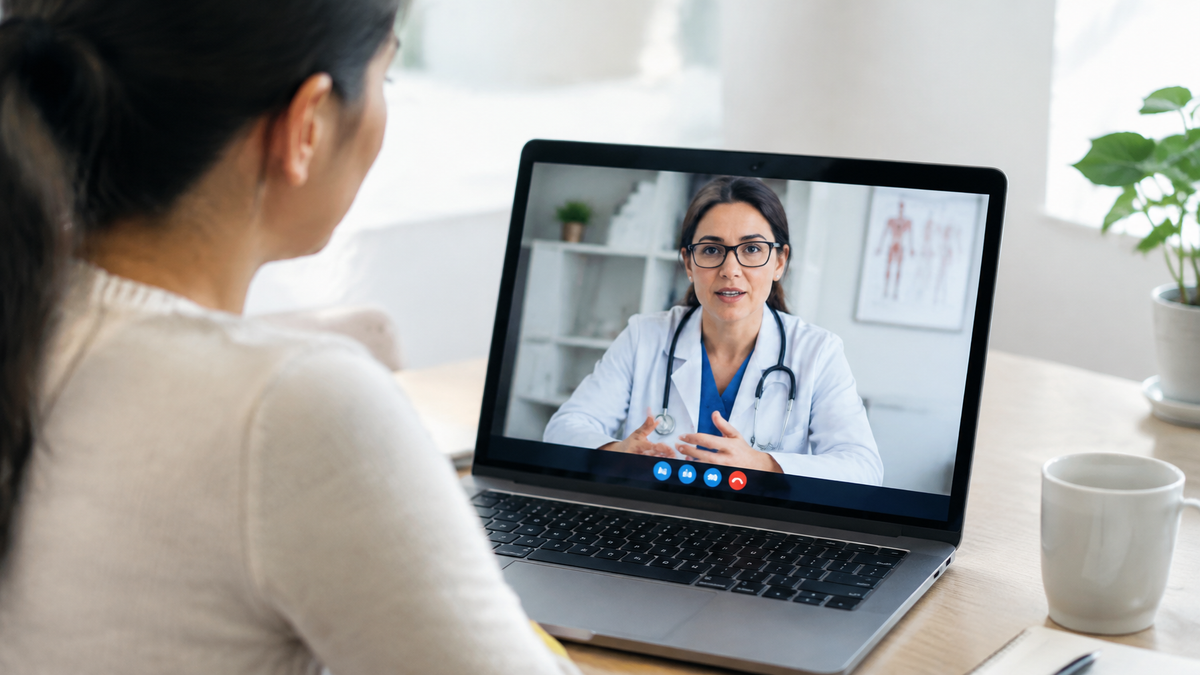
Why You Should Try a Virtual Consultation
For most of modern medical history, seeing a doctor has meant one thing: travelling to a building, sitting in a waiting room, and handing over an hour of your day for a conversation that might last ten minutes. That model is changing. A virtual consultation — an appointment conducted by video call, phone, or secure messaging — has moved from emergency stopgap to mainstream option, and for a great many people it is now simply the better choice.
It is worth understanding what these appointments actually involve, where they work well, and where they do not, because the honest answer is that virtual care is neither a universal cure nor a gimmick. It is a specific tool that suits specific problems, and knowing the difference will help you use it well.
Access Is the Obvious Win
The most immediate argument is access. If you live in a rural area, an hour or more from the nearest specialist, a video appointment collapses that distance to nothing. If you have a condition that makes travelling painful or exhausting, you can be seen without spending your limited energy on the journey. If you are a carer for young children or an elderly relative, you no longer need to arrange cover just to attend a twenty-minute check-in.
Then there is the time arithmetic. A face-to-face appointment is rarely just the appointment. It is the commute, the parking, the waiting room, the delay, and the commute back. A virtual consultation strips most of that away, which means the consultation has to be good enough to justify itself on clinical grounds rather than simply being convenient.
The Evidence Is Reasonably Strong
This is not wishful thinking. Research consistently finds that for a range of conditions, virtual consultations produce outcomes broadly comparable to in-person care. Mental health is the clearest example: talking therapies delivered by video have been shown to work about as well as those delivered face to face, and for many patients they lower the barrier to seeking help in the first place. Certain chronic conditions, such as stable diabetes or hypertension, can be monitored remotely with good results. Follow-up appointments after surgery or after a diagnosis often need nothing more than a conversation — and a conversation travels perfectly well down a video link.
Where virtual care falters is also well documented, and it is worth naming. Anything requiring a physical examination — listening to your chest, palpating an abdomen, taking a swab, examining a rash closely — is limited by a screen. Emergency symptoms are never a video call. And some people, particularly those with poor connectivity or low digital confidence, are disadvantaged by a system that assumes a smartphone and a strong signal.
It Tends to Change the Tone of the Conversation
There is an unexpected benefit that patients mention again and again: many find it easier to speak candidly when they are on their own sofa rather than in a clinical room. Anxiety about the setting drops away. People who would otherwise understate their drinking, their low mood, or their worries about a symptom often say more when they feel safe and unhurried.
Equally, the format tends to be more focused. Both parties know the time is fixed, and there is less of the flitting between rooms and interruptions that characterises a busy clinic. A well-run virtual appointment can feel surprisingly thorough for that reason — the conversation is the whole of the encounter, so the conversation gets the attention.
Better Continuity Between Appointments
Chronic illness is managed in the long stretches between visits, and that is precisely where virtual care shines. Secure messaging allows a quick question about a side effect without booking a fortnight out. Remote monitoring — a blood pressure cuff that reports readings, a glucose meter that uploads results — turns a snapshot into a pattern. Your clinician sees the trend rather than the single data point, which tends to produce better-informed adjustments to treatment.
Second Opinions and Specialists Become Realistic
If you have ever been told you should see a particular specialist three hundred miles away, you will understand what a difference this makes. Video consultations allow you to consult someone outside your immediate area without a return trip, or a hotel stay, or a day of annual leave. For rare conditions, where expertise is concentrated in a handful of centres, that is transformative. It also makes second opinions genuinely practical rather than aspirational.
It Works Best as Part of a Blended Approach
The most sensible framing is not virtual against in person, but virtual and in person, each used where it is strongest. Use virtual appointments for check-ins, follow-ups, medication reviews, mental health sessions, results discussions, and minor new complaints. Use in-person appointments for examinations, imaging, procedures, vaccinations, and anything acute. Done this way, you get the convenience without sacrificing the parts of care that need hands and equipment.
Practical Advice Before You Book
If you are going to try it, a little preparation goes a long way. Test your connection and your camera beforehand. Find a private, quiet, well-lit spot — a room with a door you can close, and light on your face rather than behind you. Write down your symptoms and questions in advance; it is easy to forget the third thing you meant to mention once the appointment begins. Have your medication list to hand. Know your pharmacy. And if the clinician says you need to be seen in person, take that seriously — it is a clinical judgement, not an inconvenience.
It is also worth checking how your particular provider handles virtual appointments: whether they are covered by your insurance or health system, whether prescriptions can be issued remotely, and what happens to the record of the consultation. These details vary, and knowing them beforehand saves frustration.
The Case in Short
Virtual consultations are not a replacement for medicine. They are a redistribution of it — moving the parts that are fundamentally conversational out of the clinic and into your home, and freeing scarce clinical time and space for the parts that genuinely require them. For patients, that means less travel, less waiting, less lost work, and often more candour. For the system, it means capacity that would otherwise be spent on logistics rather than care.
If you have been putting off a check-in, a follow-up, or a conversation you know you ought to have, a virtual appointment is worth trying. Start with something low-stakes — a medication review, a results discussion, a first session with a therapist — and see how it feels. Many people find they never want to go back to the waiting room for that kind of appointment again.
The technology is not the point. The point is that the conversation still happens, and it happens sooner, because the obstacles standing between you and it have been quietly removed.
This article is general information and not medical advice. If you have urgent or emergency symptoms, seek in-person care immediately.



Leave a comment
This site is protected by hCaptcha and the hCaptcha Privacy Policy and Terms of Service apply.