
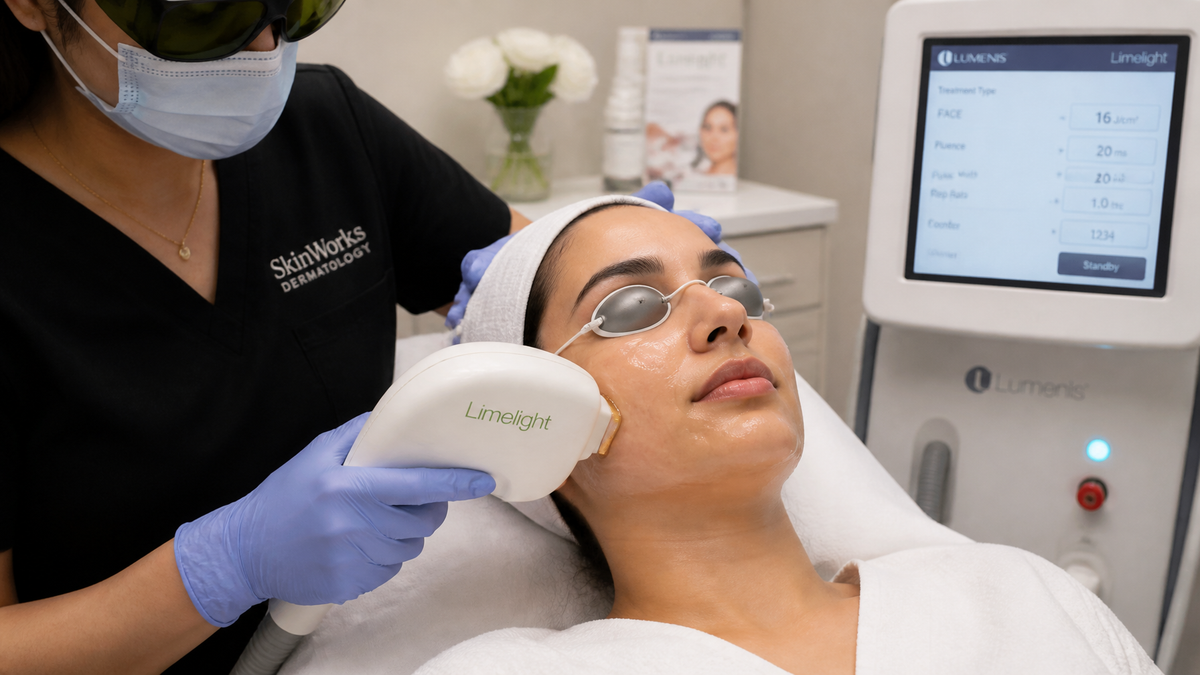
What to Expect From Limelight IPL: Skin Renewal Before & After
Understanding what Limelight IPL actually does
Limelight IPL (Intense Pulsed Light) is a non-invasive light-based treatment used to tackle pigmentation, redness, sun damage and uneven skin tone. Unlike a laser, which emits a single wavelength, IPL releases a broad spectrum of light. Limelight systems pair this with computerised filters that allow your practitioner to target specific concerns — haemoglobin in redness and broken capillaries, or melanin in sun spots and freckles — while sparing the surrounding tissue.
The mechanism is straightforward. Light energy is absorbed by the target chromophore and converted into heat. That heat damages the unwanted pigment or vessel, and your body's own repair processes gradually clear the debris over the following weeks. Because it works with your skin rather than against it, IPL is often described as a "lunchtime" option: most sessions take twenty to forty minutes, with no downtime beyond some redness.
It is worth being clear about limits. IPL is excellent for diffuse sun damage, rosacea-related flushing and mottled pigmentation. It is not a treatment for melasma in all cases, may not suit deeper skin tones without careful settings, and it will not remove a mole or a suspicious lesion — those need a dermatologist's eye, not a light device.
Before your first session: the preparation that determines your results
Preparation is where most disappointing outcomes are actually decided. Ideally, four weeks before treatment you should be minimising sun exposure and stopping any tanning beds. A fresh tan means more competing melanin, which reduces the precision of the treatment and raises the risk of burns or post-inflammatory hyperpigmentation.
Your practitioner will also ask you to pause certain actives. Prescription retinoids, strong exfoliating acids and any photosensitising medication typically need to be stopped several days beforehand. This is a good moment to simplify your routine rather than add to it. A gentle cleanser, a hydrating serum and a good moisturiser are all you need in the week running up to treatment. If your skin is reactive or compromised, a barrier-support product used twice daily in the preceding fortnight can bring you to the appointment with a calmer canvas.
Arrive with clean skin — no make-up, no fake tan, no self-tanner. Mention any history of cold sores, recent sunburn, pregnancy, or any active infection in the area. And take a proper consultation seriously: patch testing and a frank conversation about your expectations matter more than the device's brand name.
What happens during and immediately after
Most people describe the sensation as a hot rubber band snapping against the skin, lasting a fraction of a second per pulse. A good practitioner will use cooling throughout, either a cold gel interface, chilled air or a cooled tip. Discomfort is usually rated mild to moderate — entirely manageable without numbing cream for most faces.
Immediately afterwards, expect redness and warmth resembling a mild flush or light sunburn, settling within a few hours to a day. Pigmented areas often look darker for a few days as they rise to the surface and flake away. Occasionally there is slight swelling, particularly around the eyes, and a rare chance of tiny crusts or blistering if settings were too aggressive. Cold compresses and a bland moisturiser handle most of this.
The honest timeline: what "after" looks like week by week
The most common misconception is that IPL delivers instant transformation. It does not. Here is the realistic arc:
Days one to three. Redness fades. Brown patches may appear darker and more defined — this is expected, not a setback. Keep the routine minimal.
Days four to ten. Darkened pigment begins to flake or slough off. Resist picking, scrubbing or exfoliating. Skin often feels dry and tight.
Weeks two to four. This is when most people notice the shift. Tone looks more even, redness is reduced, and pores may appear refined. A single session typically gives a modest improvement; a course of three to six, spaced three to four weeks apart, produces the results people photograph.
Months three and beyond. Collagen remodelling continues, so texture can keep improving. Maintenance sessions once or twice a year help hold the gains.
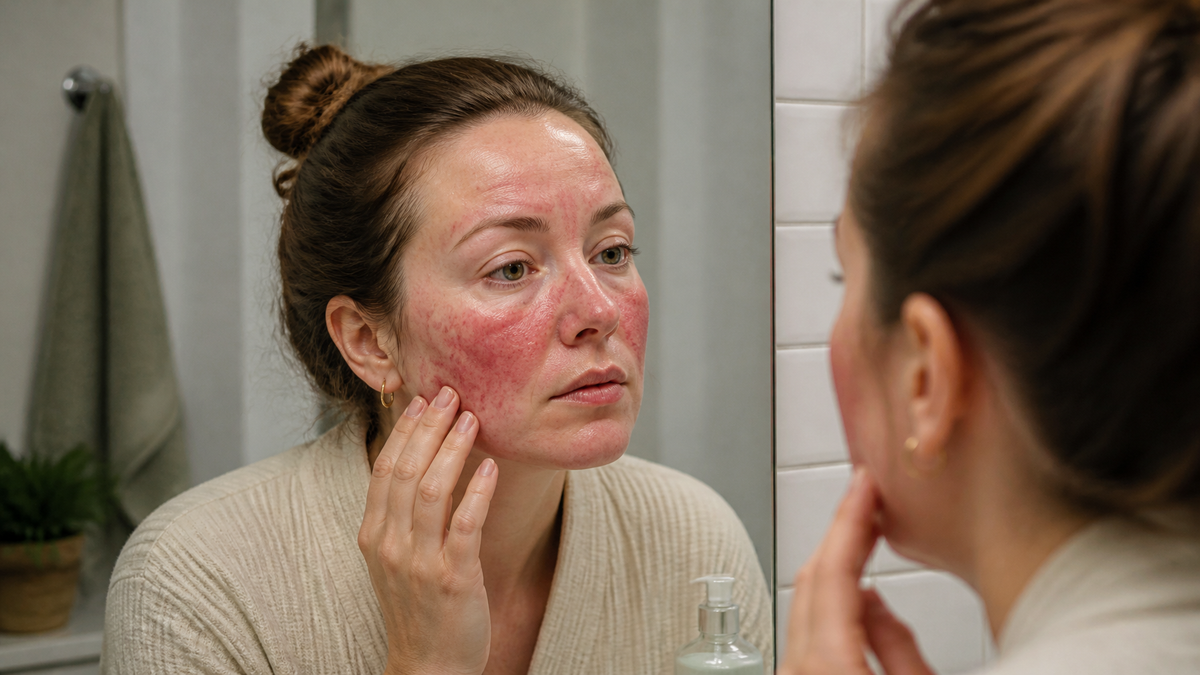
For rosacea and vascular concerns, improvement tends to be steadier rather than dramatic. For sun-induced pigmentation, the visible difference is usually more pronounced.
Post-treatment skincare: keep it simple and consistent
The fortnight after treatment is not the time for experimentation. Your skin is healing, and actives that would normally be beneficial can now trigger irritation or rebound pigmentation.
Stick to a gentle, fragrance-free cleanser, a hydrating serum, a nourishing moisturiser and daily SPF. That is genuinely the whole routine. If your skin is feeling tight or reactive, a dedicated barrier cream used morning and night helps restore comfort while the surface recovers.
Sun protection is non-negotiable. Treated skin is more vulnerable, and UV exposure can undo weeks of work by driving new pigment production. A broad-spectrum SPF 50 applied every morning — and reapplied if you are outdoors — is the single most important thing you will do.
Once your practitioner confirms the skin has settled, usually around two weeks, you can reintroduce actives gradually, one at a time, a few nights a week. A well-formulated vitamin C serum in the morning supports the antioxidant defence your skin needs after light-based treatment, and a B5 gel layered underneath moisturiser is a comfortable option if skin still feels thirsty. Retinol can wait a little longer; rushing it rarely pays off.
Setting realistic expectations

IPL works beautifully on the right concern, in the right skin, with the right aftercare. It will not erase deep wrinkles, tighten sagging skin or replace a surgical opinion. Results depend on your skin type, the severity of the concern, the number of sessions you complete, and — above all — how consistently you protect your skin afterwards.
Before and after photographs are useful precisely because progress is incremental. Take your own, in the same light, at the same time of day, before your first session and again four weeks after each treatment. Most people are surprised by how much has quietly changed.
Ask questions, follow the aftercare, wear your sunscreen, and give it time. That combination, rather than the device alone, is what delivers the renewal you are hoping for.

Leave a comment
This site is protected by hCaptcha and the hCaptcha Privacy Policy and Terms of Service apply.