
Redness, Bumps, and Flush: Recognizing Rosacea Symptoms
That warm bloom across the cheeks after a glass of wine or a brisk walk is easy to dismiss. Skin flushes; skin settles. But when the redness lingers, when it returns without an obvious trigger, and when it starts bringing company — small bumps, visible vessels, a stinging heat — it may be worth knowing what you are actually looking at.
Rosacea is a chronic inflammatory condition affecting roughly one in twenty adults, most commonly those with fair skin and a tendency to flush easily. It is not contagious, it is not caused by poor hygiene, and it is not simply "sensitive skin". It is also frequently missed, because its early signs are subtle enough to be mistaken for sunburn, acne, or a permanently reactive complexion.
This guide covers what rosacea tends to look like, how it differs from the conditions it is confused with, and what a sensible skincare routine looks like once you suspect it.
The Four Faces of Rosacea
Dermatologists generally describe rosacea in subtypes, though many people overlap several.
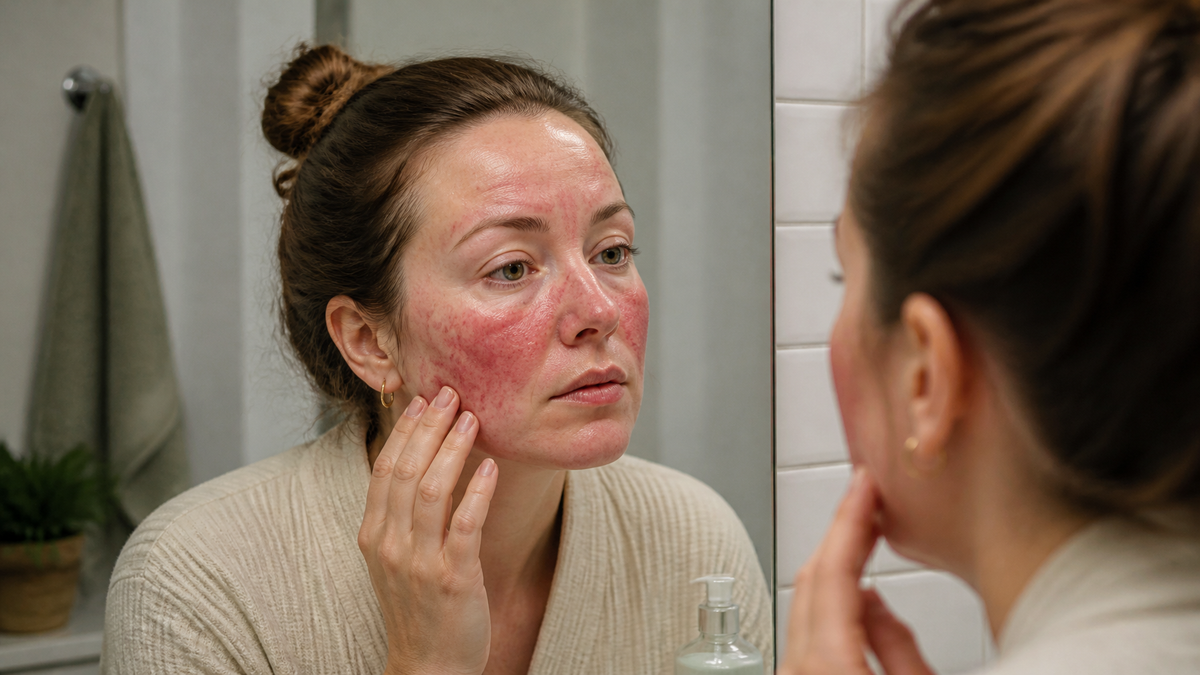
Erythematotelangiectatic rosacea is the flushing, redness-prone pattern. Persistent central facial redness across the cheeks, nose, chin and forehead, often with visible small blood vessels (telangiectasia), stinging, burning or tightening sensations, and a history of flushing that lasts longer than it should.
Papulopustular rosacea brings the bumps. Redness plus small red papules and pustules, usually without the blackheads and deep cysts that define acne. This is the subtype most often mistaken for adult acne — and treated with the wrong products as a result.
Phymatous rosacea involves thickening of the skin, most often the nose, with enlarged pores and a bumpy texture. It is far more common in men and tends to develop after years of untreated disease.
Ocular rosacea affects the eyes: burning, grittiness, dryness, a foreign-body sensation, crusting along the lash line, and recurrent styes. It can appear before any skin involvement at all, and it deserves a doctor's attention rather than a new eye cream.
What Rosacea Is Not
The confusion is understandable, but the distinctions matter because the treatments diverge sharply.
| Feature | Rosacea | Acne | Barrier damage |
|---|---|---|---|
| Blackheads/whiteheads | Absent | Present | Absent |
| Flushing history | Typical | Uncommon | Possible |
| Stinging without product | Common | Rare | Common |
| Lesions | Papules, pustules | Comedones, cysts | Usually none |
Rosacea is also not the same as a damaged moisture barrier, though the two can coexist and each makes the other worse. Barrier disruption from over-cleansing, harsh exfoliants or retinoid overuse produces redness, stinging and reactive flushing that can look convincingly like mild rosacea. The difference is usually in the history: barrier trouble follows a change in routine, whereas rosacea has been building quietly for years.
The Triggers Worth Knowing
Rosacea is not caused by triggers, but it is provoked by them. The common ones are unglamorous and specific: sun exposure, hot drinks, alcohol (particularly red wine), spicy food, temperature extremes, saunas and steam rooms, strenuous exercise, wind, and emotional stress. Some people find certain skincare ingredients — fragrance, alcohol denat., essential oils, strong acids — will set off a flush within minutes.
Keeping a simple diary for a few weeks reveals patterns faster than any amount of internet research. Note what you ate, drank, and put on your face, and how your skin responded an hour later.
When to See a Doctor
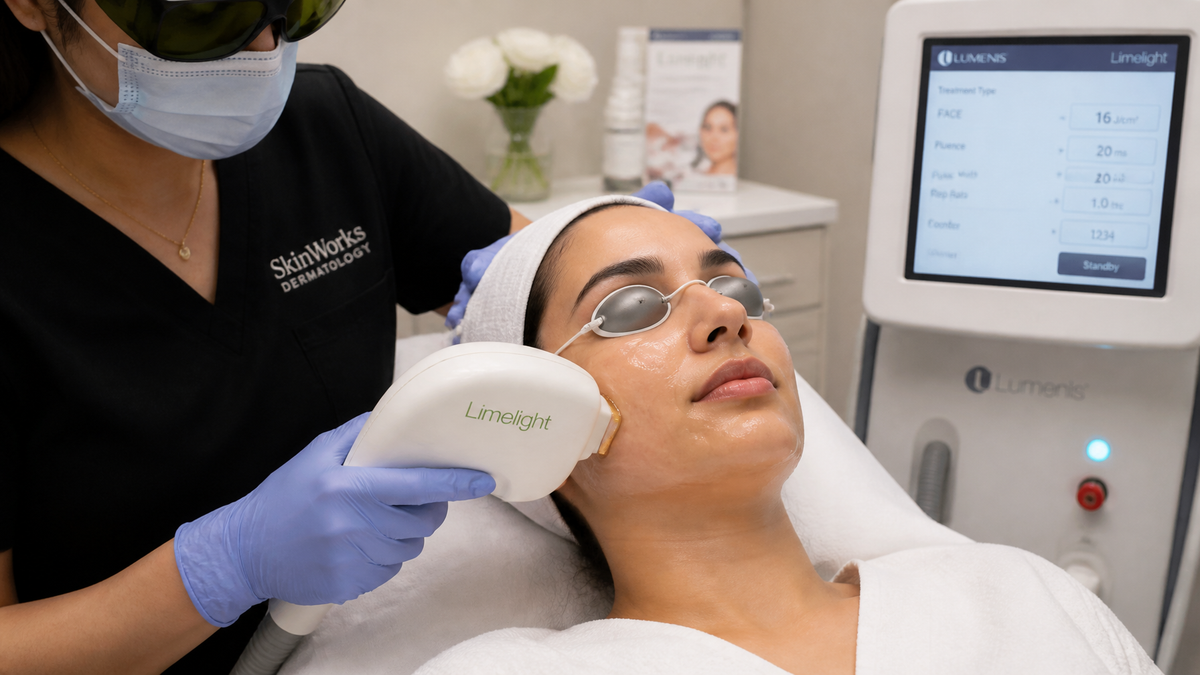
See a GP or dermatologist if redness persists for weeks rather than hours, if you develop bumps that resemble acne but do not respond to acne treatments, if your eyes are involved, or if the condition is affecting your confidence. Rosacea is manageable but not curable, and it tends to progress without treatment. Prescription options — topical metronidazole, ivermectin, azelaic acid, oral antibiotics for inflammatory flares, and laser or intense pulsed light for persistent vessels — work far better the earlier they start.
Building a Routine That Does Not Fight Back

The skincare approach to rosacea is less about adding actives and more about removing provocation. Four principles carry most of the weight.
Cleanse gently, once or twice. Harsh surfactants strip the barrier and leave skin more reactive. A creamy, low-foaming cleanser applied with lukewarm water and fingertips is plenty.
Hydrate and support the barrier. Well-hydrated skin tolerates everything else better. Look for panthenol, hyaluronic acid, ceramides, glycerin and niacinamide at modest concentrations.
Use targeted anti-inflammatory ingredients cautiously. Azelaic acid, centella asiatica, green tea, liquorice root and allantoin are reasonable choices. Introduce one at a time, at low frequency, and stop if skin stings.
Protect every single day. Ultraviolet light is the most reliable trigger of all, and the most modifiable. A mineral or well-tolerated chemical sunscreen at SPF 30 or higher, worn indoors on bright days as well, does more for long-term control than any serum.
Where a routine genuinely helps rather than merely avoiding harm is in keeping every step bland enough that the barrier stays intact. Products positioned for redness-prone skin and formulated without fragrance or drying alcohols tend to do this better than generically "gentle" options, and REFORM Skincare's Rosacea Relief routine sits exactly in that territory — a curated set built around calming, phyto-botanical formulas rather than aggressive resurfacing. Individual products from their redness and rosacea collection are worth a look if you prefer to build your own: the Phyto Botanical Gel is the one most directly aimed at this concern, while the Gentle Hydrating Crème Cleanser, Vitamin B5 Gel and Skin Barrier Repair Cream cover the cleanse-hydrate-repair foundations without adding irritants. For daytime, the SPF 30 Mineral Sunscreen suits those who react to chemical filters, and the SPF 50+ Antioxidant Sunscreen pairs high protection with antioxidants — useful given that sun exposure drives both flushing and the visible vessels that eventually become permanent.
What none of these will do is cure rosacea, and any brand claiming otherwise is worth a sceptical read.
Ingredients to Approach With Caution
Fragrance, essential oils, alcohol denat., menthol, peppermint, eucalyptus, physical scrubs, hot water and over-frequency all rank high on the list of things that provoke rather than soothe. Strong acids and retinoids are not forbidden, but they need to be introduced slowly, buffered under moisturiser, and abandoned at the first sign of persistent stinging. A skin that stings on application is telling you something.
The Long View
Rosacea rewards patience and punishes enthusiasm. The people who manage it well tend to be the ones who do fewer things, do them consistently, protect their skin from the sun without fail, and accept that flare-ups will still happen — from a stressful week, a hot summer, a spicy meal. Flares are not failures; they are information.
If the redness has been there for months rather than hours, book the appointment. Everything else — the gentle cleanser, the barrier cream, the sunscreen worn on a grey Tuesday — is support, not substitute.
This article is general information and is not medical advice. If you suspect rosacea, particularly with eye involvement, speak to a doctor or dermatologist.

Leave a comment
This site is protected by hCaptcha and the hCaptcha Privacy Policy and Terms of Service apply.