
Article: Athlete's Foot 101: Causes, Prevention, and How to Clear It Fast
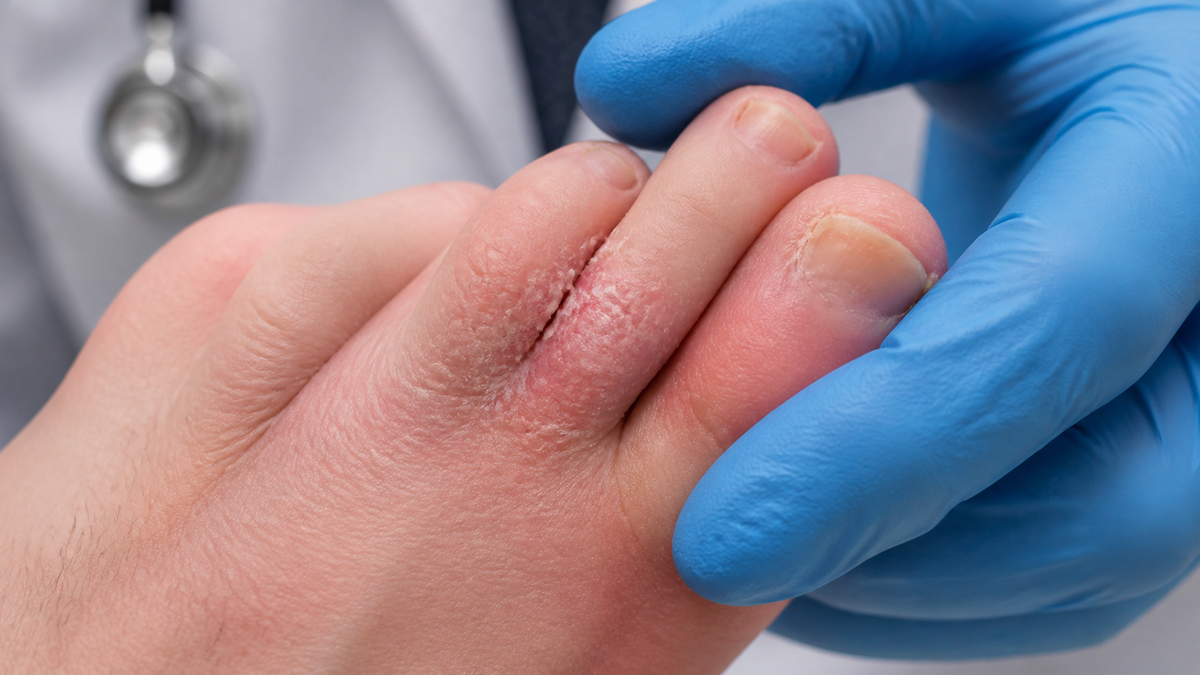
Athlete's Foot 101: Causes, Prevention, and How to Clear It Fast
It itches, it flakes, it burns between your toes after a long day — and it rarely goes away on its own. Athlete's foot is one of the most common skin complaints in the world, and despite the name, you don't need to set foot in a gym to get it.
Here's what's actually happening, why it keeps coming back, and how to shut it down properly.
What Is Athlete's Foot?
Athlete's foot (the medical term is tinea pedis) is a fungal infection of the skin on the feet. It's caused by dermatophytes — mould-like fungi that feed on keratin, the protein in your skin, hair and nails.
These fungi don't just live on humans. They're everywhere: changing room floors, swimming pool decks, shared showers, hotel carpets, the inside of your trainers. They thrive in warmth, moisture and darkness, which is a fairly accurate description of a shoe after a full day.
The classic pattern shows up between the toes (especially the gap between the fourth and fifth toe), but it can spread across the sole, along the sides of the foot, and occasionally onto the toenails — where it becomes a much more stubborn problem.
What Are the Symptoms?
Signs vary from person to person, and not everyone gets the itch. Look out for:
- Itching or burning, often worst after removing socks and shoes
- Peeling, cracking or flaking skin, particularly between the toes
- Red, scaly patches on the soles or sides of the feet
- A rash with a raised, defined edge that creeps outward
- Small blisters or weeping skin in more inflamed cases
- Dry, thick, discoloured toenails if the infection has moved into the nail
One variant — the "moccasin" pattern — causes dry, thickened skin across the sole that looks more like eczema than a rash. It's easy to miss, and it's often the source of repeat infections because nobody treats it.
How Do You Actually Get It?
Dermatophytes need three things: a warm environment, moisture, and skin they can colonise. Remove any one of the three and they struggle.
Common routes of infection:
Direct contact with infected skin. Household members with athlete's foot or fungal nail infections are a frequent source. Towels and bath mats pass it along easily.
Contaminated floors. Walking barefoot in shared wet spaces is the classic route. Fungal spores can survive on surfaces for months.
Your own feet. If you have a fungal nail infection, you're reinfecting your skin every time you put on socks. Treating the skin without treating the nail rarely ends well.
Shoes that don't breathe. Non-porous trainers, safety boots and synthetic socks trap sweat against the skin for hours. Occlusion is the single biggest enabler.
Sweat and heat. Hyperhidrosis (excessive sweating) dramatically raises your risk.
Weakened skin defences. Minor cuts, cracked heels and dry skin give fungi an entry point. So does a compromised immune system, diabetes, or poor circulation.
Worth saying plainly: athlete's foot is not a hygiene failure. It's an exposure problem. Fit, clean people get it constantly.
Clearing It Fast

If it's mild and confined to the skin between your toes, you can usually sort it at home. If it's extensive, blistering, weeping, spreading to the nails, or you have diabetes or circulation problems, see a pharmacist or GP — the treatment plan changes.
1. Use a proper antifungal, and use it for long enough.
This is the step most people get wrong. Over-the-counter antifungal creams, sprays and powders containing terbinafine, clotrimazole, miconazole or tolnaftate work — but they need to be applied to all affected skin plus a margin around it, twice daily (or as directed), and continued for one to two weeks after the skin looks normal.
Stopping when the itch fades is the number one cause of relapse. The fungus is still there; you've just quietened the symptom.
2. Dry your feet properly — especially between the toes.
Towel-dry each toe individually. Don't rub, dry. A hairdryer on a cool setting works well for stubborn moisture. If you can, leave your feet bare for 15–20 minutes after washing before putting anything on them.
3. Change socks daily — more often if you sweat.
Choose moisture-wicking or cotton-rich socks, and change them mid-day if you've been active. Wash them hot and dry them thoroughly.
4. Rotate your shoes and let them dry out.
Wearing the same pair every day keeps the inside damp and re-exposes your skin. Give shoes at least 24 hours between wears, loosen laces to air them, and consider an antifungal shoe powder or spray inside the footwear.
5. Never share towels, socks or shoes. Use a separate towel for your feet, and wash bath mats regularly.
6. Don't scratch. It spreads the infection to your hands and can break the skin open to bacterial infection.
Where Skincare Fits In
Antifungals do the killing. Skincare does something different but genuinely useful: it keeps the skin barrier intact so the fungus has less to work with.
Two points here are worth being careful about. First, broken, cracked, macerated skin is easier for fungi to colonise and slower to heal — so supporting that barrier matters. Second, anything you apply to infected feet needs to be gentle, because inflamed skin reacts badly to strong actives.
This is where a considered routine helps. If your feet are dry, cracked and flaky from months of low-grade infection, a barrier-supporting emollient is a sensible addition once the active antifungal course is underway — applying it to clean, dry skin on the heels and soles, not between the toes where moisture is the enemy.
REFORM Skincare's Skin Barrier Repair Cream is formulated for very dry and damaged skin, with a non-greasy emollient texture designed to help the skin bind and retain moisture. For feet that have been dry and cracked, that's a reasonable supportive step alongside treatment — not a replacement for it.
Two practical cautions. Keep emollients out of the toe webs during an active infection, because trapping moisture there makes things worse. And do not exfoliate infected or broken skin. Acid-based exfoliants can be excellent for rough, thickened skin on healthy heels, but on an active fungal infection they'll irritate the area and slow healing.
One more thing worth flagging: dry, thickened skin on the soles is often mistaken for simple dryness and treated with moisturiser alone, sometimes for years. If intense moisturising isn't shifting it, get it looked at.
Prevention: The Long Game
The honest truth is that clearance is straightforward and staying clear is the hard part. Reinfection is common, and it almost always comes from one of four places: your own nails, your shoes, your household, or a shared wet floor.
The prevention checklist:
- Wear flip-flops or pool shoes in communal showers, changing rooms and around pools
- Dry between your toes every single time
- Rotate footwear; never wear damp shoes
- Change socks daily, and after exercise
- Alternate two or three pairs of everyday shoes
- Use antifungal powder in shoes if you're prone to recurrence
- Treat fungal nail infections properly — this is often the missing piece
- Check household members' feet if you keep getting it
- Manage heavy sweating with breathable footwear and moisture-wicking socks
- If you have diabetes, check your feet daily and get professional advice early
When to See Someone
Book an appointment rather than self-treating if:
- There's no improvement after two weeks of correct antifungal use
- The skin is blistered, weeping, swollen or very painful
- You notice redness spreading up the leg, or you feel unwell (possible bacterial infection — this needs prompt attention)
- Your toenails are thick, crumbling or discoloured
- You have diabetes, poor circulation or a weakened immune system
- You're unsure whether it's athlete's foot at all — eczema, psoriasis and contact dermatitis can all look similar
The Short Version
Athlete's foot is a fungal infection, not a hygiene problem. It spreads through warm, damp, shared environments and through your own footwear and nails. Clear it with a proper antifungal used for the full course, keep the feet dry, treat the shoes and the nails, and support the skin barrier with gentle, non-occlusive care. Then keep doing the boring bits — because that's what stops round two.
This article is general information and not medical advice. If your symptoms are severe, persistent, or you have an underlying condition such as diabetes, speak to a pharmacist, GP or dermatologist.


Leave a comment
This site is protected by hCaptcha and the hCaptcha Privacy Policy and Terms of Service apply.