
Article: Virtual vs. In-Person Consultation: Which One Should You Book?
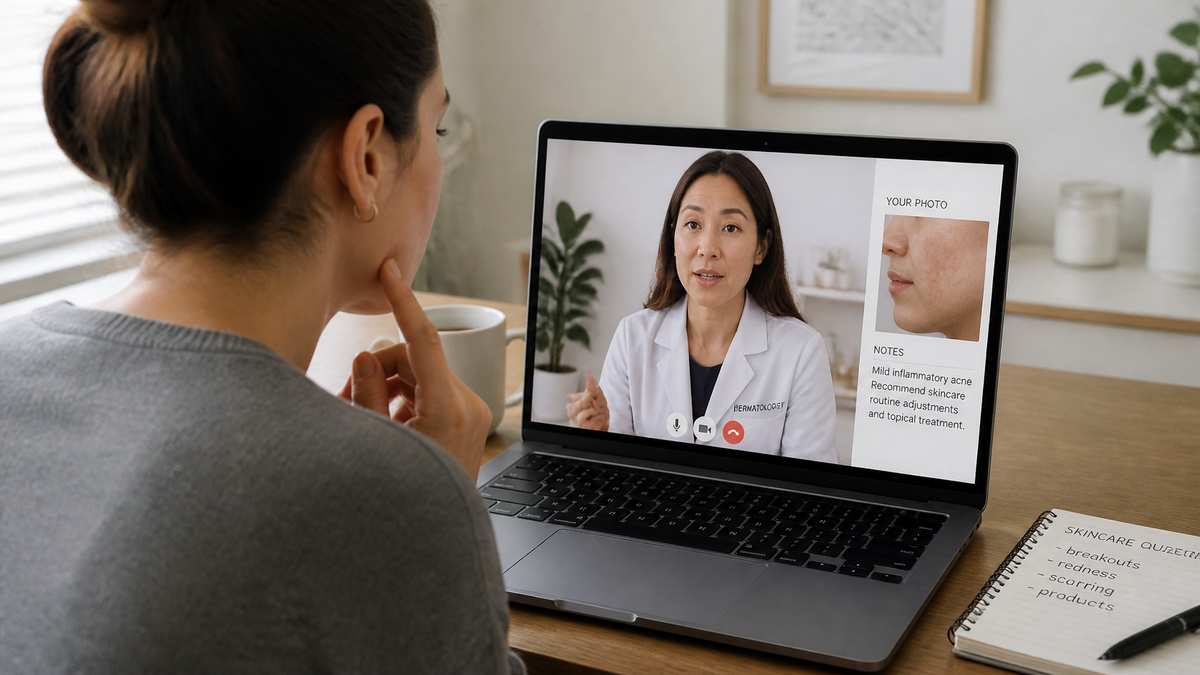
Virtual vs. In-Person Consultation: Which One Should You Book?
Booking a consultation used to involve travel, a waiting room and a carefully protected hour in your diary. Now it often means clicking a link and sitting down at your own kitchen table. Both formats work — but they work differently, and the one that suits you depends less on technology than on what you actually need from the appointment.
What each format is genuinely good at
Virtual consultations are compact. There is no commute, no parking, no half-day carved out of your schedule for a twenty-minute conversation. That efficiency matters most when the appointment is primarily verbal: discussing results you already have, reviewing a plan, asking questions about a diagnosis, going through a contract, or having a regular check-in with a professional who already knows your situation. For follow-ups in particular, virtual is hard to beat. The relationship is already established, the context is shared, and the conversation is the whole point.
In-person consultations are fuller. They bring in everything a camera and microphone cannot: physical examination, direct observation of how you move, stand, breathe or react; the ability to point at a scan, hold a document across a table, or demonstrate something with your hands. They also carry the social weight of presence. Some conversations land differently face to face — difficult news, nuanced negotiations, anything where reading a room matters as much as hearing the words.
The dividing line is not "serious versus casual". It is what the appointment needs in order to work. If the consultation's core task requires the professional's senses in the room, in-person wins. If the core task is exchange of information, virtual usually matches it.
The practical trade-offs
Cost. Virtual is nearly always cheaper, sometimes dramatically so, because you are not paying for premises, travel or the professional's time spent waiting between appointments. If you are booking privately rather than through insurance or an employer, this can be the deciding factor.
Access. This is where virtual genuinely changes lives. Specialists who are booked out for months locally can be consulted from another city, or another country, within days. People with limited mobility, caring responsibilities, unpredictable work shifts or no reliable transport can attend appointments that would otherwise be impossible. If geography or scheduling has been the barrier, virtual removes it.
Technology risk. The obvious cost. Connections drop, audio fails, platforms misbehave. The mitigation is simple: test your setup, join early, have a phone number for the clinic or practice, and keep the appointment short enough that a ten-minute technical problem does not destroy it. For anything high-stakes, the small risk of a failed call is worth weighing against the inconvenience of travelling.
Privacy and comfort. Some people find it easier to speak candidly from their own home; others find clinical settings help them focus. Neither is wrong. Notice which one you are. If you know you will hold back on a video call — because of who else might overhear, or simply because screens make you guarded — say so and book in person.
Non-verbal information. Even in a verbal consultation, professionals pick up a lot from a person's appearance, movement and environment. A video call conveys some of this and distorts the rest. For anything where the professional needs to see rather than hear, that gap is decisive.
When in-person is the right call
- The appointment involves a hands-on assessment of any kind.
- It is your first meeting with this professional and the subject is complex or sensitive.
- Something needs to be physically demonstrated, handed over or inspected.
- You have received news or results you expect to find difficult and would rather not absorb alone at a screen.
- Previous virtual attempts have left you frustrated or unclear.
- There is a legal or formal requirement for physical attendance.
When virtual is the better choice
- It is a follow-up where the groundwork is already done.
- You need information, advice, a review or a second opinion rather than a physical assessment.
- Travel would cost you hours, significant money or a day's leave.
- Your condition or circumstances make leaving home difficult or painful.
- The professional you most want to see is not local.
- The appointment is short and outcome-driven: a prescription renewal, a results discussion, a progress check.
A middle path worth knowing about
Many practices now run hybrid models: an initial in-person assessment where the professional can actually examine or observe, followed by virtual reviews once the picture is clear. For ongoing care, this often gives you the best of both — the thoroughness of a first meeting in the room, and the convenience of not having to return every time. If you are booking a course of consultations rather than a single one, ask whether this is possible. It frequently is, even when it is not advertised.
Questions to ask yourself before you book
- What does this appointment actually need to accomplish? If the answer is "a physical assessment", book in person. If it is "a conversation", virtual is fine.
- Would travelling make me cancel or postpone? If yes, virtual is the appointment that actually happens.
- Is there anything I need to show, or have done to me? That decides it.
- How sensitive is the subject? Choose the setting in which you will speak most honestly.
- Is this a first meeting or a continuation? First meetings often benefit from presence; continuations rarely need it.
- What is the cost difference, and does it matter to me? Factor it in openly rather than pretending it is irrelevant.
- Can I arrange good conditions for a call? A private room, stable connection, and no interruptions.
The honest answer
There is no universally better format, only a better fit for a particular appointment and a particular person. The mistake people make is treating the choice as a statement about how seriously they take their own health, or their work, or their case. It is not. It is a logistical decision.
If the consultation's value lies in the professional's hands, eyes or presence, book in person. If its value lies in the conversation, and travelling would cost you more than it returns, book virtual without guilt. And where you can, use both: front-load the in-person visit, then keep the momentum going with virtual reviews.
Whichever you choose, prepare for it. Write down your questions, have your documents to hand, and be clear about what you want to leave with. A well-prepared virtual consultation beats a rushed in-person one every time — and that, more than the platform, is what decides whether the appointment was worth booking.

Leave a comment
This site is protected by hCaptcha and the hCaptcha Privacy Policy and Terms of Service apply.