
The Real Risks of UV Damage: Why a Tan Isn't Healthy | 2026 Guide
The golden glow of a summer tan has been marketed as the "look of health" for nearly a century. Since the 1920s, when Coco Chanel accidentally made sun-kissed skin a fashion statement, we have been conditioned to believe that a darker complexion equates to vitality, wealth, and wellness. However, as we move through 2026, the medical community is louder than ever: that bronze hue isn't a sign of wellness—it’s a distress signal.
To truly protect ourselves, we have to look past the surface and understand the complex, microscopic, and often permanent damage occurring beneath the skin. The truth is that your skin doesn't want to be tan; it is desperately trying to survive.
The Biological Reality of the "Glow"
When UV radiation hits your skin, it triggers a biological emergency. Your skin cells (keratinocytes) sense DNA damage and send out a chemical "SOS." In response, specialized cells called melanocytes produce melanin—the pigment that darkens your skin—and distribute it to neighboring cells.
This melanin acts as a tiny umbrella, attempting to shield the cell's nucleus from further radiation. Therefore, a tan is not a sign of vitality; it is a physical scar showing that your DNA has already been attacked. By the time you see a change in your skin color, the damage at a cellular level has already been done.
The Role of Melanin
Melanin is often misunderstood. While it is true that melanin provides some level of protection against the sun's harmful rays, its production is a reactive process. Think of it like a fire alarm: the alarm only goes off once the fire has already started. Relying on a tan for protection is like relying on the ashes of a burned house to protect you from the next fire.
The Two-Pronged Attack: UVA vs. UVB
To understand the risks, we have to differentiate between the two types of ultraviolet radiation that reach our skin. In 2026, we have more data than ever on how these specific wavelengths interact with our biology.

1. UVB: The "Burning" Rays
UVB rays have a shorter wavelength and carry more energy. They primarily target the epidermis (the outermost layer of skin). These rays are the main culprit behind:
-
Sunburns: The painful, red inflammation that occurs after a day at the beach.
-
Direct DNA Damage: UVB rays strike the DNA molecules directly, causing "photoproducts" that lead to mutations.
-
Most Skin Cancers: Because they damage the DNA of the cells responsible for regenerating your skin, UVB rays are the primary drivers of basal and squamous cell carcinomas.
2. UVA: The "Aging" Rays
UVA rays have a longer wavelength, which allows them to penetrate much deeper into the dermis—the thick layer of living tissue below the epidermis. Unlike UVB, UVA rays are present with relatively equal intensity during all daylight hours throughout the year. They can even penetrate through clouds and window glass.
-
Photoaging: UVA rays are responsible for the long-term breakdown of your skin’s structural integrity.
-
Indirect Damage: These rays create free radicals—unstable molecules that bounce around inside your cells, causing oxidative stress and "rusting" your skin from the inside out.
The "Invisible" Risks: Beyond the Surface
The most insidious aspect of UV damage is that much of it is cumulative and invisible to the naked eye for years. You may feel fine today, but your skin's "memory" is flawless.
DNA Mutation: The "Kink" in the Code
When UV light hits a skin cell, it can cause "kinks" in the DNA sequence, specifically something called thymine dimers. Imagine a zipper where two teeth accidentally fuse together; the zipper can no longer close properly. While our bodies have incredible DNA repair enzymes that work 24/7 to "snip out" these errors, they aren't perfect.
As we age, or as our UV exposure increases, these repair mechanisms become overwhelmed. If a mutation occurs in a "tumor suppressor gene"—the part of your DNA that tells cells when to stop growing—that cell can begin to divide uncontrollably. This is how a "healthy tan" in your 20s becomes a melanoma in your 40s.
Immune Suppression: The Hidden Danger
Many people don't realize that the skin is a vital part of the immune system. It is filled with specialized cells (Langerhans cells) that act as sentries, looking for pathogens or mutated cells. UV radiation actually dampens this immune response. It "stuns" these sentry cells, making it harder for your body to identify and destroy "bad" cells. This local immunosuppression is why people often get cold sore outbreaks after being in the sun—the UV rays have suppressed the immune system's ability to keep the virus in check.
The Collapse of the Dermis: Photoaging
Up to 90% of the visible changes commonly attributed to aging are actually caused by the sun. UV rays specifically target collagen and elastin fibers—the scaffolding that keeps your skin firm and bouncy.
-
Solar Elastosis: This is the medical term for the thick, yellowed, leathery skin seen in chronic sun-seekers.
-
Capillary Damage: UV rays weaken the walls of small blood vessels, leading to permanent redness and "spider veins" on the face.
The Rise of Non-Melanoma Cancers in 2026
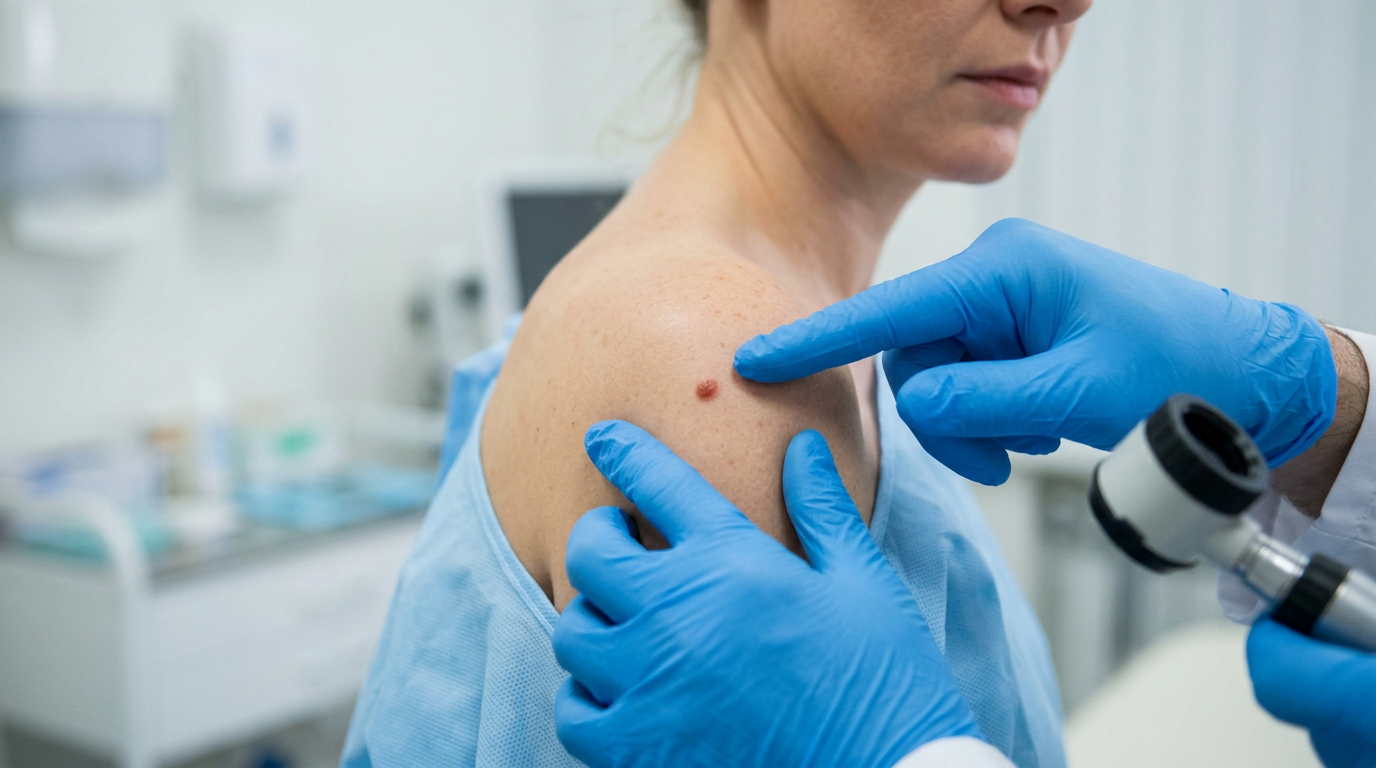
While melanoma is the most feared because of its ability to spread to other organs, Basal Cell Carcinoma (BCC) and Squamous Cell Carcinoma (SCC) are reaching record highs. In 2026, we are seeing a significant "youth shift," where these traditionally "older person" cancers are appearing in people in their late 20s and early 30s.

These cancers are directly linked to cumulative sun exposure—every tan you’ve ever had adds to the "bucket." Once the bucket overflows, cancer appears. While these are rarely fatal if treated early, the surgeries required to remove them (such as Mohs surgery) can be extensive. On the face, ears, or nose, these surgeries can require skin grafts and lead to significant permanent scarring.
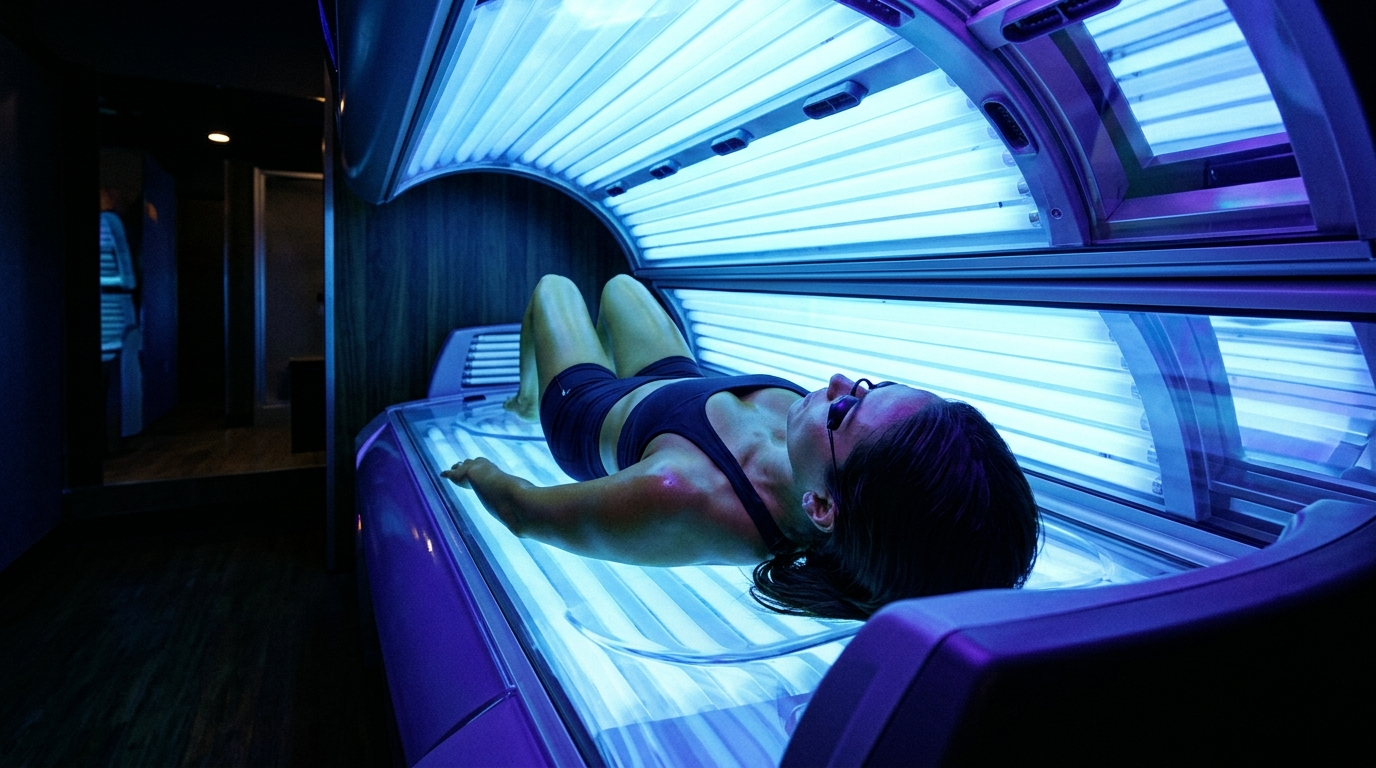
Tanning Beds: A Controlled Disaster
Even in 2026, the myth of the "safe tanning bed" persists. Let’s be clear: tanning beds are essentially "cancer coffins." A tanning bed can emit UVA radiation at levels 12 times higher than the sun.
Using a tanning bed just once increases your risk of developing squamous cell carcinoma by 67% and basal cell carcinoma by 29%. There is no such thing as a "controlled" way to damage your DNA. If a tanning salon tells you their bulbs are "safe," they are ignoring decades of peer-reviewed oncology.
Modern Protection: The 2026 Standard of Care
We no longer live in an era where "greasy, white sunscreen" is the only option. To mitigate the risks of UV damage, the modern standard of care has evolved into a multi-layered approach:
-
Broad-Spectrum Antioxidants: Modern dermatology recommends applying Vitamin C, Vitamin E, or Ferulic acid serums under your sunscreen. These antioxidants act as a second line of defense, neutralizing the free radicals that manage to slip past your SPF.
-
UPF Clothing: The 2026 fashion industry has embraced "Sun-Safe Chic." High-tech fabrics with a UPF (Ultraviolet Protection Factor) of 50+ provide a consistent physical barrier that doesn't wash off, sweat off, or require reapplication every two hours.
-
The "Two-Finger" Rule: Most people apply only 25-50% of the recommended amount of sunscreen. To get the SPF on the bottle, you need to apply two full strips of sunscreen to your index and middle fingers for just your face and neck.
-
Visible Light Protection: We now know that visible light (especially blue light from screens and the sun) can worsen pigmentation issues like melasma. Modern sunscreens often include iron oxides to protect against this specific part of the spectrum.
Final Thoughts: Respect Your Largest Organ
Your skin is your body's first line of defense against the outside world. It regulates your temperature, prevents dehydration, and produces essential Vitamin D. When we chase a tan, we are intentionally damaging the very barrier that keeps us alive.
This year, choose a different kind of "glow"—the one that comes from healthy, hydrated, and protected skin. The sun is a powerful force of nature; enjoy it, but respect the damage it can do. Your future self will thank you for the wrinkles you didn't get and the biopsies you never had to endure.


Leave a comment
This site is protected by hCaptcha and the hCaptcha Privacy Policy and Terms of Service apply.