
The ABCDEs of Melanoma: Home Skin Monitoring Guide | The Adare Clinic
Our skin is more than just an aesthetic outer layer; it is a dynamic, living record of our history. It bears the marks of childhood summers, the scars of past tumbles, and the genetic blueprint passed down through generations. However, because we see our skin every single day, we often fall into a state of "visual habituation"—we stop noticing the subtle shifts and new additions that could signify a serious health change.
Among these changes, none is more critical to identify early than Melanoma. While it is not the most common form of skin cancer, it is the most dangerous due to its ability to spread to other organs if left untreated. The good news? When caught in its earliest stages, melanoma is highly treatable.
Empowerment begins with education. This guide will walk you through the ABCDEs of Melanoma, providing you with a professional framework to monitor your skin effectively at home between your annual visits to The Adare Clinic.
Why Home Monitoring Matters
In a busy world, it’s easy to relegate skin health to the "someday" pile. However, in Ireland, where fair skin types (Fitzpatrick Type I and II) are the norm, our biological resistance to UV damage is naturally lower. Whether you have a history of sunbeds, experienced blistering sunburns as a child, or simply spend time gardening on cloudy days, the cumulative DNA damage to your skin cells is a reality.
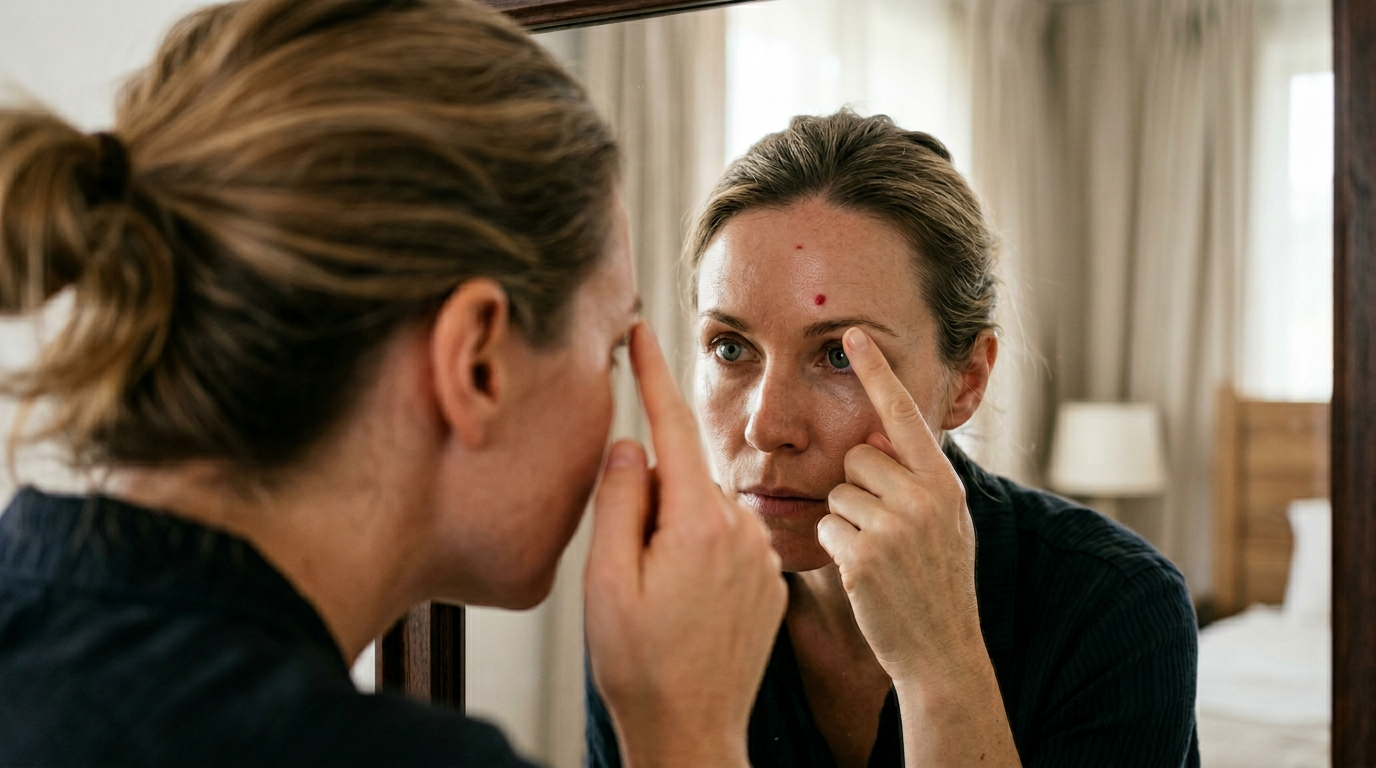
Professional skin checks are the gold standard, but your own eyes are the first line of defense. You know your body better than anyone else. By performing a monthly self-check, you establish a "baseline"—a mental and visual map of what is normal for you. This allows you to spot the "interloper"—the mole that wasn't there last month or the freckle that is suddenly changing its tune.
The ABCDE Framework: Your Diagnostic Toolkit
Dermatologists use the ABCDE acronym as a simple yet scientifically backed method for identifying suspicious lesions. If a mole or spot on your body displays any of these characteristics, it warrants a professional evaluation at The Adare Clinic.
A – Asymmetry
Most benign (normal) moles are symmetrical. If you were to draw an invisible line through the center of a healthy mole, the two halves would be mirror images of each other.
What to look for: Melanoma cells often grow at different rates and in different directions. This results in a lopsided or asymmetrical appearance. If one half of the spot looks significantly different from the other in shape or thickness, it is a warning sign.
B – Border
The edges of a common mole are typically smooth, even, and clearly defined. You can easily tell where the mole ends and the skin begins.
What to look for: The borders of an early melanoma are often uneven. They may be ragged, notched, blurred, or "scalloped." In some cases, the pigment may appear to "bleed" or leak into the surrounding skin.

C – Colour
A healthy mole is usually a single, uniform shade of brown, tan, or flesh-tone. While some people naturally have darker moles than others, the key is consistency within the individual spot.
What to look for: Variety is a red flag. A suspicious lesion may contain multiple shades of brown or black. As a melanoma progresses, you might even see splashes of red, white, or blue. A mole that looks "patriotic" (red, white, and blue) or significantly darker than your other moles should be checked immediately.
D – Diameter
While melanomas can occasionally be small, most are larger than 6 millimeters—roughly the size of a pencil eraser.
What to look for: If you notice a mole that is larger than your other spots, or one that is reaching that 6mm threshold, pay close attention. However, do not ignore smaller spots if they meet the other ABCDE criteria; "micro-melanomas" are becoming increasingly recognized by specialists.
E – Evolving
This is arguably the most important factor in the entire framework. A mole that is "mind its own business" is generally safe. A mole that is "active" is a concern.
What to look for: Is the spot changing in size, shape, or color? Is it becoming raised when it used to be flat? Has it started to itch, crust, or bleed? Any change—even a subtle one—is a reason to seek a professional opinion.
How to Perform a Professional-Grade Home Exam
To monitor your skin effectively, you need more than just a quick glance in the bathroom mirror. You need a systematic approach to ensure no area is overlooked.
1. Set the Stage
Perform your check in a well-lit room, ideally with a full-length mirror and a hand-held mirror for hard-to-see areas. It is best to do this after a shower when your skin is clean.
2. The Head-to-Toe Routine
-
The Face and Scalp: Use a hairdryer or a comb to part your hair and inspect your scalp. Check your ears, nose, and lips. Don't forget the skin behind your ears.
-
The Upper Body: Examine your neck, chest, and torso. Women should check the undersides of their breasts.
-
The Arms: Look at your underarms, your forearms, and both sides of your hands. Check between your fingers and look closely at your fingernails (dark streaks under the nail can be a sign of subungual melanoma).
-
The "Blind Spots": This is where the hand mirror comes in. Turn your back to the full-length mirror and use the hand mirror to inspect your back, shoulders, and the back of your neck.
-
The Lower Body: Check your buttocks and the back of your legs. Sit down to inspect the front of your thighs, your shins, and your feet.
-
The Feet: Melanoma can hide on the soles of the feet and between the toes. This is particularly common in people with darker skin tones (Acral Lentiginous Melanoma).
3. Record Your Findings
If you have many moles, it can be helpful to take "baseline" photos. Use your phone to take clear, well-lit photos of specific areas. If you find a spot that concerns you, place a ruler next to it for scale before taking the photo. This provides an objective record for your specialist at The Adare Clinic.
The "Ugly Duckling" Sign
Beyond the ABCDEs, dermatologists often look for the "Ugly Duckling." Most of the moles on your body likely look like "siblings"—they share a similar color, shape, and size profile.
An "Ugly Duckling" is a mole that stands out because it looks nothing like its neighbors. It might be darker, lighter, larger, or the only one with a jagged edge. If you have a cluster of moles and one looks like it doesn't belong to the family, that is the one that needs the most scrutiny.
When to Call The Adare Clinic
It is important to remember that the ABCDEs are a guide, not a final diagnosis. Many benign spots, such as seborrheic keratoses (common "age spots") or atypical nevi, can mimic some of these features. However, you should never attempt to self-diagnose.
Book an appointment if:
-
A mole meets one or more of the ABCDE criteria.
-
A spot is new and growing rapidly.
-
A lesion feels different (itchy, tender, or painful).
-
An existing mole has started to bleed or develop a crust.
-
You have an "Ugly Duckling" that is causing you anxiety.
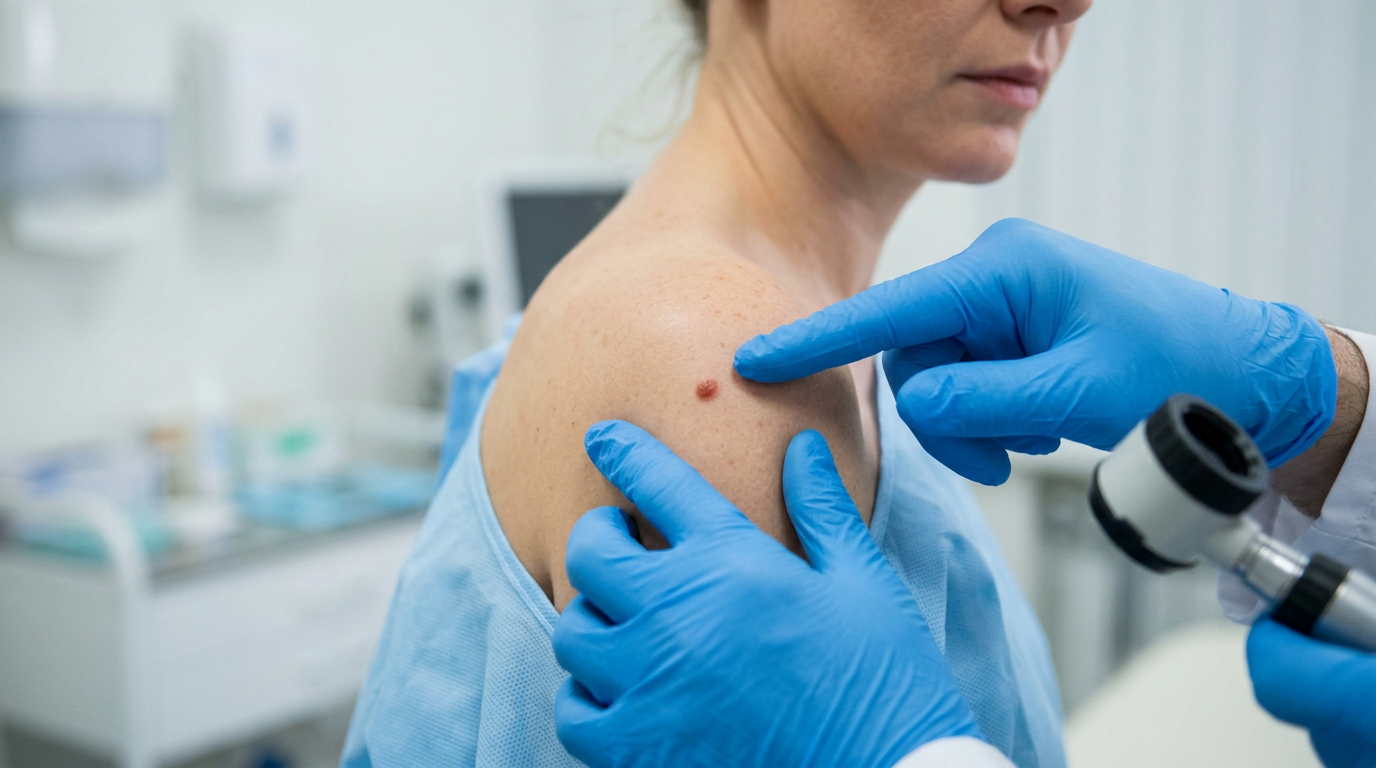
At The Adare Clinic, we utilize advanced Dermoscopy. This allows us to look beneath the surface pigment and see the microscopic structures of the lesion. What might look like a "weird mole" to you can be definitively identified by our specialists, often saving you from unnecessary worry—or providing life-saving early intervention.
Prevention: Beyond the Check
Monitoring is half the battle; prevention is the other. To reduce the likelihood of developing melanoma, we recommend the following:
-
Year-Round SPF: In Ireland, UVA rays (the "ageing" and DNA-damaging rays) are present even on grey, rainy days. Apply a broad-spectrum SPF 30 or 50 daily to exposed areas.
-
Avoid the "Peak": Stay out of the direct sun between 11:00 AM and 3:00 PM.
-
Ditch the Sunbeds: There is no such thing as a "safe tan" from a sunbed. The concentrated UV radiation significantly increases your risk of melanoma.
-
Cover Up: Wear UV-protective clothing, wide-brimmed hats, and sunglasses to protect the delicate skin around your eyes.
Conclusion: Knowledge is Protection
Melanoma is a formidable opponent, but it is not an invisible one. By mastering the ABCDEs and committing to a monthly home skin exam, you are taking an active role in your own longevity.
Remember, your home check is a partnership with your professional care. It does not replace the need for an annual full-body skin mapping session at The Adare Clinic, where we use high-resolution technology to track changes that the human eye simply cannot remember.
Take ten minutes this month to get to know your skin. Look beyond the surface. If you see something that doesn't feel right, listen to that instinct.
Your skin is telling a story. Make sure you’re listening.
Secure Your Skin Health Today
Have you noticed a spot that fits the ABCDE criteria? Or has it been more than a year since your last professional check? Contact The Adare Clinic today to schedule a comprehensive skin exam. Early detection is the most powerful tool we have. Let our experts provide you with the peace of mind you deserve.

Leave a comment
This site is protected by hCaptcha and the hCaptcha Privacy Policy and Terms of Service apply.