
Quick Fixes for Breakouts: Do They Really Work?
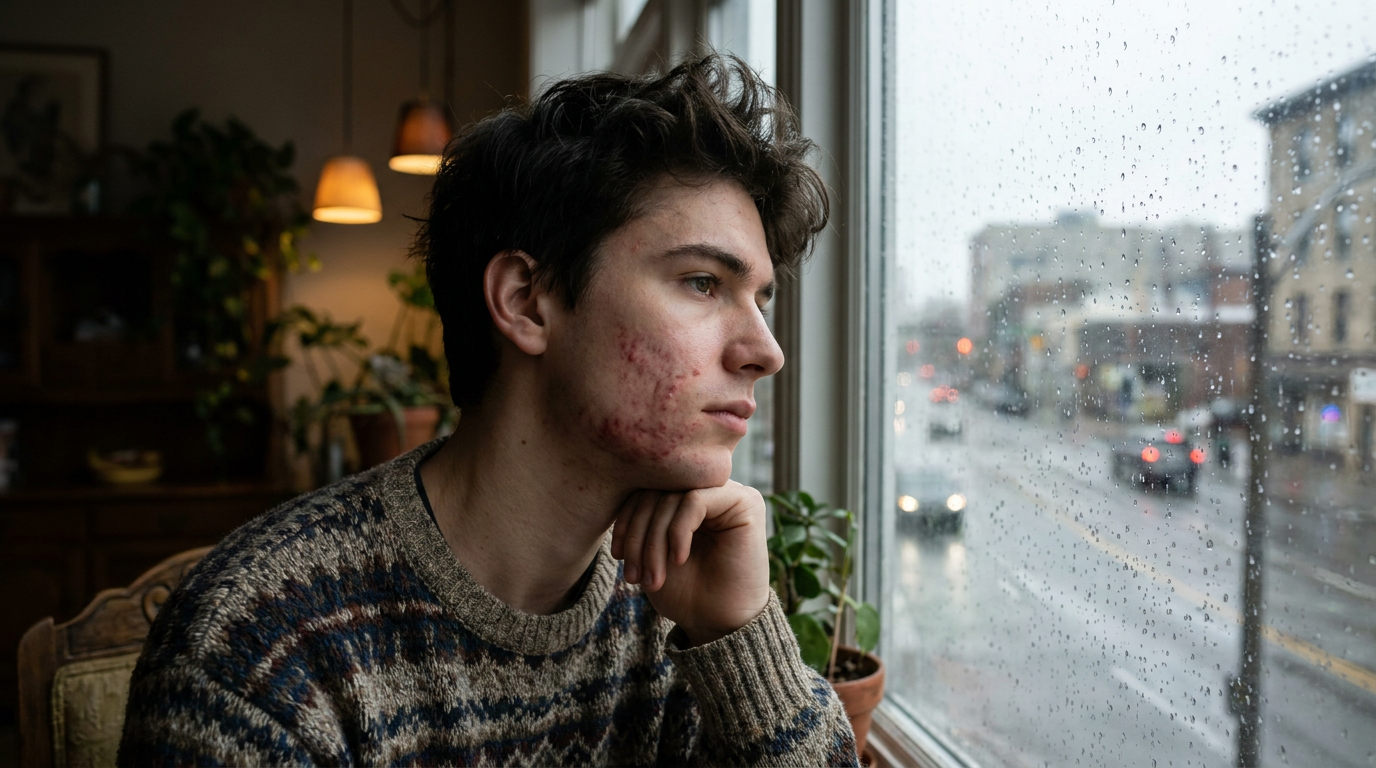
You've got a big day tomorrow — a presentation, a date, a wedding — and you wake up to a fresh breakout staring back at you in the mirror. Naturally, you reach for whatever's nearby: toothpaste, ice cubes, a spot treatment you half-remember seeing on social media. We've all been there. The question is whether any of it actually does anything useful, or whether you're just putting your skin through unnecessary stress in the name of hope.
Let's break down the most popular quick fixes, what the science says, and which ones are actually worth your time.
Why Breakouts Happen in the First Place
Before diving into remedies, it helps to understand what you're dealing with. A pimple forms when a pore gets clogged with dead skin cells, excess oil (sebum), and sometimes bacteria — primarily Cutibacterium acnes, formerly known as Propionibacterium acnes. The body mounts an inflammatory response, and that's the redness, swelling, and tenderness you feel.

Different types of breakouts behave differently. A whitehead is a closed comedone — clogged but not yet infected. A pustule has become inflamed. A cystic pimple sits deep beneath the skin, involves the immune system more aggressively, and takes significantly longer to resolve. This matters because no single "quick fix" works equally well across all of these. The treatment that flattens a whitehead overnight may do absolutely nothing to a cyst — and could even irritate it further.
The Classic Fixes, Evaluated
1. Benzoyl Peroxide Spot Treatments
Verdict: Genuinely effective — with caveats.
Benzoyl peroxide is one of the few over-the-counter ingredients with solid clinical backing. It works by releasing oxygen into the pore, creating an environment where C. acnes bacteria can't thrive. It also has mild keratolytic properties, meaning it helps break down the dead skin cells that clog pores.
A 2.5% concentration is roughly as effective as 5% or 10% but significantly less irritating. Applied directly to a fresh pustule or whitehead, it can visibly reduce inflammation within 24 to 48 hours. The catch: it bleaches fabric on contact (goodbye, nice pillowcase) and can over-dry the surrounding skin if applied too aggressively. Use a small, targeted amount and don't rub it in — dab it.
It's worth noting that benzoyl peroxide works best on surface-level, bacterial-driven breakouts. On cystic or hormonal acne, you'll see minimal results because the issue isn't primarily bacterial — it's happening too deep for topical treatment to reach meaningfully.
2. Salicylic Acid
Verdict: Better for prevention than overnight rescue.
Salicylic acid is a beta-hydroxy acid (BHA) that's oil-soluble, meaning it can penetrate into the pore lining — a key advantage over water-soluble exfoliants. It breaks down the "glue" holding dead skin cells together and helps keep pores clear.
As a spot treatment, it's useful for whiteheads and non-inflammatory blackheads. It won't deliver dramatic overnight results, but it can speed up the resolution of a breakout and reduce the likelihood of new ones forming nearby. Think of it as more of a reliable worker than a miracle worker.
Over-application is a common mistake. More acid does not mean faster results — it means irritation, a compromised skin barrier, and potentially more breakouts as your skin overcompensates with oil production.
3. Ice
Verdict: Genuinely useful, underrated.
Ice gets dismissed as a folk remedy, but there's sound logic behind it. Cold temperatures constrict blood vessels and reduce swelling and redness. Pressing ice wrapped in a clean cloth against a pimple for a minute or two can visibly reduce its appearance — not because it's treating the underlying cause, but because it's managing the inflammatory response.
This is especially useful right before an event. A large, red cystic pimple can look significantly less angry after a few applications of ice over an hour. It won't heal the pimple — it's cosmetic management — but it's completely harmless and often more effective than people expect.
Never apply ice directly to bare skin; always wrap it in a cloth to avoid ice burn.
4. Toothpaste
Verdict: Skip it.
This one has been circulating since long before the internet gave it extra reach. The idea is that toothpaste dries out pimples. Historically, some formulations contained triclosan (an antibacterial agent) and menthol, which could produce a drying effect. However, triclosan has been phased out of most products, and the remaining ingredients — fluoride, abrasives, whitening agents — are formulated for enamel, not skin.
Applying toothpaste to a pimple risks chemical irritation, contact dermatitis, and post-inflammatory hyperpigmentation — meaning a dark spot that lingers for weeks after the pimple itself has cleared. It's one of the most persistently unhelpful remedies that continues to get passed around, and dermatologists are nearly unanimous in recommending against it.
5. Hydrocolloid Patches
Verdict: Highly effective for surface-level breakouts.
Pimple patches — the small, clear hydrocolloid stickers that you apply directly over a breakout — have earned genuine clinical credibility in recent years. Hydrocolloid is a material originally used in wound care that absorbs excess fluid, creates a moist healing environment, and acts as a physical barrier against touching or picking.
They work best on open or oozing whiteheads and pustules. Within six to eight hours (many people wear them overnight), a good patch will visibly draw out fluid, flatten the pimple, and reduce redness. The white, opaque appearance of the used patch in the morning is genuinely satisfying evidence that something happened.
They do not work on closed, deep comedones or cystic acne — there's nothing to absorb and no pathway in. If you stick one on a deep cyst, you'll wake up to a clear patch, which tells you the pore wasn't accessible. For those cases, you need a different approach entirely.
6. Tea Tree Oil
Verdict: Works, but slowly — and needs dilution.
Tea tree oil has well-documented antimicrobial properties, and studies have shown it can reduce the number and severity of acne lesions over time. It's a legitimate active ingredient, not just a natural-market gimmick.
The problem is timing. Tea tree oil is a slow burn — it works over weeks of consistent use, not overnight. As a last-minute spot treatment, it will do very little. Applied at full concentration (which many people do), it can cause significant skin irritation, particularly on sensitive skin.
If you want to use tea tree oil, dilute it to around 5% in a carrier oil (like jojoba), and think of it as a preventive measure built into a routine rather than an emergency fix.
7. Cortisone Injections
Verdict: The most effective true "quick fix" — but requires a dermatologist.
If there's one method that actually deserves the phrase "works overnight," it's an intralesional cortisone injection administered by a dermatologist. A tiny amount of diluted corticosteroid is injected directly into a cystic or nodular lesion, rapidly reducing inflammation. Most patients see dramatic improvement within 24 hours.
This isn't something you can do at home, and it's not for minor surface breakouts — it's reserved for large, painful cysts that need medical intervention. The cost is relatively low per injection in most countries, and many dermatology clinics in the Philippines offer same-day or next-day appointments for exactly this reason. If you have a genuinely severe breakout before an important event, this is the route worth pursuing.
What You Should Never Do
Picking, squeezing, or popping a pimple — especially a deep one — is almost always counterproductive. Forcing contents deeper into surrounding tissue amplifies inflammation and dramatically increases the risk of scarring and post-inflammatory hyperpigmentation. The exception is a fully formed whitehead with a visible head, which some dermatologists say can be gently extracted with proper technique. Even then, the margin for error is narrow, and the hands-off approach heals faster more often than not.
Layering multiple active ingredients simultaneously out of desperation — salicylic acid, benzoyl peroxide, retinol, and a physical scrub all at once — does not speed up healing. It damages the skin barrier, making your skin more reactive, more oily, and more prone to future breakouts. Restraint works better than aggression here.
The Honest Truth About "Quick"
Most legitimate skin treatments operate on timelines your skin dictates, not your social calendar. The honest answer is that true overnight resolution of a significant breakout is rare without professional intervention. What the best quick fixes do is reduce redness and inflammation, support faster healing, and minimize the chance you make things worse.
The things that genuinely help — benzoyl peroxide, hydrocolloid patches, ice — work by addressing one specific aspect of the problem: bacteria, fluid, or swelling. They're not cures. They're targeted, intelligent interventions that respect what a pimple actually is.
If breakouts are a recurring problem rather than an occasional one, the most valuable step isn't a better spot treatment — it's a consistent skincare routine with appropriate actives, and ideally, a conversation with a dermatologist who can address the root cause rather than the symptoms.
The quick fix has its place. Just know what it can and can't do before you reach for it at midnight.

Leave a comment
This site is protected by hCaptcha and the hCaptcha Privacy Policy and Terms of Service apply.