
Melasma Beyond the Sun: Why Heat Is Secretly Worsening Your Melasma (And How to Cool Down)
When most people think about melasma, they think about the sun. And rightly so — UV exposure is one of the best-known triggers of this common pigmentation condition. But at The Adare Clinic in Limerick and Dublin, we see time and again that sun protection alone isn't enough to keep melasma under control. There's another trigger that's far less talked about, yet just as important: heat.
In this post, we'll walk through what melasma actually is, why it happens, and why temperature — not just UV light — plays such a significant role in flare-ups. We'll also share the skincare foundations we recommend to every melasma patient, and practical ways to keep your skin cool and your pigmentation stable.
What Exactly Is Melasma?
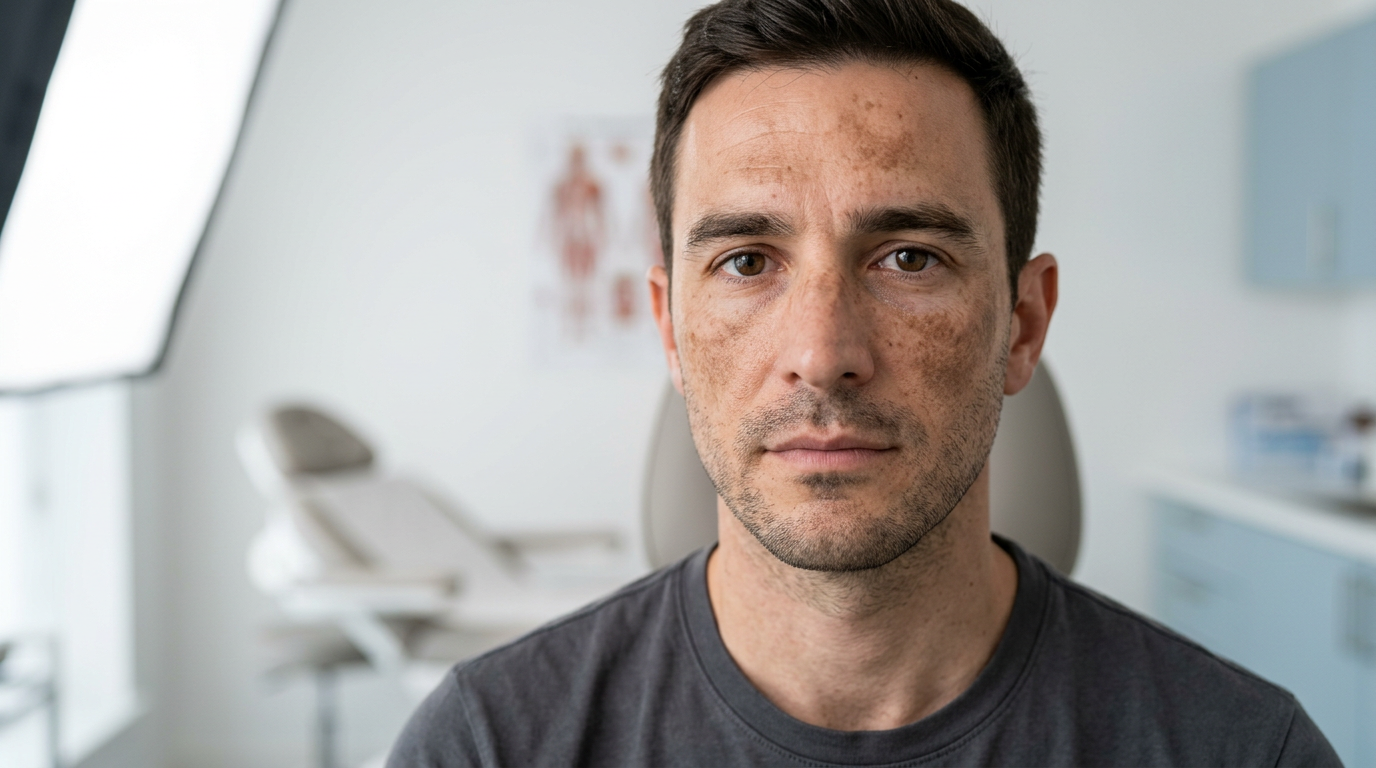
Melasma is a clinical diagnosis — meaning an experienced dermatologist can usually recognise it by its appearance and distribution on the skin, typically without needing a biopsy. It presents as symmetrical, brown-to-grey-brown patches, most commonly across the cheeks, forehead, upper lip, nose, and chin.

It's important to understand who melasma affects. It is significantly more common in people with darker skin types (Fitzpatrick III–VI), and it affects women far more often than men, largely because of hormonal influences. That said, melasma is not exclusive to women — we do see male patients with melasma in our clinics, and it should never be dismissed simply because a patient doesn't fit the "typical" profile.
There's also a pattern that's less well known: postmenopausal women can develop what's sometimes referred to as extra-facial melasma, where pigmentation appears in areas beyond the classic facial distribution, such as the neck, chest, or forearms. This is a useful reminder that melasma can evolve and change presentation across a woman's lifetime, and it shouldn't automatically be assumed to be "just sun damage" or another pigmentary condition.
Why Does Melasma Happen?
There are three key factors we discuss with every melasma patient:
Genetics. Melasma often runs in families, and patients with a family history are more likely to develop it themselves, sometimes at a younger age or with more persistent pigmentation.
Hormonal influence. Pregnancy, the combined oral contraceptive pill, and hormone replacement therapy are all well-established triggers or aggravating factors. This is why melasma is sometimes called the "mask of pregnancy," though it extends well beyond pregnancy alone.
Aging. This is a point we can't stress enough to our patients: melasma is a disorder of aging skin. It isn't a condition that appears once and then resolves on its own — it reflects changes in how pigment-producing cells (melanocytes) behave over time, and it tends to become more entrenched the longer it's left unmanaged. This is exactly why we encourage patients to start a proper, protective skincare routine early, rather than waiting until pigmentation has already become well established and harder to treat.
The Skincare Foundation Every Melasma Patient Needs
Because melasma is a long-term, aging-related condition, consistency matters more than any single treatment. At The Adare Clinic, we recommend the following as a daily foundation for every melasma patient, regardless of what other treatments they may also be having.
A broad-spectrum SPF50+ sunscreen, every single day. This isn't optional or seasonal — it's the single most important step in managing melasma. Ideally, we recommend a sunscreen that also filters High Energy Visible (HEV) light, not just UVA and UVB. Visible light — including HEV, or "blue light" — has been shown to stimulate pigmentation in melasma-prone skin, so filtering it out matters as much as blocking UV rays.
This is especially critical here in Ireland and the UK between March and September, when the UV index regularly climbs above 3. Many patients assume that because our climate is often cloudy or cool, sun protection matters less — but UV index, not temperature or sunshine, is what determines UV risk, and it's frequently above the "protection needed" threshold throughout the spring and summer months, even on overcast days.
A vitamin C serum. As a potent antioxidant, vitamin C helps neutralise the oxidative stress that contributes to pigment production, and it works well alongside daily sun protection.
Glycolic and mandelic acid products. These gentle exfoliating acids help turn over pigmented surface cells and improve the penetration and effectiveness of other active ingredients in the routine.
Retinoids, for patients who are not pregnant or breastfeeding. Retinoids support cell turnover and can help fade existing pigmentation over time, but they're not suitable during pregnancy or breastfeeding, so we always check this with patients before recommending them.
The Trigger That Often Gets Overlooked: Heat
Sun protection tends to be front of mind for melasma patients, but heat is a trigger that's just as capable of causing a flare — and it's one that's much easier to miss.
Melasma is fundamentally about melanocyte instability. These pigment-producing cells in melasma-affected skin are more reactive and more easily stimulated than in unaffected skin, and heat is one of the stimuli that can set them off, independent of UV exposure. This is why a patient can do everything "right" with their sunscreen and still notice their pigmentation worsening after activities that raise the skin's temperature.
In our clinics, this has real, practical implications for how we treat melasma patients:
We are cautious with heat-generating treatments. Procedures such as Intense Pulsed Light (IPL) and laser therapy work by generating controlled heat in the skin. In patients without melasma, this is usually well tolerated, but in melasma-prone skin, that same heat can destabilise melanocytes and trigger a rebound in pigmentation — sometimes making the melasma worse rather than better. This is why any energy-based device treatment in a melasma patient needs to be approached carefully, with the right settings, cooling protocols, and patient selection, and always under the guidance of a dermatologist experienced in treating pigmentary conditions.

We advise caution with saunas and steam rooms. These environments raise both skin and core body temperature significantly, and for melasma-prone patients, this can be enough to trigger or worsen pigmentation, even with no UV exposure involved at all.
Beyond these two examples, the same principle applies to everyday heat exposure. Hot showers or baths, standing over a hot stove or oven while cooking, using a hairdryer close to the face, hot yoga, and even prolonged time in a hot car can all raise skin temperature enough to act as a trigger in susceptible patients. None of these need to be avoided entirely, but melasma patients benefit from being aware of them and moderating exposure where they can.
How to Cool Down: Practical Steps
The good news is that managing heat-related triggers doesn't require an overhauled lifestyle — just a bit of awareness and a few simple habits:
Keep showers and baths lukewarm rather than very hot, particularly if you notice your face flushing easily.
If you enjoy saunas, steam rooms, or hot yoga, consider reducing frequency or duration during periods when your melasma feels more active, and always follow with a cool rinse and a soothing, fragrance-free moisturiser.
When cooking, step back from direct heat sources where possible, and consider a light, breathable barrier such as a mineral sunscreen, which can also offer some protection against heat-associated skin reactivity.
Keep a cooling facial mist or a chilled jade roller on hand for warm days or after exercise, and use it to bring the skin's temperature down quickly.
If you're having any energy-based skin treatment — whether for melasma or an unrelated concern — always tell your practitioner about your melasma history beforehand, so the treatment can be adjusted or an alternative approach considered.
The Bottom Line
Melasma is a genuinely complex, chronic condition — shaped by genetics, hormones, and the natural aging process, and triggered by more than sunlight alone. Heat, whether from the sun, a sauna, a laser device, or even a hot shower, can be enough to unsettle melasma-prone skin and undo weeks of careful management.
The most effective approach is a consistent one: daily SPF50+ with HEV protection, antioxidant and exfoliating actives, retinoids where appropriate, and genuine awareness of heat as a trigger alongside UV light.
If you're struggling with melasma, or you're not sure whether your current routine is doing enough to protect your skin, our dermatology team at The Adare Clinic in Limerick and Dublin would be happy to assess your skin and put together a personalised management plan. Book a consultation with us today to take the next step toward calmer, more even-toned skin.



Leave a comment
This site is protected by hCaptcha and the hCaptcha Privacy Policy and Terms of Service apply.