
Breakouts Along Your Jawline? The Real Science Behind Adult Hormonal Acne
You've outgrown your teenage years, your skincare routine is more sophisticated than it's ever been, and yet, without fail, deep, tender breakouts keep appearing along your jawline and chin. If this sounds familiar, you're far from alone. At The Adare Clinic in Dublin and Limerick, adult hormonal acne is one of the most common reasons patients come to see us, and the jawline pattern in particular is one of the clearest signals we look for.
This isn't the same acne you may have had as a teenager. It behaves differently, it's driven by different underlying factors, and it needs a different treatment approach. In this post, we'll explain the actual science behind hormonal acne, why the jawline is such a characteristic site, and what evidence-based treatment really looks like.
What Makes Adult Hormonal Acne Different?
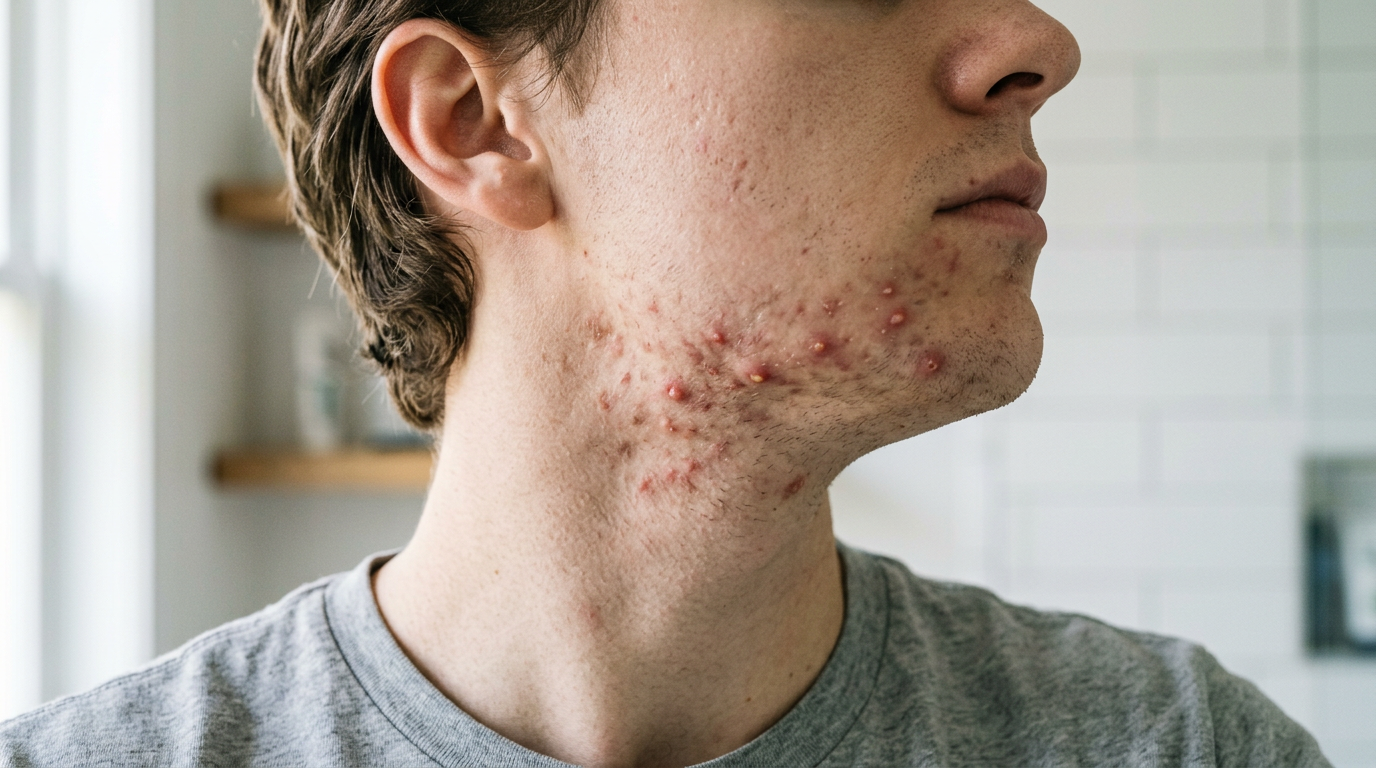
Hormonal acne typically appears along the lower third of the face: the jawline, chin, and sometimes the lower cheeks and neck. Unlike the more widespread, often superficial breakouts seen in teenage acne, hormonal acne tends to present as deeper, tender, cystic or nodular lesions that sit under the skin rather than coming to a head quickly. It's also frequently cyclical, flaring predictably in the week or so before a menstrual period, and it disproportionately affects adult women, though it's not exclusive to women.
Patients often describe the same pattern: skin that was calm through their twenties suddenly starts breaking out in their late twenties, thirties, or even forties, concentrated almost entirely along the jaw. That specificity isn't a coincidence, and it points directly to what's driving it.
The Real Science: Androgens and Your Skin
At the centre of hormonal acne are androgens, a group of hormones that includes testosterone. Every hair follicle on your face has an attached sebaceous (oil-producing) gland, and these glands are studded with androgen receptors. When androgens bind to these receptors, they stimulate the gland to produce more sebum, and they also promote a process called follicular hyperkeratinisation, where dead skin cells shed abnormally and clump together inside the follicle.
This combination, excess oil plus a partially blocked follicle, creates the ideal low-oxygen environment for Cutibacterium acnes (formerly known as Propionibacterium acnes), a bacterium that naturally lives on everyone's skin but proliferates rapidly under these conditions. As it multiplies, it triggers an inflammatory response from the immune system, and that inflammation is what produces the deep, painful, cystic lesions characteristic of hormonal acne, rather than the more superficial whiteheads and blackheads typical of adolescent acne.
Critically, this doesn't require unusually high hormone levels in the blood. Many women with hormonal acne have entirely normal circulating androgen levels; what differs is how sensitive their sebaceous glands and follicles are to those hormones. The enzyme 5-alpha-reductase, which converts testosterone into the more potent dihydrotestosterone (DHT) locally within the skin, appears to be more active in acne-prone skin, meaning the same hormone level can produce a much stronger effect.
Why the Jawline Specifically?
This is a question we're asked constantly, and the honest answer is that dermatologists are still refining the full explanation. What we do know is that sebaceous gland density and androgen receptor concentration vary across the face, and the jawline, chin, and mandibular area appear to have a higher concentration of androgen-sensitive follicles than other facial zones. This is also the same region where facial hair growth is typically most androgen-responsive, which reinforces the idea that this area of skin is simply more reactive to circulating hormones than, say, the forehead or cheeks.
The result is a very recognisable clinical pattern, and it's one of the first things we look for when a patient describes an acne history that shifted from generalised teenage breakouts to a tighter, jaw-focused pattern in adulthood.
What Triggers or Worsens Hormonal Acne?
Several factors commonly interact with this underlying androgen sensitivity:
The menstrual cycle. Progesterone rises and then drops sharply in the days before a period, and this shift appears to unmask the effects of androgens on the skin, which is why so many women notice a predictable premenstrual flare.
Polycystic ovary syndrome (PCOS). PCOS is one of the most common underlying causes of persistent hormonal acne, and it's frequently underdiagnosed. Alongside acne, signs can include irregular or absent periods, excess facial or body hair, scalp hair thinning, and weight changes. If these symptoms accompany jawline acne, we typically recommend blood tests, including testosterone, DHEAS, and an LH:FSH ratio, often in coordination with your GP or an endocrinologist.
Coming off hormonal contraception. Some contraceptive pills contain anti-androgenic progestins that actively suppress acne. Stopping the pill can unmask an underlying hormonal sensitivity that had been controlled for years.
Stress and cortisol. Chronic stress raises cortisol, which can indirectly increase androgen activity and sebum production, compounding an existing tendency toward breakouts.
Diet and insulin resistance. High-glycaemic diets and, in some individuals, dairy consumption have been linked to increased insulin and insulin-like growth factor 1 (IGF-1), both of which can amplify androgen signalling in the skin.
Evidence-Based Treatment: What Actually Works
Because hormonal acne has a different mechanism to standard adolescent acne, it generally responds better to treatments that address hormonal signalling directly, alongside good topical care.

Topical treatments remain a foundation: retinoids to normalise follicular shedding, azelaic acid for its anti-inflammatory and mildly anti-androgenic effects, and benzoyl peroxide to reduce C. acnes load. These are often used together but need to be introduced gradually to avoid irritation.
Combined oral contraceptives, particularly those containing anti-androgenic progestins, are one of the most effective options for hormonally driven acne in women, working by reducing circulating free androgens.
Spironolactone is an anti-androgen medication that blocks androgen receptors in the skin, directly reducing sebum production. It's one of the most reliably effective treatments we prescribe for jawline-pattern acne in adult women and is generally well tolerated, though it requires appropriate monitoring.
Isotretinoin may be appropriate for severe, scarring, or treatment-resistant cystic acne and works on multiple pathways at once, though it requires careful medical supervision.
Professional in-clinic treatments, such as certain chemical peels, can help manage texture and post-inflammatory marks, but they work best as an adjunct to addressing the underlying hormonal driver, not as a replacement for it.
Lifestyle Support Alongside Treatment
While lifestyle changes alone rarely resolve significant hormonal acne, they meaningfully support other treatments: favouring a lower-glycaemic diet, moderating dairy intake if you notice a personal correlation, prioritising sleep, and managing stress where possible. It's also worth resisting the urge to pick or squeeze jawline lesions; because these are deeper, inflammatory breakouts, picking significantly increases the risk of scarring and post-inflammatory pigmentation.
Getting the Right Diagnosis
The most important step with jawline-pattern breakouts is accurate diagnosis. Hormonal acne can look similar to other conditions, including perioral dermatitis and folliculitis, and effective treatment depends on identifying the real driver rather than applying a generic acne routine. If your acne is concentrated along the jawline, flares with your cycle, or is accompanied by other signs of hormonal imbalance, it's worth having it properly assessed rather than continuing to guess.
At The Adare Clinic in Dublin and Limerick, our dermatology team can assess your skin, take a full hormonal and medical history, and where appropriate, arrange bloodwork to identify what's really driving your breakouts. From there, we build a treatment plan suited to your skin and your hormonal profile, not a one-size-fits-all routine. Book a consultation with us to get to the root of your jawline acne, rather than just its symptoms.

Leave a comment
This site is protected by hCaptcha and the hCaptcha Privacy Policy and Terms of Service apply.