
Is It Just Blushing or Rosacea? How to Tell the Difference
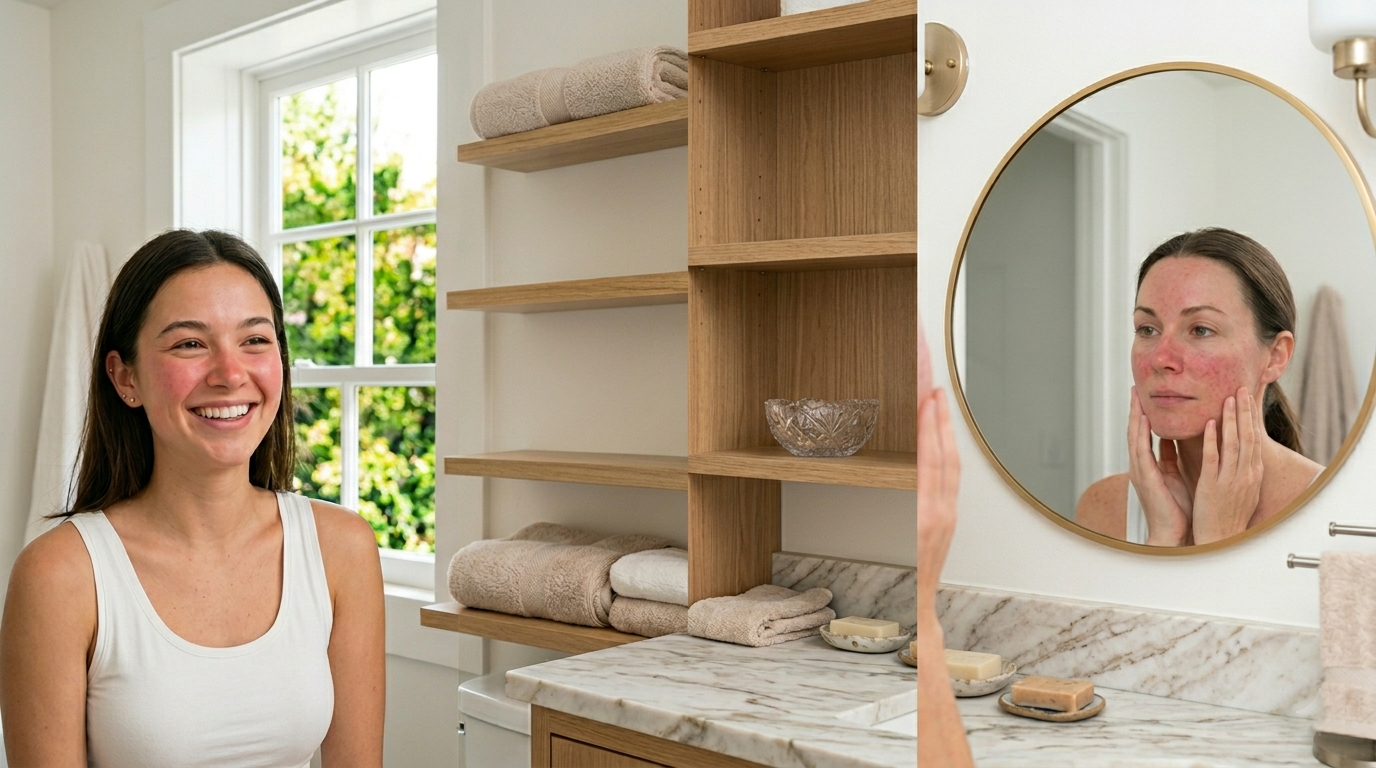
You've just finished a brisk walk, sipped a hot cup of coffee, or laughed a little too hard at a friend's joke — and there it is: that familiar warmth spreading across your cheeks. For most people, a flushed face is a fleeting, harmless response. The redness fades, the warmth disappears, and life goes on.
But for the estimated 415 million adults worldwide living with rosacea, that flush doesn't fade. It lingers, worsens, and over time, begins to reshape both the skin and the person's relationship with it. Rosacea is one of the most common — yet most misunderstood — skin conditions in the adult population. It masquerades as simple blushing, sun sensitivity, or even acne, and because of this, millions go undiagnosed for years.
So how do you tell the difference between a face that's simply flushed and one that's signaling a chronic medical condition? Let's break it down.
What Exactly Is Rosacea?
Rosacea is a chronic inflammatory skin condition that primarily affects the central face — the cheeks, nose, chin, and forehead. It tends to develop in adults over the age of 30, and while it can affect anyone, it's most commonly diagnosed in people with fair skin. That said, rosacea is significantly underdiagnosed in people with darker skin tones, partly because the hallmark redness is harder to detect visually.
Unlike a temporary flush, rosacea involves a complex interplay of vascular dysfunction, immune system irregularities, and skin barrier disruption. It's not caused by poor hygiene. It's not a sign of excessive drinking. And it's definitely not "just blushing."
The condition tends to be progressive, meaning that without management, it can worsen over time — evolving from occasional flushing episodes to persistent redness, visible blood vessels, inflammatory bumps, and even changes in skin texture.
Normal Flushing vs. Rosacea: The Key Differences
Everyone flushes from time to time. Exercise, heat, embarrassment, spicy food, and alcohol can all trigger a temporary increase in blood flow to the face. Here's how to distinguish everyday flushing from something more:
Duration
A normal flush typically subsides within minutes to an hour. Rosacea-related flushing can last for extended periods, sometimes hours, and over time, the redness may become semi-permanent or permanent.
Triggers and Frequency
Occasional blushing tied to an obvious cause — a hot room, a glass of wine — is normal. But if you notice that your face flushes frequently, intensely, and in response to a growing list of triggers, that pattern is worth investigating. People with rosacea often report that triggers multiply over time, and the flushing episodes become harder to control.
Accompanying Symptoms
A simple flush is just redness. Rosacea, on the other hand, often brings additional symptoms: a stinging or burning sensation on the skin, visible spider-like blood vessels (telangiectasia), small red bumps that resemble acne, dry or rough patches, and in some cases, eye irritation. If your "blushing" comes with any of these, it's more than skin-deep.
Progression
Normal flushing doesn't get worse over the years. Rosacea does. One of the most telling signs is a gradual worsening — what started as occasional redness becomes a daily reality, sometimes accompanied by swelling, skin thickening, or textural changes, particularly around the nose.
The Four Subtypes of Rosacea
Dermatologists generally classify rosacea into four subtypes, though many patients experience features of more than one:
1. Erythematotelangiectatic Rosacea (ETR) — Characterized by persistent facial redness, flushing, and visible blood vessels. This is the subtype most easily confused with simple blushing.
2. Papulopustular Rosacea — Often mistaken for adult acne, this subtype involves redness accompanied by swollen, pus-filled bumps. Unlike acne, it rarely produces blackheads and tends to appear in the central face.
3. Phymatous Rosacea — The least common but most visually distinctive subtype, marked by thickening of the skin, particularly on the nose (a condition called rhinophyma). This subtype is more prevalent in men and develops over years of unmanaged inflammation.
4. Ocular Rosacea — Affects the eyes, causing redness, irritation, swollen eyelids, and a gritty sensation. It can occur with or without the skin symptoms and, if untreated, may lead to corneal damage.
Understanding where your symptoms fall can help guide both diagnosis and treatment.
What Causes Rosacea?

The honest answer is that the exact cause of rosacea is still not fully understood. However, research has identified several contributing factors:
- Genetics — Rosacea tends to run in families, suggesting a hereditary component. If a close relative has it, your risk is higher.
- Immune system dysregulation — People with rosacea show elevated levels of certain antimicrobial peptides (like cathelicidin) and an exaggerated innate immune response, which drives inflammation.
- Vascular instability — The blood vessels in the facial skin of rosacea patients are more reactive, dilating more easily and taking longer to constrict.
- Demodex mites — These microscopic mites live on everyone's skin, but people with rosacea tend to have significantly higher concentrations of them, particularly Demodex folliculorum. Whether the mites cause rosacea or thrive because of it is still debated.
- Environmental and lifestyle triggers — Sun exposure, heat, stress, alcohol, spicy food, and certain skincare products can all provoke flare-ups.
It's important to understand that rosacea is not caused by any single factor — it's the result of multiple systems interacting in ways that create a cycle of inflammation and vascular reactivity.
Why Does It Matter? The Real Impact of Rosacea
Rosacea is sometimes dismissed as a cosmetic concern, but that characterization misses the full picture. Studies consistently show that rosacea has a significant psychological and emotional impact on those who live with it. Feelings of embarrassment, social anxiety, and reduced self-esteem are commonly reported. Some people avoid social situations, change careers, or withdraw from activities they once enjoyed — all because of a condition that's visible on the most expressive part of the body: the face.
Beyond the emotional toll, untreated rosacea can lead to real physical complications. Ocular rosacea, if neglected, can impair vision. Phymatous changes can permanently alter facial structure. And the chronic inflammation itself can compromise the skin barrier, making the skin more vulnerable to irritation, infection, and sensitivity.
This is precisely why recognizing the difference between a flushed face and rosacea matters. The earlier the condition is identified, the more effectively it can be managed.
Managing Rosacea: What Works
There is currently no cure for rosacea, but there are effective strategies for managing symptoms and preventing progression:
- Topical treatments — Prescription creams and gels containing ingredients like metronidazole, azelaic acid, or ivermectin can reduce inflammation and control bumps. Brimonidine gel can temporarily reduce facial redness by constricting blood vessels.
- Oral medications — In moderate to severe cases, low-dose antibiotics (like doxycycline) are used for their anti-inflammatory properties rather than their antibacterial ones. For severe or resistant cases, isotretinoin may be considered.
- Laser and light therapies — Vascular lasers and intense pulsed light (IPL) can target and reduce visible blood vessels and persistent redness. These are among the most effective treatments for the vascular components of rosacea.
- Skincare adjustments — Gentle, fragrance-free cleansers and moisturizers help protect the compromised skin barrier. Broad-spectrum sunscreen with SPF 30 or higher is non-negotiable — UV exposure is one of the most consistent rosacea triggers.
- Trigger identification — Keeping a diary of flare-ups and their potential triggers helps patients learn their personal patterns and avoid provocations.
A dermatologist can tailor a treatment plan based on your specific subtype and severity. What works for one person may not work for another, so personalized care is essential.
When to See a Doctor
If you notice any of the following, it's time to consult a dermatologist:
- Facial redness that doesn't go away on its own
- Frequent flushing that feels disproportionate to the trigger
- Bumps or pustules on the cheeks, nose, or chin that don't respond to over-the-counter acne treatments
- A burning, stinging, or tight sensation on the facial skin
- Eye irritation, dryness, or redness that persists
Early intervention is the single most effective strategy against rosacea's progression. The longer it goes undiagnosed, the harder it becomes to manage.
The Bottom Line
A flushed face after a workout or a moment of embarrassment is your body doing exactly what it's designed to do. But when that redness becomes a constant companion — when it burns, progresses, and begins to affect how you feel about yourself — it's no longer a blush. It's a medical condition that deserves attention, understanding, and proper care.
Rosacea doesn't define you, but ignoring it gives it room to grow. If your reflection is trying to tell you something, listen.

Leave a comment
This site is protected by hCaptcha and the hCaptcha Privacy Policy and Terms of Service apply.