
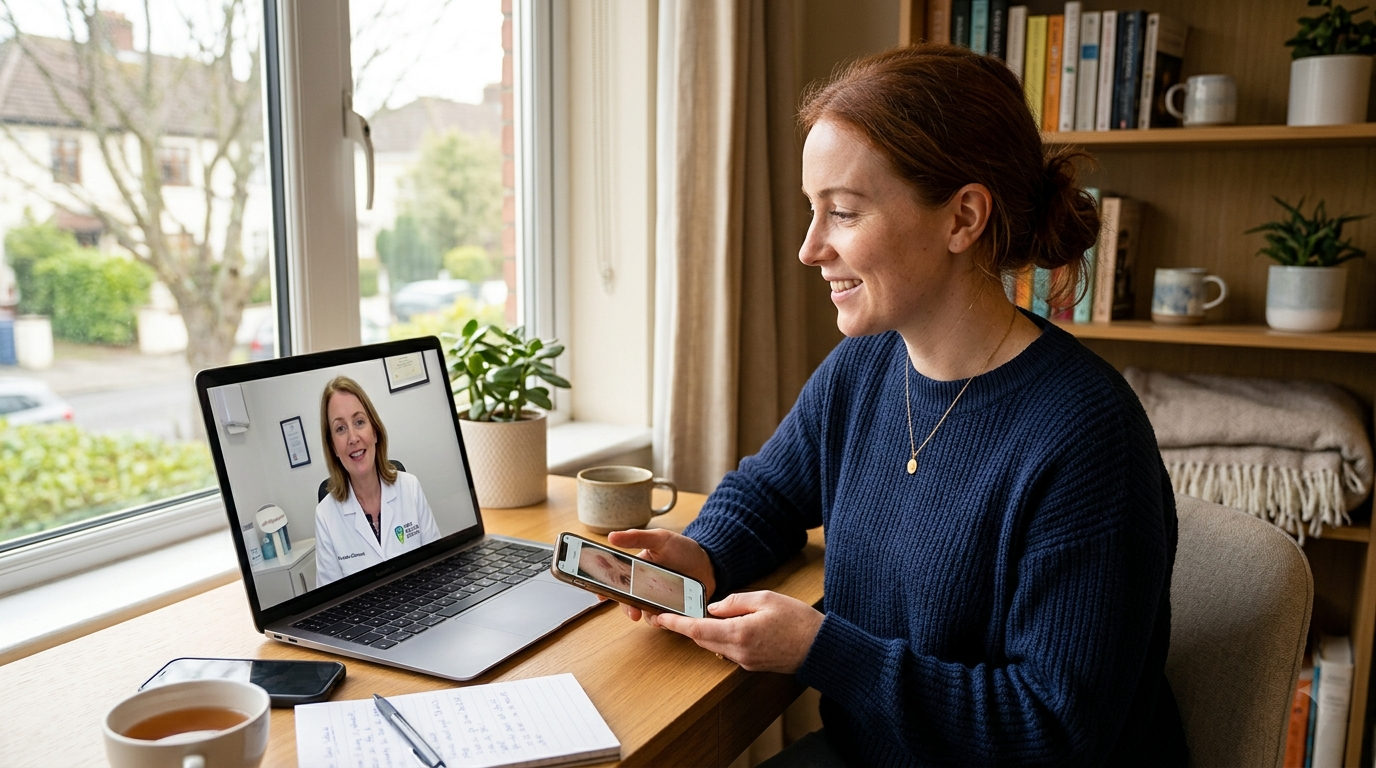
How Online Skin Consultations Work in Ireland
A Complete Guide to Getting Expert Dermatological Advice from the Comfort of Your Home
The way Irish people access skincare advice has changed dramatically. What once required weeks of waiting for a GP referral, followed by months on a hospital dermatology list, can now begin with a few taps on a smartphone. Online skin consultations have surged in popularity across Ireland, offering a faster, more accessible route to professional skin assessments. But how do they actually work? What can you expect from the process, and is it right for you?
This guide walks you through everything you need to know about virtual skin consultations in Ireland — from how to book one to what happens after you receive your diagnosis.
The Rise of Teledermatology in Ireland

Ireland's public dermatology services have long been under strain. Waiting lists for a consultant dermatologist appointment through the HSE can stretch anywhere from several months to well over a year, depending on the region. For many people dealing with acne, rosacea, eczema, psoriasis, or suspicious moles, that kind of delay isn't just inconvenient — it can be genuinely distressing.
Online skin consultations emerged as a practical solution. Accelerated by the pandemic-era shift to remote healthcare, several Irish clinics and platforms now offer teledermatology services that connect patients with qualified dermatologists, GPs with a special interest in dermatology, or prescribing pharmacists — all without leaving home.
These services aren't a replacement for emergency care or complex surgical dermatology, but for the vast majority of common skin concerns, they offer a clinically sound, efficient alternative.
Step 1: Choosing a Provider
The first step is selecting a reputable online skin consultation provider. In Ireland, several options exist, ranging from dedicated teledermatology platforms to individual dermatology clinics that have added virtual consultations to their services. Some general practice clinics also offer skin-specific video consultations.
When choosing a provider, look for:
- Qualified professionals — Ensure the service is led by registered medical practitioners. In Ireland, doctors should be registered with the Irish Medical Council. Pharmacists offering skin consultations should be registered with the Pharmaceutical Society of Ireland (PSI).
- Transparency about the process — A trustworthy provider will clearly explain what the consultation involves, what conditions they can and cannot assess remotely, and how prescriptions are handled.
- Data protection compliance — Any platform handling your health data must comply with GDPR. Look for clear privacy policies detailing how your images and personal information are stored and used.
- Reviews and reputation — Check Google reviews, social media, or word-of-mouth recommendations. A provider with a strong track record in Ireland is generally a safer bet.
Step 2: Submitting Your Details and Photos
Once you've chosen a provider, the process typically begins with an online form. You'll be asked to provide:
- Basic personal details — name, date of birth, contact information, and sometimes your GP's details.
- A medical history questionnaire — This covers your general health, current medications, allergies, past skin conditions, family history of skin disease, and lifestyle factors like sun exposure and smoking.
- A description of your concern — You'll describe the issue in your own words: when it started, whether it's changed, any symptoms like itching or pain, and what (if anything) you've already tried.
- Clear photographs — This is a critical part of the process. Most platforms ask for multiple high-quality images of the affected area. You'll typically be guided to take a close-up photo, a slightly wider shot for context, and sometimes an image in natural lighting. Some platforms provide in-app camera tools with guides to help you frame the shots correctly.
The quality of the photos matters enormously. Good lighting, sharp focus, and accurate colour reproduction all help the clinician make a more reliable assessment. Blurry, dark, or poorly framed images can lead to inconclusive results and a request for resubmission.
Step 3: The Clinical Review
After you submit your form and images, a clinician reviews your case. There are two main models for how this review happens:
Asynchronous (Store-and-Forward) Consultations
This is the most common format in Ireland. Your photos and medical history are reviewed by a dermatologist or qualified prescriber at a later time — usually within 24 to 72 hours, though some services offer faster turnaround for an additional fee. You won't be on a live call; instead, the clinician studies your submission carefully, arrives at an assessment, and sends you a written response.
This model is efficient, often more affordable, and works exceptionally well for straightforward presentations like acne, dermatitis, fungal infections, and rosacea.
Synchronous (Live Video) Consultations
Some providers offer real-time video consultations, similar to a face-to-face appointment but conducted over a secure video link. This is particularly useful for more complex cases, follow-up appointments, or situations where the clinician wants to ask you questions in real time and examine the skin more dynamically.
Video consultations typically last between 15 and 30 minutes and are booked into specific appointment slots, much like a traditional clinic visit.
Step 4: Receiving Your Assessment and Treatment Plan
After the review, you'll receive a detailed response that usually includes:
- A clinical assessment or diagnosis — The clinician will explain what they believe the condition is, based on your images and history.
- A treatment plan — This might include recommendations for over-the-counter products, a prescription for topical or oral medication, or specific skincare advice tailored to your condition.
- Lifestyle guidance — Advice on triggers, sun protection, diet, or product ingredients to avoid.
- A referral, if necessary — If the clinician identifies something that requires an in-person examination — such as a suspicious mole that needs a biopsy, or a condition that requires specialist intervention — they will recommend you see a dermatologist or your GP face to face. This is an important safety net in the virtual model.
Step 5: Prescriptions and Follow-Up
If your treatment plan includes prescription medication, the process varies by provider. In many cases, the prescription is sent electronically to a pharmacy of your choice in Ireland, or the provider's own dispensing pharmacy posts the medication directly to your address. Medications commonly prescribed through online consultations include topical retinoids, antibiotics, antifungal creams, and steroid preparations.
For conditions like acne, rosacea, or eczema, follow-up consultations are often recommended at intervals of six to twelve weeks to assess progress and adjust treatment. Many platforms make rebooking straightforward, and some offer subscription or care-plan models for ongoing management.
What Online Consultations Can and Can't Do
Well-suited for online assessment:
- Acne and breakouts
- Rosacea
- Eczema and dermatitis
- Psoriasis flare-ups
- Fungal skin infections
- General skincare advice and anti-ageing concerns
- Hair loss assessments
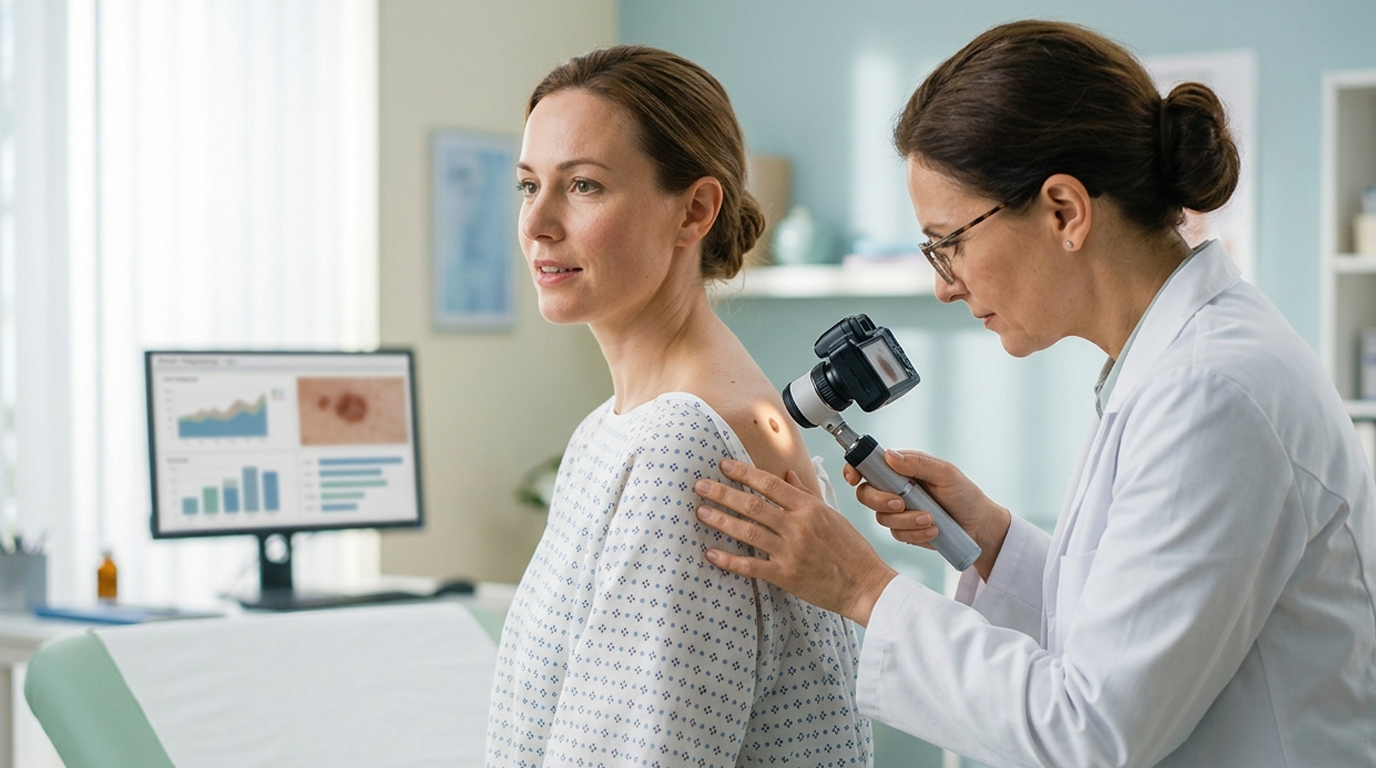
- Mole checks (initial screening)
Better seen in person:
- Lesions suspicious for skin cancer (an online assessment may be a useful first step, but excision or biopsy requires a clinic visit)
- Severe allergic reactions or skin emergencies
- Conditions requiring patch testing or blood work
- Complex cases where a physical examination is essential
A responsible online provider will always be transparent about these limitations and refer appropriately.
Cost and Accessibility
Online skin consultations in Ireland typically cost between €30 and €150, depending on the provider, the type of consultation (asynchronous vs. live video), and whether prescriptions are included. This is generally comparable to, or slightly less than, a private in-person dermatology consultation, and dramatically faster than the public route.
Some providers accept referrals from GPs, and a small number of health insurance plans in Ireland now offer partial coverage for telehealth consultations — though this varies significantly between insurers and plan levels. It's worth checking with your provider before booking.
The accessibility factor is significant. For people in rural Ireland — where the nearest dermatologist might be a two-hour drive away — online consultations remove a major barrier. They're also valuable for people with mobility challenges, busy parents, shift workers, or anyone who simply can't afford to take a half-day off for a clinic appointment.
Privacy and Safety
Any legitimate online skin consultation platform operating in Ireland is subject to strict regulations. Patient data must be handled in compliance with GDPR, and medical practitioners must adhere to the same professional standards and codes of conduct as they would in a face-to-face setting. The Irish Medical Council's guidelines on telemedicine apply, meaning clinicians must maintain proper records, obtain informed consent, and ensure continuity of care.
If you're ever unsure about a platform's legitimacy, check whether the consulting clinician is listed on the Irish Medical Council's register or the PSI register. Avoid services that offer prescriptions without any meaningful clinical assessment — this is a red flag, not a convenience.
Final Thoughts
Online skin consultations have matured into a reliable, regulated, and genuinely useful part of Ireland's healthcare landscape. They won't replace every in-person dermatology visit, nor should they. But for the millions of Irish people dealing with common skin conditions, they offer something the traditional system often struggles to provide: timely access to expert advice.
If you've been putting off getting a skin concern checked because of long waiting lists, cost, or logistics, an online consultation could be the practical first step you need. The process is simple, the turnaround is fast, and the care — when delivered by qualified professionals — is clinically robust.
Your skin doesn't wait. Your healthcare doesn't have to either.


Leave a comment
This site is protected by hCaptcha and the hCaptcha Privacy Policy and Terms of Service apply.