
Fractional CO2 Resurfacing: What It Rebuilds Under the Surface
Fractional CO2 laser resurfacing has a reputation as one of the most powerful tools in dermatology for improving skin texture, and at our Adare Dermatology Clinics in Dublin and Limerick, that reputation is well earned. But it's worth understanding what this treatment is actually doing, because the visible smoothing you see on the surface is really just the outward sign of a much deeper process happening in the layers of skin you can't see.
What Makes It “Fractional”
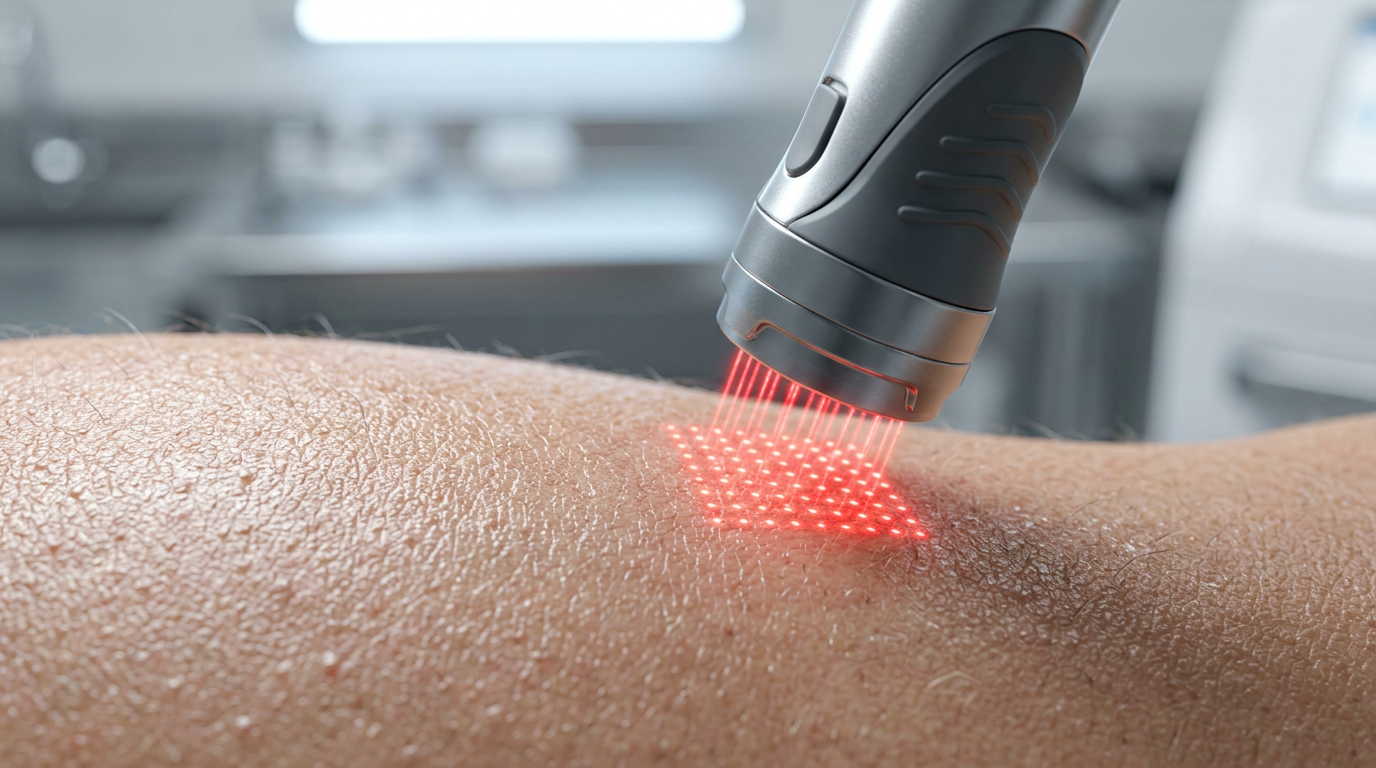
Older, fully ablative CO2 lasers treated the entire surface of the skin at once, which gave dramatic results but came with a long, difficult recovery and a meaningful risk of complications. Fractional CO2 technology changes this by delivering the laser energy in a grid of microscopic columns, treating only a fraction of the skin's surface in any one pass while leaving the tissue between those columns completely untouched. That untouched tissue is what allows healing to happen so much faster than with older fully ablative devices, while the columns that are treated still reach deep enough to make a genuine structural difference.
What's Actually Happening Under the Surface
Each microscopic column created by the laser does two things at once: it vaporises, or ablates, a precise column of tissue from the surface downward, and it creates a surrounding zone of controlled thermal heating in the deeper tissue beneath it. This combination is what triggers the real work of the treatment. The controlled thermal injury signals your body to begin an active wound-healing response, and that response is what stimulates fibroblasts, the cells responsible for producing new collagen and elastin, deep within the dermis.
This process doesn't happen overnight. New collagen production builds gradually over the following three to six months as the deeper tissue genuinely remodels itself, which is why results continue to improve well after the visible surface has healed. In effect, fractional CO2 isn't simply removing a damaged top layer of skin — it's using that controlled injury to rebuild the structural scaffolding underneath it, producing firmer, tighter, more evenly textured skin from the inside out.
What Fractional CO2 Actually Treats
Because it works on this deeper structural level, fractional CO2 is a genuinely deep resurfacing treatment, and at Adare Dermatology Clinics we reserve it specifically for severe acne scarring, severe photo-ageing, and genuinely saggy, loose skin — concerns that need real structural remodelling rather than surface-level improvement. It is also effective more broadly across:
-
Photodamage and sun-related ageing, including fine lines, roughness and mottled texture.
-
Deeper wrinkles, particularly around the mouth and eyes, where surface treatments alone often aren't enough.
-
Severe acne scarring, where true structural remodelling is needed rather than surface-level exfoliation.
-
Overall skin laxity and enlarged pores, both of which respond to the collagen-rebuilding effect.

This is also why, in our experience, CO2 resurfacing is generally reserved for more significant concerns rather than mild ones. For milder texture or scarring issues, gentler options such as medical microneedling, Secret RF or chemical peels are usually more appropriate, both because they carry less downtime and because CO2's intensity is genuinely better matched to more significant structural damage.
Who Needs to Be Cautious
Fractional CO2 is a powerful treatment, and that power comes with real considerations around patient selection. It carries a higher risk of post-inflammatory pigment changes in darker skin tones than gentler alternatives, so a thorough assessment of skin type, along with realistic expectations about that risk, is essential before proceeding in these patients. It also isn't suitable for anyone with active acne or active skin infections, both of which need to be brought under control first, and it requires strict sun avoidance and diligent aftercare in the weeks following treatment while the new skin is particularly vulnerable to pigment changes.
What to Expect: Downtime and Recovery
Unlike some of the gentler resurfacing options we offer, fractional CO2 does involve genuine downtime, and patients should plan for this honestly rather than being caught off guard. Expect visible redness, swelling and a period of peeling that typically lasts at least seven to ten days, during which the skin needs careful, specific aftercare to heal properly and to protect the results you're paying for. Most patients plan their treatment around time off work or social commitments, and strict sunscreen use afterwards is non-negotiable, both for safe healing and for protecting the new collagen being laid down underneath.
Because of this, and despite being genuinely one of our best treatments for real skin rejuvenation, fractional CO2 is not actually our most popular procedure. That title goes to Secret RF combined with TCA peels, simply because it carries little to no downtime, and most working patients don't have seven to ten days to disappear from daily life. CO2 remains the right choice specifically when the concern — severe acne scarring, significant photo-ageing, or genuinely saggy, loose skin — needs a depth of remodelling that gentler options can't reach.
Why the Machine and the Doctor Both Matter
Not all fractional CO2 machines are equal, and this matters more than most patients realise. We use the Candela Core system specifically because it delivers excellent, consistent results with a strong safety profile. The device itself is only half the equation, though — an experienced dermatology specialist who understands exactly how to set depth, density and energy for your specific skin and concern is just as important as the machine underneath their hands.
The only treatment that genuinely rivals CO2 laser for depth of resurfacing is a phenol peel, but it comes with its own serious considerations. Like CO2, it is ablative, but the downtime is even more extensive, and treating more than about half of the face carries a real risk of cardiac arrhythmia, meaning phenol peels must be performed by a doctor with the patient properly monitored throughout. It is not a treatment to be taken lightly or offered outside a genuinely medical setting.
CO2 Laser vs a Facelift: Different Jobs Entirely
Patients often ask whether a facelift might achieve something similar, but the two procedures do fundamentally different jobs. A facelift pulls and repositions skin that has become loose and sagging — it addresses position, not quality. It does not rejuvenate the skin itself: it doesn't rebuild collagen, improve texture, or reverse photo-damage at a cellular level. Fractional CO2 laser does exactly that, and genuinely can buy a patient a number of years of improved skin quality. In fact, many patients who go on to have a facelift will still need CO2 resurfacing afterwards if they actually want their skin, and not just its position, to look rejuvenated.
Why This Should Be Done in a Medical Clinic
Because fractional CO2 resurfacing is genuinely a medical-grade procedure, with real risks if the settings, patient selection or aftercare aren't managed correctly, we believe it should always be carried out under proper dermatological supervision rather than in a purely aesthetic setting. Getting the depth, density and energy settings right for your specific skin type and concern is what determines whether you get the deep, lasting remodelling this treatment is capable of, or unnecessary complications.
At our Adare Dermatology Clinics in Dublin and Limerick, every CO2 resurfacing treatment starts with a proper consultation to confirm it's genuinely the right tool for your skin and your concern, rather than defaulting to the most powerful option available. If you're dealing with significant photodamage, deep textural scarring, or skin laxity that gentler treatments haven't been able to touch, book a consultation with one of our dermatologists to find out whether fractional CO2 resurfacing is right for you.

1 comment
Will this treatment help wrinkl d saggy joeels
Marian Quirke
Leave a comment
This site is protected by hCaptcha and the hCaptcha Privacy Policy and Terms of Service apply.