
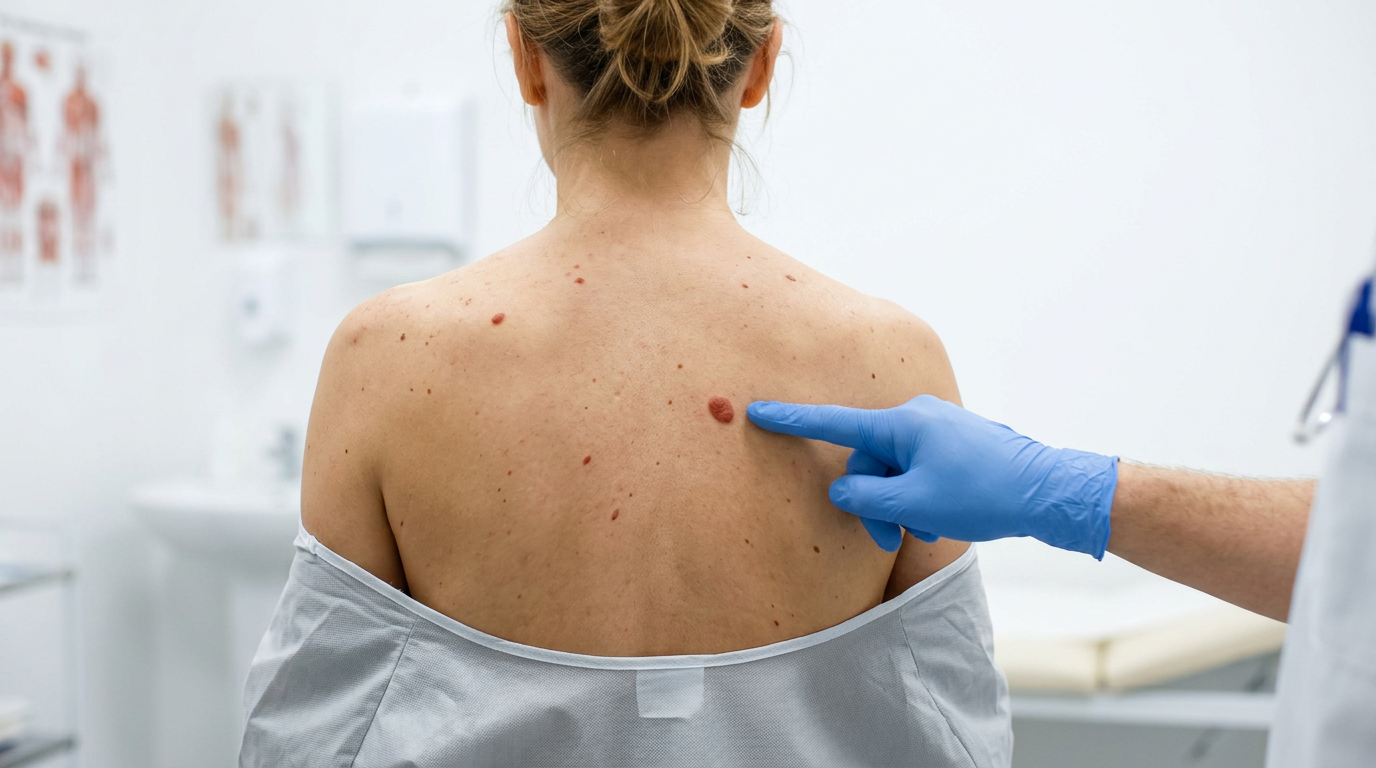
Annual Skin Checks at The Adare Clinic | Preventative Skin Cancer Screening
We often treat our skin like a permanent suit of armor—durable, self-healing, and largely indestructible. We invest in serums for a youthful glow, luxury lotions for hydration, and high-factor SPF during those rare, scorching weeks of an Irish summer. But beneath the vanity and the daily skincare routine lies the body’s largest and most exposed organ. It is a complex, living biological barrier that is constantly communicating its internal health to us through textures, tones, and growths.

The fundamental problem? Most of us do not know how to speak the language of our skin. What appears to the untrained eye as a "new freckle," a "stubborn dry patch," or a "beauty mark" might actually be a quiet SOS from the immune system. In Ireland, where a genetically fair-skinned population meets a culture that prizes the "sun-holiday" glow, skin cancer is not just a possibility; it is the most common form of cancer diagnosed nationwide.
At The Adare Clinic, we believe that skin health should never be a guessing game. Beyond the surface-level aesthetics, our mission is built on the pillar of preventative excellence. A skin check isn't just an appointment; it is a vital safeguard. Here is a comprehensive look at why an annual professional skin check is the most important date you will put in your calendar this year.
The Invisible Threat: Why "Self-Checking" Is Only Half the Battle
We have all been told to keep an eye on our moles. While self-surveillance is an excellent habit that fosters body literacy, it has significant clinical limitations. The human eye—especially one peering into a dimly lit bathroom mirror—is prone to a psychological phenomenon known as "habituation." Because we see our bodies every day, we become functionally blind to the subtle, millimeter-by-millimeter changes that signify the transition from a benign lesion to a malignancy.
The Limits of the Naked Eye
Most skin cancers, particularly Melanoma, do not begin as large, frightening growths. They often start as microscopic pigmentary shifts that look identical to a normal mole. Furthermore, skin cancer is a master of disguise and camouflage. It does not only appear on the "sun-kissed" parts of the body like the shoulders or nose. It can hide in places you would never think to check:
-
The Scalp: Hidden under thick hair, these lesions are often only found by hairdressers or during professional exams.
-
Interdigital Spaces: The skin between your toes is highly susceptible but rarely inspected.
-
Subungual Areas: Cancer can develop under the fingernails and toenails, often mistaken for a bruise.
-
The Posterior Chain: The small of the back, the back of the thighs, and the areas behind the ears are notorious "blind spots."
The Adare Advantage: The Science of Dermoscopy
When you visit The Adare Clinic, we don’t just "look" at your skin in the traditional sense. Our specialists utilize Dermoscopy—a non-invasive, high-tech diagnostic technique. Using a handheld dermatoscope, which combines high-intensity polarized light with powerful magnification, we can see structures within the epidermis and dermis that are entirely invisible to the naked eye.
This allows our clinicians to observe the "architecture" of a mole. We can distinguish between the chaotic, asymmetrical pigment networks of a developing melanoma and the orderly, uniform patterns of a harmless mole. This level of detail allows for early intervention long before a spot becomes a visible threat.
Understanding the "Big Three": A Guide to Skin Malignancy
To understand why professional checks are life-saving, it helps to understand what we are looking for. Not all skin cancers behave the same way, and their "warning signs" vary significantly.
| Cancer Type | Common Appearance | Risk & Behavior |
| Basal Cell Carcinoma (BCC) | Often looks like a pearly, waxy bump, a sore that bleeds and scabs but won't heal, or a flat, flesh-colored patch. | The most common type. While it rarely spreads to distant organs, it is "locally invasive," meaning it can grow deep into tissue and bone if ignored. |
| Squamous Cell Carcinoma (SCC) | Presents as a firm, red nodule or a flat lesion with a scaly, crusted surface. May feel tender or painful. | The second most common type. It has a moderate risk of spreading to lymph nodes if left untreated, particularly in immunosuppressed individuals. |
| Melanoma | Usually identified by the ABCDE rules: Asymmetry, irregular Borders, varied Colours, Diameter >6mm, and Evolving. | The most dangerous form. It can develop within an existing mole or appear as a new dark spot. It is highly prone to metastasizing (spreading) to the lungs, liver, and brain. |
The Critical Statistic: When caught in its earliest stages, the survival rate for skin cancer is incredibly high. For melanoma, the five-year survival rate is approximately 99% if detected while it is still localized to the top layer of the skin. Once it reaches the bloodstream, that percentage drops drastically. This is why "annual" isn't a suggestion—it’s a clinical necessity.
The "Irish Skin" Factor: Biology vs. Environment
Ireland presents a unique challenge for dermatology. A vast majority of our population falls into Fitzpatrick Skin Types I and II.
-
Type I: Always burns, never tans (typically red hair, freckles, very fair skin).
-
Type II: Usually burns, tans minimally (typically fair skin, blue or green eyes).
Biologically, these skin types produce less Eumelanin (the dark pigment that acts as a natural umbrella against UV radiation). Even if you haven't "sunbathed" in a decade, UV damage is cumulative. Your skin cells have a "memory." The blistering sunburn you had as a child during a heatwave, or the incidental exposure from gardening, walking the dog, or driving (UVB rays are blocked by glass, but UVA rays are not) all add up.
At The Adare Clinic, we often see patients who believe they are "safe" because they don't go abroad or use sunbeds. However, the Irish UV index can be deceptively high, and the prevalence of "incidental damage" makes regular professional screening even more vital for our population.
The Adare Clinic Process: What to Expect
We understand that a full-body skin check can feel vulnerable or intimidating. Our clinical environment is designed to be professional, discreet, and deeply respectful. Here is how we conduct a life-saving screening:

1. The Comprehensive History
We begin with a conversation. We discuss your family history (genetics play a huge role in melanoma risk), your history of sun exposure, and any specific "spots of concern" you’ve noticed. We also talk about your lifestyle—do you work outdoors? Do you play sports? This helps us build a risk profile tailored to you.
2. Full-Body Mapping
You will be asked to undress to your underwear. Your specialist will systematically examine your skin from the scalp down to the soles of your feet. We check the ears, the eyelids, the areas between the fingers—nowhere is overlooked.
3. Digital Monitoring & Comparison
At The Adare Clinic, we believe in the power of data. If we identify a "mole of interest"—a spot that isn't currently cancerous but looks "atypical"—we use high-resolution digital photography to "map" it. This image is stored in your medical file. When you return the following year, we can overlay the new image with the old one. This "comparative monitoring" allows us to detect changes as small as a fraction of a millimeter—changes that would be impossible to remember or see with the naked eye.
4. Immediate Action Plan
If a suspicious lesion is found, we don't leave you in limbo. The Adare Clinic is equipped to discuss the next steps immediately, whether that involves a biopsy, a simple excision, or referral for further specialized treatment.
Beyond Cancer: The Holistic Benefits of a Skin Check
While cancer detection is the primary goal, an annual check-up at The Adare Clinic provides a wealth of information regarding your overall skin health. During your appointment, our experts often identify and provide management plans for:
-
Actinic Keratosis (AK): These are "precancers"—rough, scaly patches caused by years of sun exposure. If treated early with cryotherapy or specialized creams, we can prevent them from ever turning into Squamous Cell Carcinoma.
-
Atypical Nevi: These are benign moles that share some characteristics with melanoma. Identifying these helps us establish which patients need more frequent (bi-annual) monitoring.
-
Rosacea and Psoriasis: Many patients suffer from facial redness or itchy patches, assuming it's just "sensitive skin." We provide medical-grade diagnoses and treatments for these chronic inflammatory conditions.
-
Skin Barrier Integrity: We assess how well your skin is performing its job as a barrier. We can offer advice on medical-grade skincare that goes beyond the "marketing fluff" found on high-street shelves.
Prevention: The "Daily Homework"
Think of your annual skin check at The Adare Clinic as your "Yearly Final Exam." To pass that exam with flying colors, you need to do your daily homework. We advocate for a three-pronged approach to daily skin safety:
The 365-Day SPF Rule
In Ireland, we often think SPF is for the beach. In reality, UVA rays (the ones responsible for aging and DNA damage) are present at relatively consistent levels all year round, even through cloud cover and rain.
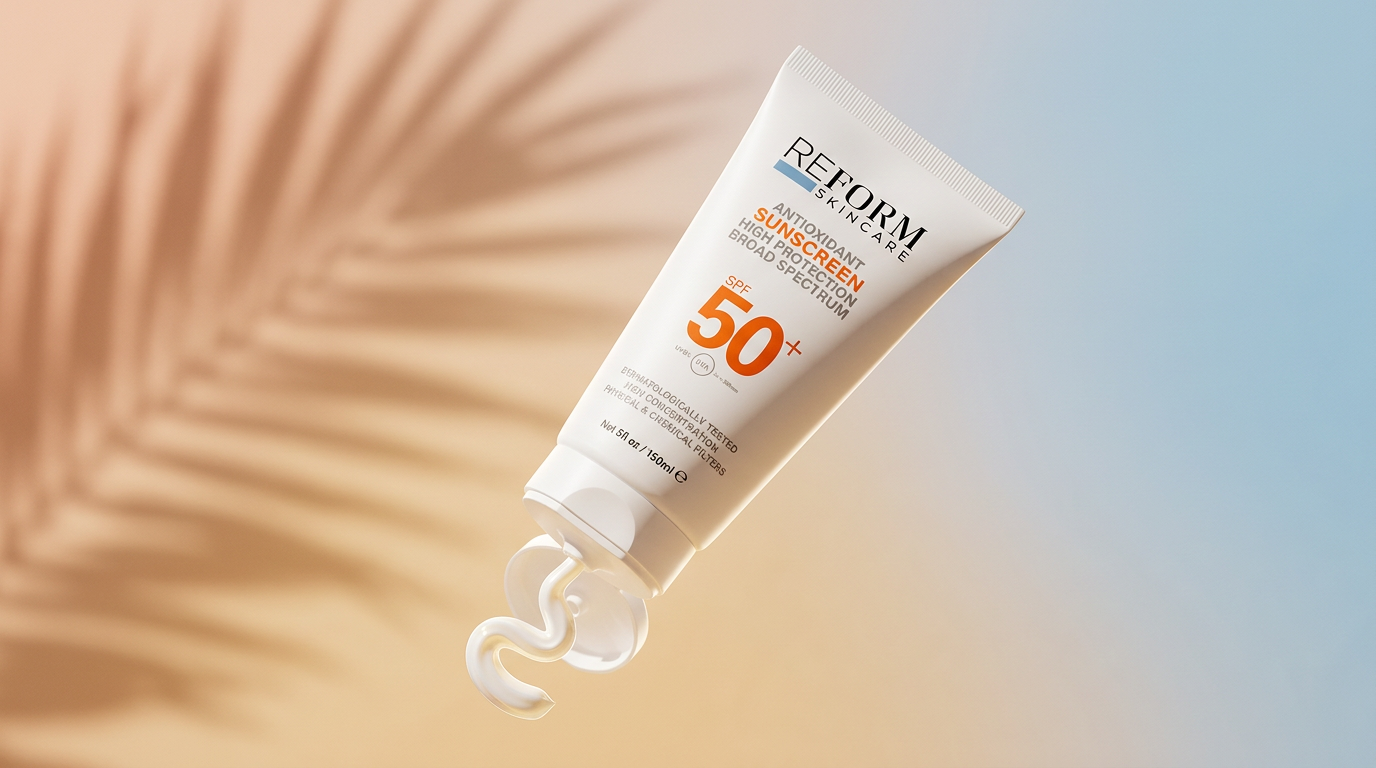
The Adare Tip: Find a broad-spectrum SPF 30 or 50 that you actually enjoy wearing. If it feels like a chore, you won't do it. Modern medical-grade sunscreens are now formulated to feel like light moisturizers or primers.
The ABCDE Self-Exam
Once a month, after a shower, perform a self-check in a well-lit room.
-
A is for Asymmetry: Does one half of the mole match the other?
-
B is for Border: Is the edge ragged, blurred, or notched?
-
C is for Colour: Does it have multiple shades of brown, black, blue, or red?
-
D is for Diameter: Is it larger than the end of a pencil eraser (6mm)?
-
E is for Evolving: This is the most important. Is it changing in any way?
Vitamin D vs. UV Exposure
A common concern in Ireland is Vitamin D deficiency. Many people believe they need to skip sunscreen to "soak up the D." However, most dermatological studies show that you can maintain healthy Vitamin D levels through incidental exposure and, more importantly, through diet and supplementation, without ever needing to risk a sunburn.
The Psychological Weight: Replacing Anxiety with Knowledge
Perhaps the most overlooked benefit of an annual skin check is the mental one. Many people live with "spot anxiety"—that nagging feeling every time they catch a glimpse of a dark mole in the mirror or feel a rough patch on their shoulder. They wonder, Is it different? Was it that big last month?
That anxiety is a heavy burden. By booking a professional check at The Adare Clinic, you outsource that worry to experts. You replace "I think it’s okay" with "I know it’s okay."
Our patients often describe the feeling of leaving the clinic as a "weight off their shoulders." Even in cases where a biopsy is required, the relief of taking action and having a professional plan in place is far better than the paralysis of uncertainty.
Conclusion: A Commitment to Your Future Self
Your skin is a record of your life—the summers spent outdoors, the places you’ve traveled, and the genetic heritage of your family. It is also your first line of defense against the world. At The Adare Clinic, our goal is to ensure that your skin remains a source of health, not a source of danger.
An annual skin check is more than a clinical procedure; it is an act of self-respect. It is an acknowledgment that your health is worth sixty minutes of your time once a year. When it comes to skin cancer, the difference between a "minor procedure" and a "life-altering diagnosis" is almost always time.
Don't wait for a spot to itch, bleed, or grow. Don't wait for a "more convenient" time. The most successful medical outcomes are the ones that happen before symptoms even appear.
Beyond the surface, there is a life to be lived. Let The Adare Clinic help you protect it.
Ready to book your peace of mind?
Contact The Adare Clinic today to schedule your comprehensive full-body skin mapping and check. Our team of specialists is ready to provide you with the clarity, expertise, and care you deserve. Your future self will thank you.


Leave a comment
This site is protected by hCaptcha and the hCaptcha Privacy Policy and Terms of Service apply.