

5 Common Skin Cancer Myths Debunked | 2026 Skin Safety Guide
The year is 2026, and while we’ve made incredible strides in medical technology—from AI-driven mole mapping to advanced immunotherapies—one thing remains stubbornly persistent: skin cancer misinformation.
With over 112,000 new cases of melanoma expected to be diagnosed in the U.S. this year alone, the stakes have never been higher. Social media "health influencers" often spread dangerous myths that discourage sunscreen use or promote "natural" tanning, leading to a rise in preventable cases among younger generations.
It’s time to set the record straight. Here are five of the most common skin cancer myths debunked with 2026 data and dermatological science.
Myth 1: "I Have Dark Skin, So I’m Immune to Skin Cancer"
This is perhaps the most dangerous myth because it leads to late-stage diagnoses in communities of color. While it is true that higher levels of melanin provide some natural protection against UVB rays, no one is immune.
The Reality
According to the American Cancer Society’s 2026 figures, while the lifetime risk of melanoma is lower for Black (0.1%) and Hispanic (0.5%) individuals compared to White individuals (3%), the survival rates tell a different story. Because of the myth that they aren't at risk, people of color are often diagnosed at a much later stage.
-
Acral Lentiginous Melanoma (ALM): This specific type of skin cancer is more common in people of color and appears in places you might not expect—like the palms of the hands, the soles of the feet, or under the fingernails.
-
The Survival Gap: Current data shows a five-year melanoma survival rate of approximately 67% for Black patients versus 92% for White patients, largely due to delayed detection.
Bottom Line: Melanin is a filter, not a suit of armor. Everyone, regardless of skin tone, needs to perform regular skin checks and wear SPF.
Myth 2: "A 'Base Tan' Protects You from Burning on Vacation"
We’ve all heard it: "I'll just hit the tanning bed a few times before my trip so I don't burn at the beach." This logic is fundamentally flawed and scientifically inaccurate.
The Reality
A "base tan" is essentially a visible sign of DNA damage. When your skin turns darker, it is a defensive response to cellular injury.
-
Minimal Protection: A base tan provides an SPF of roughly 2 to 3. In 2026, where dermatologists recommend a minimum of SPF 30, a base tan is practically useless.
-
The Tanning Bed Trap: Tanning beds can emit UV radiation up to 10–15 times stronger than the midday sun.Using a tanning bed even once before the age of 35 can increase your risk of melanoma by 75%.
-
Carcinogenic Classification: The International Agency for Research on Cancer (IARC) classifies UV-emitting tanning devices as Group 1 carcinogens—the same category as tobacco and asbestos.
Bottom Line: There is no such thing as a "healthy tan." If you want a bronze glow for your vacation, reach for a sunless self-tanner.
Myth 3: "Sunscreen Causes More Cancer Than the Sun Does"
In recent years, "clean beauty" trends and viral videos have fueled a fear of sunscreen chemicals like oxybenzone, claiming they disrupt hormones or cause the very cancer they’re meant to prevent.

The Reality
While 2026 research continues to refine our understanding of sunscreen ingredients, the consensus among the global medical community remains unchanged: Sunscreen is safe and essential.
If you are worried about chemical filters, the solution isn't to skip protection; it’s to switch to mineral sunscreens (Zinc Oxide or Titanium Dioxide), which sit on top of the skin and reflect UV rays like a mirror.
Bottom Line: The risk of skin cancer from UV radiation is a proven fact; the "danger" of sunscreen is largely internet fiction.
Myth 4: "I Don't Need Sunscreen on Cloudy Days or Indoors"
Many people believe that if they can’t see the sun or aren't standing directly under it, they are safe. This "out of sight, out of mind" approach leads to significant cumulative damage.
The Reality
UV rays are persistent. They don't need a clear sky to damage your skin cells.
-
Cloud Penetration: Up to 80% of UV rays pass through clouds. You can experience a severe sunburn even on a gray, overcast day in the middle of April.
-
The Window Effect: Standard glass windows in your home, office, or car block most UVB rays (the ones that cause burns), but they do not block UVA rays. UVA rays penetrate deeper into the skin, causing premature aging and contributing to skin cancer.
-
Blue Light (HEV): Emerging 2026 studies suggest that long-term exposure to high-energy visible (HEV) light from our digital screens can also contribute to skin pigment changes and oxidative stress.
Bottom Line: If there is daylight, there is UV radiation. Make SPF a non-negotiable part of your morning routine, just like brushing your teeth.
Myth 5: "If a Mole Isn't Itchy or Painful, It’s Not Cancer"
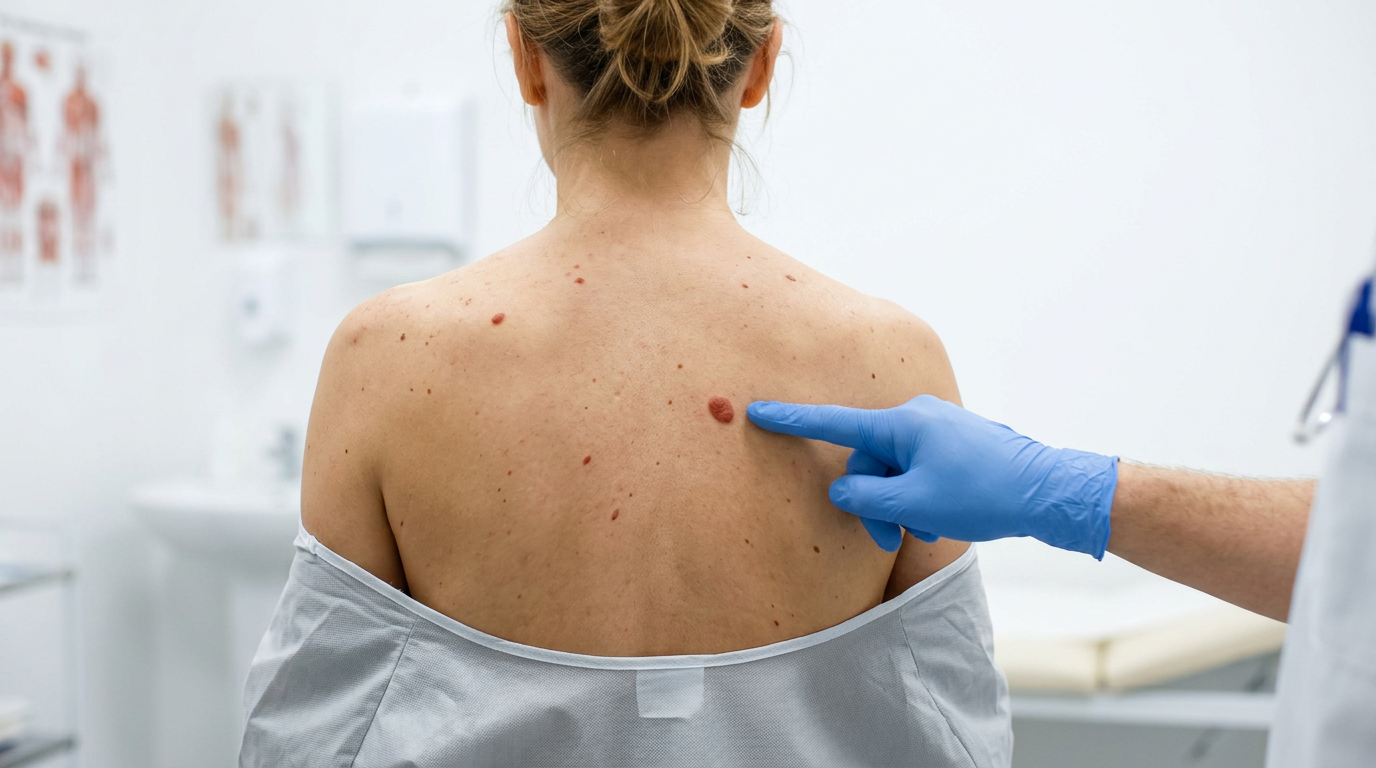
We tend to associate "cancer" with "pain" or "sickness." Because of this, many people ignore new spots on their skin because they "don't feel like anything."
The Reality
Skin cancer is famously silent. In its early, most treatable stages, it rarely hurts, itches, or bleeds.
-
The "Ugly Duckling" Rule: Dermatologists look for the "ugly duckling"—the one mole that looks different from all the others on your body. It doesn't have to be painful to be dangerous.
-
The ABCDEs of Melanoma: You should be looking for Asymmetry, irregular Borders, multiple Colors, a Diameter larger than 6mm, and—most importantly—Evolution (change over time).
-
Non-Melanoma Signs: Basal Cell Carcinomas often look like shiny, pearly bumps or sores that heal and then return. They are rarely painful but can be disfiguring if left alone.
Bottom Line: Don't wait for a spot to hurt before you get it checked. An annual professional skin exam can catch issues long before they become symptoms.

Leave a comment
This site is protected by hCaptcha and the hCaptcha Privacy Policy and Terms of Service apply.