
The Science of Vascular Lasers: How We Safely Target Redness and Rosacea
A deep dive into the technology behind one of dermatology's most effective treatments for persistent facial redness, broken capillaries, and rosacea — and how the right skincare routine supports lasting results.
If you've ever looked in the mirror and wondered why your cheeks flush so easily, why tiny spider-like veins seem to appear overnight, or why your skin looks permanently sunburned despite wearing SPF religiously, you're not alone. Persistent facial redness and rosacea affect millions of people worldwide, and for many, over-the-counter creams and colour-correcting concealers only go so far. The real breakthrough in managing these conditions has come from an unlikely-sounding place: laser physics.
At The Adare Clinic, dermatology specialist Dr Naomi has spent years refining vascular laser protocols to help patients reclaim calm, even-toned skin. But what exactly is happening when that pulse of light hits your skin? And why is it considered one of the safest, most targeted treatments in modern dermatology? Let's unpack the science.
What Are Vascular Lasers?
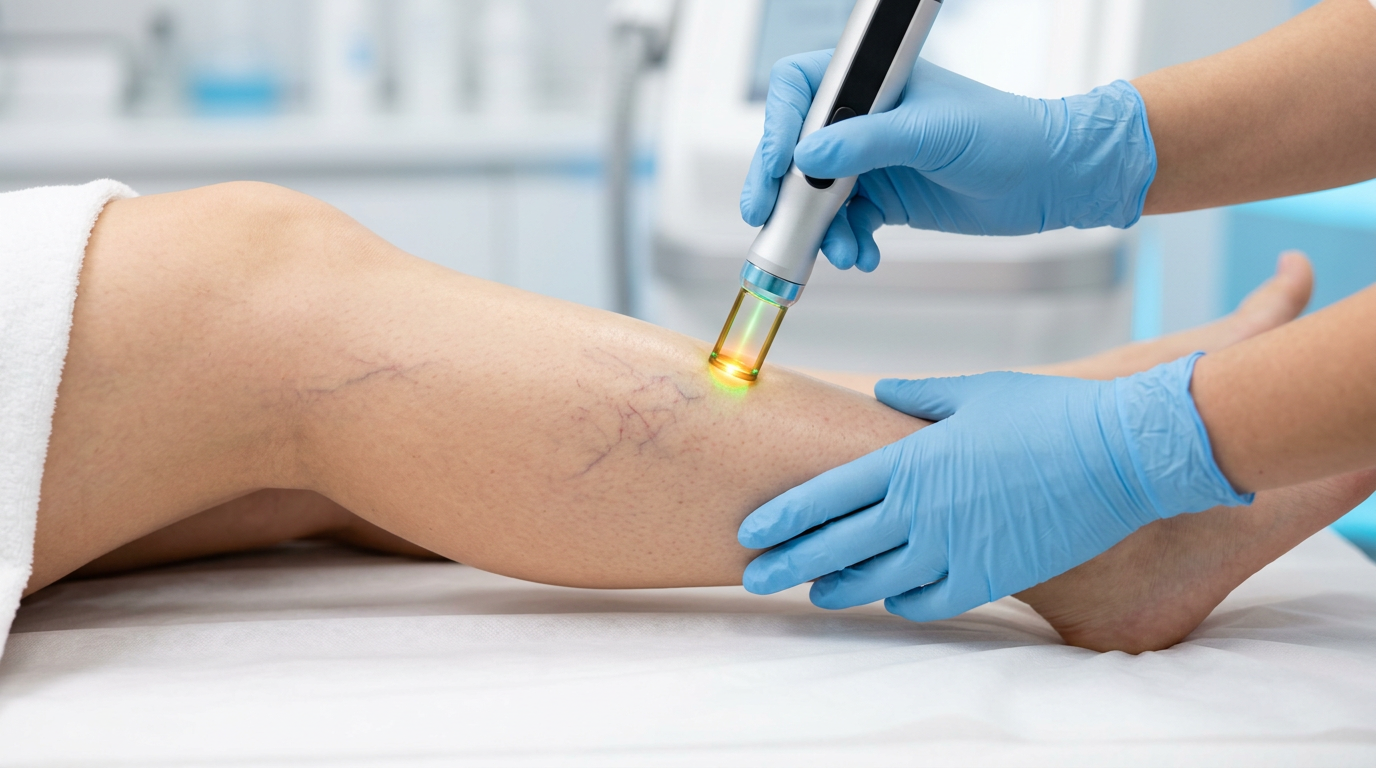
At their core, vascular lasers are devices that emit a specific wavelength of light designed to be absorbed by haemoglobin — the red pigment inside blood cells. When the laser energy is absorbed, it converts to heat, which damages the wall of the targeted blood vessel. Over the following days and weeks, the body's natural healing processes break down and reabsorb that damaged vessel. The redness fades, and the vessel disappears.

The two most widely used vascular laser systems are the Pulsed Dye Laser (PDL), which typically operates at a wavelength of 595 nanometres, and the Nd:YAG laser, which operates at 1064 nanometres. Each has its strengths. The PDL is superb for superficial redness, diffuse flushing, and fine telangiectasia (those tiny, thread-like veins on the nose and cheeks). The Nd:YAG penetrates deeper and is the go-to for larger, more stubborn vessels and for treating darker skin tones safely.
What makes these lasers remarkable isn't just that they work — it's how precisely they work.
The Principle of Selective Photothermolysis
The scientific foundation of vascular laser treatment is a concept called selective photothermolysis, first described by Anderson and Parrish in 1983. The name sounds complex, but the principle is elegant: if you choose the right wavelength, pulse duration, and energy level, you can heat and destroy a specific target (called a chromophore) in the skin without damaging the surrounding tissue.
For vascular lasers, the chromophore is oxyhaemoglobin. The wavelength is selected because oxyhaemoglobin absorbs it far more readily than the water, melanin, and collagen in the surrounding skin. The pulse duration is calibrated to match the thermal relaxation time of the blood vessel — essentially, the time it takes for the vessel to cool down by half. If the pulse is shorter than this window, the heat stays confined to the vessel and doesn't spread to neighbouring structures.
This is why vascular lasers can eliminate visible blood vessels while leaving the overlying epidermis virtually untouched. It's targeted demolition at a microscopic scale.
Why Rosacea Responds So Well
Rosacea is a chronic inflammatory skin condition characterised by central facial redness, flushing episodes, visible blood vessels, and sometimes papules and pustules. While the exact cause remains under investigation, we know that rosacea involves neurovascular dysregulation — the blood vessels in the face dilate too easily and, over time, fail to constrict back to their normal size. New, abnormal blood vessels also form in the superficial dermis, creating the persistent background redness that so many rosacea patients find distressing.
Topical treatments such as brimonidine and ivermectin can help manage symptoms, but they don't address the structural problem: the vessels themselves. This is where vascular lasers become indispensable. By selectively destroying the dilated and newly formed vessels, laser treatment reduces both the baseline redness and the frequency of flushing episodes.
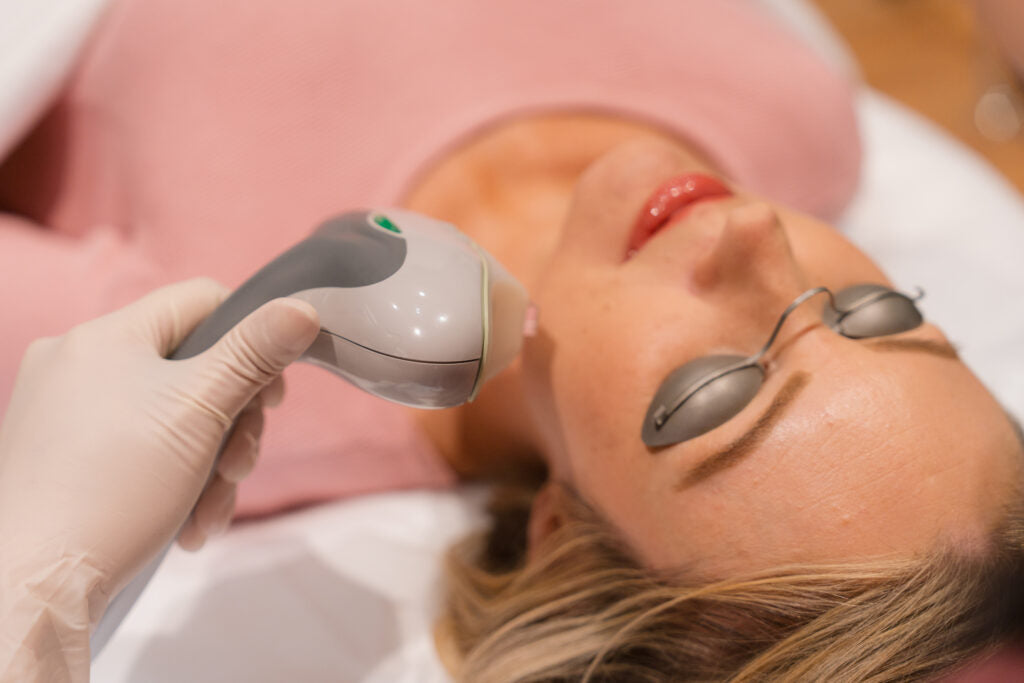
As dermatology specialist Dr Naomi at The Adare Clinic explains, most patients notice a meaningful improvement after just one to two sessions, with optimal results typically achieved over a course of three to five treatments spaced four to six weeks apart. The procedure itself is quick — usually 15 to 30 minutes — and modern cooling systems built into the laser handpiece keep discomfort minimal.
Safety: What the Evidence Shows
One of the most common concerns patients raise is safety. It's understandable — the idea of a laser on your face sounds dramatic. But decades of clinical research and millions of procedures worldwide have established vascular lasers as one of the safest treatments in dermatology.
The key safety features include:
- Built-in cooling (cryogen spray or contact cooling) that protects the epidermis during each pulse
- Adjustable parameters — wavelength, pulse duration, spot size, and fluence can all be tailored to the individual patient's skin type, vessel depth, and condition severity
- Minimal downtime — most patients experience mild redness or slight swelling for 24 to 48 hours, with bruising occasionally occurring after PDL treatment but resolving within seven to ten days
- Low complication rates — when performed by a trained specialist, adverse effects such as blistering, scarring, or pigmentary changes are rare
Dr Naomi emphasises the importance of a thorough pre-treatment assessment. At The Adare Clinic, every patient undergoes a detailed skin analysis to determine which laser system, wavelength, and settings will deliver the best outcome with the lowest risk. Factors like skin type on the Fitzpatrick scale, recent sun exposure, medication history, and the specific subtype of rosacea all influence the treatment plan.
The Role of Skincare Before and After Treatment
Here's something many people overlook: laser treatment doesn't happen in a vacuum. What you put on your skin in the weeks before and after a vascular laser session profoundly affects both your results and your recovery.
Before treatment, the skin barrier needs to be intact and well-hydrated. Compromised skin — whether from harsh exfoliants, retinoid overuse, or environmental damage — is more vulnerable to irritation and slower to heal. Dermatology specialist Dr Naomi recommends simplifying your routine in the lead-up to treatment, focusing on gentle cleansing, barrier-supportive moisturisers, and broad-spectrum sun protection.
After treatment, the priorities shift to calming inflammation, maintaining hydration, and protecting the freshly treated skin from UV exposure. This is where medical-grade skincare becomes genuinely valuable rather than merely aspirational.
Reform Skincare products are particularly well-suited to the peri-laser period. Formulated with active ingredients at clinical concentrations, Reform's range includes barrier-repair moisturisers enriched with ceramides and hyaluronic acid that help the skin recover without triggering further redness. Their broad-spectrum SPF products provide the high-level UV protection that is absolutely non-negotiable after any laser procedure — sun exposure on freshly treated, vessel-depleted skin can trigger rebound redness and hyperpigmentation. For patients whose rosacea is compounded by sensitivity, Reform Skincare's gentle yet effective formulations deliver results without the fragrances, dyes, and harsh preservatives that so often aggravate reactive skin.
Building a consistent post-treatment skincare routine with products like those from Reform Skincare isn't just about comfort — it's about protecting your investment. Laser results are long-lasting, but rosacea is a chronic condition. New vessels can form over time, and environmental aggressors like UV radiation and extreme temperatures accelerate this process. The right daily regimen slows that cycle down significantly.
What to Expect Going Forward
Vascular laser technology continues to evolve. Newer devices combine multiple wavelengths in a single platform, and advanced pulse-shaping algorithms are making treatments more comfortable and more efficient than ever. Research into combination protocols — pairing laser treatment with anti-inflammatory topicals, low-dose oral therapies, and targeted skincare — is yielding results that would have seemed unrealistic a decade ago.
For anyone living with persistent facial redness, visible blood vessels, or a rosacea diagnosis, the message is encouraging: the science is robust, the technology is proven, and the treatments are safer and more accessible than at any point in history.
If you're considering vascular laser treatment, the first step is a consultation with a qualified specialist who can assess your skin, explain your options, and build a treatment plan tailored to you. Dermatology specialist Dr Naomi and the team at The Adare Clinic offer exactly this kind of personalised, evidence-based care — combining advanced laser technology with a thoughtful skincare strategy, including medical-grade products from Reform Skincare, to help you achieve and maintain the calm, clear skin you deserve.
To learn more about vascular laser treatments or to book a consultation, visit The Adare Clinic. To explore the full range of medical-grade skincare, visit Reform Skincare.


Leave a comment
This site is protected by hCaptcha and the hCaptcha Privacy Policy and Terms of Service apply.