
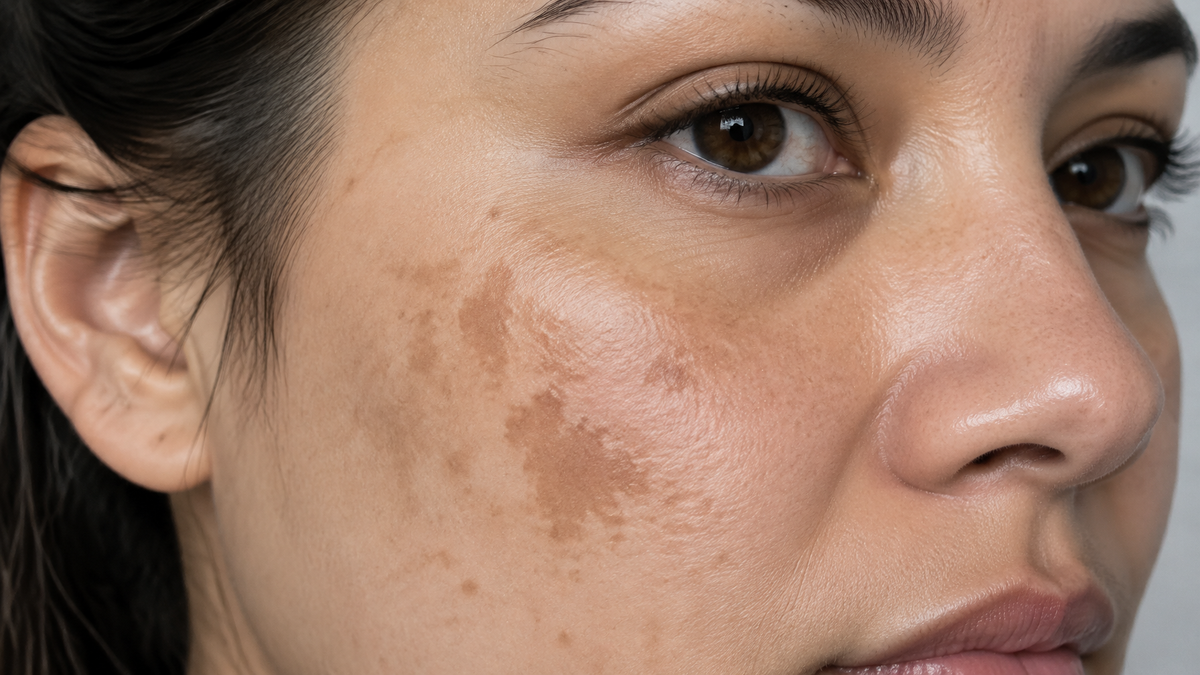
Sun Spots or Red Flags? When Your Skin Pigmentation Needs a Professional Assessment
Most of us accumulate marks on our skin the way we accumulate opinions about them: gradually, then all at once. A freckle here, a flat brown patch there, a small dark spot on the shoulder that seems to have appeared overnight. In the vast majority of cases, these are ordinary signs of living in a body that has spent years in the sun. In a minority of cases, they are the skin's way of waving for attention. The difficulty — and the reason dermatologists are so insistent about annual checks — is that the two can look remarkably similar to the untrained eye.
What Pigmentation Actually Is
Pigmentation is simply the presence of melanin, the pigment your skin produces as a defence. Melanocytes, the cells responsible for that pigment, respond to ultraviolet exposure by ramping up production, which is why a fortnight in a warmer climate leaves you freckled, tanned or both. This is a protective mechanism, not a malfunction.
When pigmentation becomes uneven, it usually settles into recognisable patterns:
- Solar lentigines — the classic "sun spot" or "liver spot," flat, tan to brown, sharply defined, appearing on chronically exposed areas such as the face, forearms and scalp.
- Melasma — broader, softer-edged, symmetrical patches, typically on the cheeks, upper lip and forehead. It is strongly linked to hormonal shifts, particularly pregnancy and oral contraception, and is stubborn by nature.
- Post-inflammatory hyperpigmentation — the brown stain left behind by acne, eczema or an injury. More common and more persistent in deeper skin tones.
- Seborrhoeic keratoses — benign, waxy, raised growths that look almost stuck on. Harmless, but frequently mistaken for moles.
None of the above is malignant. All of them, however, share a common trigger: ultraviolet radiation.
The Red Flags That Warrant a Check
The trick to distinguishing ordinary pigmentation from something needing review lies less in colour and more in behaviour. A spot that is changing is a spot worth showing to a doctor. The most widely used screening framework is the ABCDE rule:
| Sign | What to look for |
|---|---|
| A | Asymmetry — one half unlike the other |
| B | Border that is irregular, blurred or notched |
| C | Colour that varies within a single lesion |
| D | Diameter above roughly 6mm, though smaller lesions can still be concerning |
| E | Evolution — any change in size, shape, colour, elevation or sensation |
Alongside that, watch for a lesion that itches, bleeds, crusts, refuses to heal, or simply feels different from everything else on your skin. This last one matters enormously: dermatologists call it the "ugly duckling" sign, and it is often the single most reliable clue that something deserves attention.
If you have a personal or family history of skin cancer, a large number of moles, a history of blistering sunburn, or a compromised immune system, your threshold for getting things checked should be lower still. In the UK, melanoma rates have risen steadily over recent decades, and early detection remains the single greatest determinant of outcome. There is no cosmetic product that will make a concerning lesion safe.
Where Skincare Genuinely Helps — and Where It Doesn't
Here is where the conversation usually goes wrong. People rightly worry about a changing mole, then buy a brightening serum instead of booking an appointment. The two actions belong to entirely different categories.
Cosmeceutical skincare cannot treat or prevent skin cancer. What well-formulated products can do is manage the benign, cosmetic side of pigmentation, support the skin's barrier and reduce the cumulative damage that drives visible unevenness. That means a considered approach rather than a hopeful one.
Sun protection is non-negotiable. Every pigmentation routine that works rests on daily, generous, repeated broad-spectrum SPF. Without it, you are simply refilling a bucket with the tap running. A high-protection sunscreen that prevents both immediate damage and longer-term photoaging and pigmentation is the foundation — REFORM Skincare's SPF 50+ Antioxidant Sunscreen is formulated with a blend of chemical and physical filters precisely for that dual role, and for those who dislike the traditional weight of sunscreen, a lighter mist format makes daily reapplication far more realistic.

Antioxidants support the effort. Vitamin C is the best-evidenced addition, interrupting the oxidative cascade that follows UV exposure and helping to brighten existing discolouration over months rather than weeks. REFORM's Vitamin C 20% Serum is a high-concentration example that also supports collagen production and overall clarity. Expect a slow, cumulative improvement — not a fortnight's transformation.
Cell turnover and repair. Retinoids remain the gold standard for refining texture and evening out tone, though they require patience and gradual introduction. The REFORM Pigmentation Protocol combines a Phyto Botanical Gel, Vitamin C 20%, Retinol 1% Crème, a glycolic acid cleanser, an exfoliating gel and SPF 50+ — a coherent sequence rather than a random assortment of actives. For anyone whose pigmentation sits alongside acne, products formulated to calm inflammation and improve post-inflammatory marks address the stain at its source.
What none of this does is replace a diagnosis.
A Sensible Order of Operations
Get anything changing, itching, bleeding or simply unusual assessed by a GP, dermatologist or qualified skin specialist first. If you are in the UK, that route is straightforward: your GP can refer you, and private dermatology is widely available. Photography is your ally — take dated images of any lesion you are monitoring so you can see change objectively rather than relying on memory.
Once you have that reassurance, the cosmetic work can begin in earnest, with realistic expectations and a routine you will actually follow. Consistency in sun protection, antioxidant use and gentle exfoliation will do more for uneven tone over a year than any single dramatic product will in a week.
Sun spots are, for the overwhelming majority of people, exactly what they appear to be: the visible ledger of time spent outdoors. But the only reliable way to know which spots are harmless and which are asking for a second look is to have them looked at by someone qualified to tell the difference. Skin cancer is highly treatable when caught early, and no serum, however well formulated, can offer that.
Book the check. Then build the routine.


Leave a comment
This site is protected by hCaptcha and the hCaptcha Privacy Policy and Terms of Service apply.