
Rosacea or Just Flushing? How to Tell the Difference — and How Laser Treatment Can Help
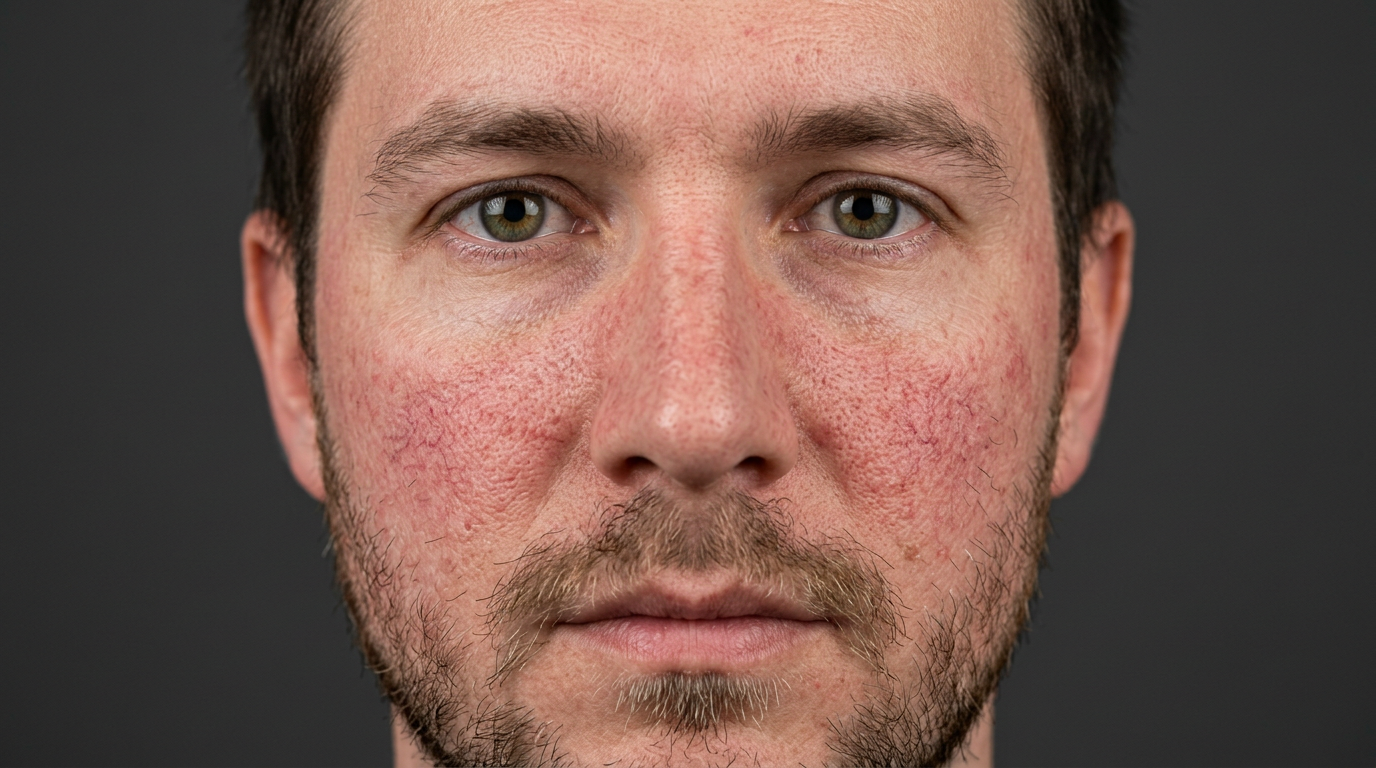
Few things bring more patients through our doors in Dublin, Limerick and London than persistent facial redness. It is one of the most common concerns we see in clinic, and also one of the most misunderstood. Patients frequently arrive convinced they have rosacea, having read about it online or been told so by a well-meaning friend, when in fact their redness has a completely different cause. Just as often, someone who genuinely does have rosacea has spent years being told it is “just sensitive skin” or “just flushing,” and has never been offered a proper diagnosis or an effective treatment plan.
This matters, because the two are not managed the same way, and getting it wrong can mean months or years of the wrong skincare, unnecessary frustration, and a face that never quite settles. So let's take the confusion out of it.
What Rosacea Actually Is
Rosacea is, first and foremost, a clinical diagnosis. There is no single blood test or swab that confirms it; it is made by a doctor taking a careful history and carrying out a proper examination, ideally supported by dermoscopy. This is important, because it means an accurate diagnosis depends entirely on spending real time with the patient, not just glancing at a red face for thirty seconds.
In our clinics across Dublin, Limerick and London, a few patterns come up again and again. Rosacea is especially common in fair, Celtic skin types, and it typically appears from the late twenties through the forties and fifties, rather than in the teenage years. There is very often a family history — a mother, father, sibling or an aunt or uncle who has “always had red cheeks” or an obviously ruddy complexion, even if they were never formally diagnosed. And almost universally, our rosacea patients tell us the same thing: their skin reacts to everything. Cleansers sting, sunscreens burn, and “gentle” products they have used for years suddenly seem to set their face on fire. This heightened sensitivity to skincare and cosmetic products is one of the most consistent features we see, and it should always raise our suspicion.
On dermoscopy, rosacea leaves visible fingerprints. We look for fine, unstable, dilated capillaries, a particular vascular pattern around the follicles, and background erythema that doesn't fully settle between flares. These findings, combined with the history, are what allow us to confirm the diagnosis with confidence rather than guesswork.
The Four Types of Rosacea
Rosacea is not one single condition, and this is a key reason why a thorough consultation matters so much. There are four recognised subtypes, and a patient can have one or a combination of several:
-
Erythematotelangiectatic rosacea — persistent central facial redness with visible broken capillaries (telangiectasia) and a tendency to flush easily.
-
Papulopustular rosacea — redness alongside small red bumps and pustules, often mistaken for acne, particularly in patients who develop it later in life.
-
Phymatous rosacea — thickening of the skin, most often on the nose, with enlarged pores and a coarser texture, more common in men.
-
Ocular rosacea — dry, irritated, gritty or bloodshot eyes and eyelid margins, which can occur with or without visible facial changes and is frequently missed.
Because the subtypes look and behave differently, and often overlap, treatment has to be tailored to what is actually happening in front of us — not applied as a one-size-fits-all approach.
Not All Facial Redness Is Rosacea

This is the part that gets missed most often, both by patients and, frankly, by some skincare advice online: flushing and rosacea are not the same thing, even though flushing is a feature of rosacea.
We see plenty of teenagers who blush intensely with embarrassment, nerves or heat, and who do not have rosacea at all — simply a normal, if inconvenient, physiological response with no underlying vascular disease and no telangiectasia on dermoscopy. The same goes for many adults who flush with exercise, spicy food, stress or hot rooms without ever developing the persistent vascular changes that define rosacea.
Menopause and perimenopause are a particularly important, and under-recognised, cause of facial flushing. Falling and fluctuating oestrogen levels affect the body's temperature regulation and blood vessel tone, producing hot flushes that can be just as visible and just as distressing as any rosacea flare. Crucially, in flushing driven purely by hormonal changes, we typically do not see the fixed, visible broken veins that are the hallmark of rosacea on examination. This distinction matters enormously for how we counsel and treat these patients. And it is worth saying plainly: menopausal patients who also happen to have rosacea, particularly the papulopustular type that can resemble acne, often have a genuinely miserable time, feeling as though their skin and their hormones are working against them simultaneously. Recognising both processes, rather than lumping everything together as “just hormonal” or “just rosacea,” is essential to getting them real relief.
Then there is alcohol, and the old, unkind nickname “whiskey nose.” Alcohol causes flushing through vasodilation — it relaxes and widens blood vessels, which is a normal pharmacological effect in anyone who drinks, regardless of quantity. The visible, fragile, broken capillaries seen in rosacea are not a sign of how much someone drinks; they are a marker of unstable vasculature and an underlying inflammatory condition. Alcohol can certainly aggravate rosacea once it is present, as can heat, sun exposure, spicy food and stress, but it does not cause it, and a rosacea patient is not “excessive” simply because their skin reddens with a glass of wine. This is an outdated and frankly unfair stereotype that has stuck around far longer than the medicine that debunks it.
Another condition we see mislabelled as rosacea, particularly in younger patients, is keratosis pilaris of the face. This causes a generalised redness and rough texture, most often on the cheeks, in teenagers and young adults, but it is a completely different condition, driven by keratin plugging around the hair follicles rather than vascular instability or inflammation. Crucially, these patients do not have the reactive, sensitive skin that defines rosacea — they can generally use ordinary skincare products without difficulty. Because the underlying mechanism is different, traditional vascular lasers used for rosacea are not the most effective treatment here, and getting this diagnosis right changes the plan completely, as you will see below.
Why Getting the Diagnosis Right Changes Everything
Once we understand which of these processes is driving a patient's redness, we can build a plan that actually works, rather than one that simply masks the problem or, worse, makes it worse.

For our confirmed rosacea patients, skincare is not an afterthought — it is central to the treatment plan. Because rosacea-prone skin has a compromised barrier and heightened reactivity, generic “anti-redness” products bought off a shelf frequently backfire, triggering more irritation and perpetuating the inflammatory cycle. This is why we always recommend a bespoke skincare regime, built specifically for the individual using our REFORM Skincare range. A carefully chosen combination of gentle, barrier-supporting actives helps calm the inflammatory cascade that drives rosacea, rebuilds the skin's protective barrier, and reduces the day-to-day sensitivity that makes so many rosacea patients afraid to put anything on their face at all. Getting this right is often the single biggest improvement in comfort that our patients notice.
How Laser Treatment Helps

Skincare alone, however good, cannot remove visible broken capillaries once they have formed — and this is where laser and light-based treatments come in. But “laser for rosacea” is not a single treatment; at ADC we use several different devices, each targeting a different wavelength and a different problem, and choosing correctly depends entirely on getting the diagnosis right first.
For acne rosacea, we frequently use the Cutera Limelight, an intense pulsed light (IPL) device. It brightens the skin and reduces redness, and it also has a useful secondary effect: it coagulates Demodex mites, the tiny skin mites implicated in driving the ongoing inflammation in rosacea, which can genuinely improve the long-term course of the condition rather than just the appearance on the day. Limelight is also our treatment of choice for general photodamage, and, interestingly, for keratosis pilaris of the face — the generalised redness we discussed above that is often mistaken for rosacea in younger patients. This works for a slightly different reason: Limelight also targets fine facial hair, and in keratosis pilaris it is often that fine hair blocking and irritating the follicle that perpetuates the bumpy redness. By reducing the hair alongside the redness, Limelight addresses the actual mechanism of keratosis pilaris in a way that traditional vascular lasers, built for rosacea's blood vessels, simply are not designed to do.
For confirmed rosacea, we also draw on the V-beam Perfecta and N-lite pulsed dye lasers (PDL) and the Nd:YAG laser, each suited to a different vessel type. Pulsed dye laser is our workhorse for general, diffuse facial redness and the finer telangiectasia typical of erythematotelangiectatic rosacea. Nd:YAG, which penetrates more deeply, is reserved for the larger, more prominent blood vessels that PDL cannot fully address on its own. Used in the right combination, these vascular lasers deliver targeted energy that is absorbed by haemoglobin within the abnormal vessels, causing them to collapse and gradually clear without damaging the surrounding skin, visibly reducing redness and telangiectasia over a course of sessions.
This is precisely why seeing a dermatology specialist first matters so much. Vascular lasers are genuinely excellent when the diagnosis is truly rosacea, but they are the wrong tool, and an unnecessary expense, when the underlying problem is keratosis pilaris, hormonal flushing or simple embarrassment. Choosing the right device starts with choosing the right diagnosis.
The Bottom Line: A Multi-Factorial Approach
At Adare Dermatology Clinics, across our Dublin, Limerick, or London locations, we start every patient with an accurate diagnosis, built on a careful history and examination rather than assumption. From there, we build the right bespoke REFORM Skincare regime for your skin, we prescribe the correct medication when drugs are genuinely needed to control an active flare, and we recommend the right laser or device, from Limelight to PDL to Nd:YAG, when and only when it is actually going to help.
We cannot cure rosacea or facial flushing, but we can manage both very well — and doing so properly means treating it as the multi-factorial condition it is. Skincare treats and prevents day to day, medication controls active flares when needed, and laser addresses the visible vascular damage already done. Get all three right, in the right order, and most patients see a real and lasting difference. If persistent redness or flushing has been troubling you, book a consultation with one of our dermatologists to get a clear answer and a plan that actually fits your skin.

Leave a comment
This site is protected by hCaptcha and the hCaptcha Privacy Policy and Terms of Service apply.