
Laser Hair Removal for Sensitive and Darker Skin Tones: Technology and Safety
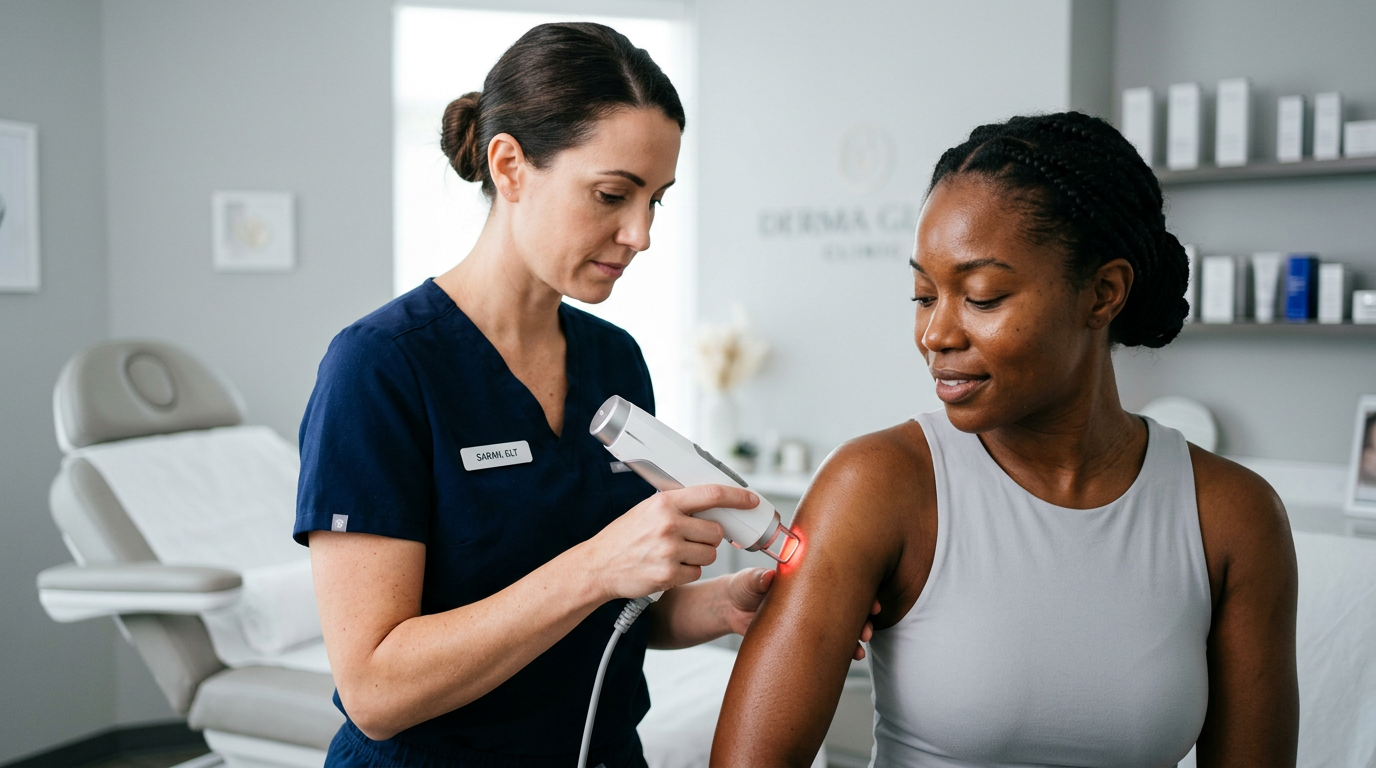
Laser hair removal is one of the most requested treatments across our Dublin, Limerick and London clinics, and it has become far more accessible in recent years. But accessibility has come with a trade-off worth understanding before you book anywhere: laser hair removal today is rarely performed by a dermatologist or doctor at all. In most clinics, it's delivered by laser therapists, aestheticians or nurses. That brings the price down, which is genuinely good for patients in many respects, but in some clinics it also strips away a significant amount of the medical knowledge and expertise that matters most for the patients who need it — particularly those with darker or more sensitive skin.
Why Persistent Hair After Multiple Sessions Is a Red Flag
If you've had several sessions of laser hair removal and the hair simply isn't reducing the way it should, it's tempting to assume you just need more sessions. Sometimes that's true, but often it's a sign of one of three underlying issues, and it's worth knowing the difference. There may be an underlying medical condition driving excess or persistent hair growth, most commonly a hormonal imbalance such as polycystic ovary syndrome, which needs to be identified and addressed for laser treatment to actually work long-term. Alternatively, the equipment itself may not be a genuine medical-grade laser, or the settings being used may simply not be optimal for your skin type and hair colour. Without a doctor involved, these possibilities are far less likely to be properly investigated — a therapist can adjust a treatment plan, but only a doctor can order the blood tests needed to rule in or out a genuine hormonal cause.
Why We're a Medical Clinic, Not a Beauty Salon

At Adare Dermatology Clinics, we do offer laser hair removal, and we're upfront that we are generally more expensive than salon-based alternatives. That's because we are a medical clinic, with a doctor involved in your care rather than a purely aesthetic service. One practical benefit of this is that we issue a medical receipt for your treatment, which many of our patients are able to claim back, either through their own tax relief on medical expenses or through private medical insurance, depending on their policy and jurisdiction. But the real value goes beyond the paperwork: if your hair growth pattern suggests something medical is going on, our doctors can arrange the appropriate blood tests to investigate a suspected hormonal abnormality, something a purely aesthetic clinic simply cannot offer.
Darker Skin Tones Need the Right Technology
Darker skin tones carry a meaningfully higher risk of complications from laser hair removal, including burns, scarring and changes in pigmentation, and the technology used has to reflect that. For our patients with darker skin, we typically use a diode laser or an Nd:YAG laser, both of which use wavelengths that pass more safely through melanin-rich skin while still effectively targeting the hair follicle. This is a fundamentally different consideration from choosing a laser for lighter skin, and it's exactly the kind of decision that benefits from medical oversight rather than a generic, one-size-fits-all machine.
Before any treatment begins, we always carry out a patch test, and only proceed with full treatment if there's no adverse reaction. Patients with darker skin should also expect to need multiple sessions for a proper result, in line with how hair growth cycles work, rather than expecting results after just one or two treatments.
One point we feel strongly about: we would be very hesitant to ever use an IPL (intense pulsed light) device on skin of colour, even for an initial patch test. IPL carries a genuinely high risk of causing dyspigmentation in darker skin, and in our view that risk isn't worth taking when safer, purpose-built alternatives like diode and Nd:YAG lasers exist specifically for this purpose.
What This Means for You
If you're considering laser hair removal, particularly if you have a darker or more sensitive skin tone, it's worth asking a few direct questions before you book: who will actually be performing your treatment, and what is their medical training? What type of laser is being used, and is it appropriate for your skin tone? And if a previous course of treatment elsewhere hasn't worked despite multiple sessions, is there a doctor available to investigate whether something medical might be going on, rather than simply booking you in for more of the same?
At Adare Dermatology Clinics, across Dublin, Limerick and London, our approach to laser hair removal starts with getting these fundamentals right: the correct medical-grade technology for your skin tone, a proper patch test, a realistic session plan, and a doctor available to investigate further if your hair growth pattern suggests there's more going on than meets the eye. If you'd like an honest assessment of what your skin actually needs, book a consultation with one of our dermatologists/dermatology specialists.


Leave a comment
This site is protected by hCaptcha and the hCaptcha Privacy Policy and Terms of Service apply.