
Article: How to Incorporate REFORM Skincare Salicylic Acid into Your Daily Routine
How to Incorporate REFORM Skincare Salicylic Acid into Your Daily Routine
Salicylic acid has earned its place as one of the most reliable ingredients in blemish-prone skincare — and for good reason. Unlike gentler exfoliating acids that work mainly on the surface, it is oil-soluble, which means it can travel into the pore lining where congestion actually begins. Get the introduction right and it becomes the backbone of a clearer, calmer complexion. Get it wrong — too much, too soon, layered with too many other actives — and you will spend a fortnight repairing your barrier instead of enjoying the results.
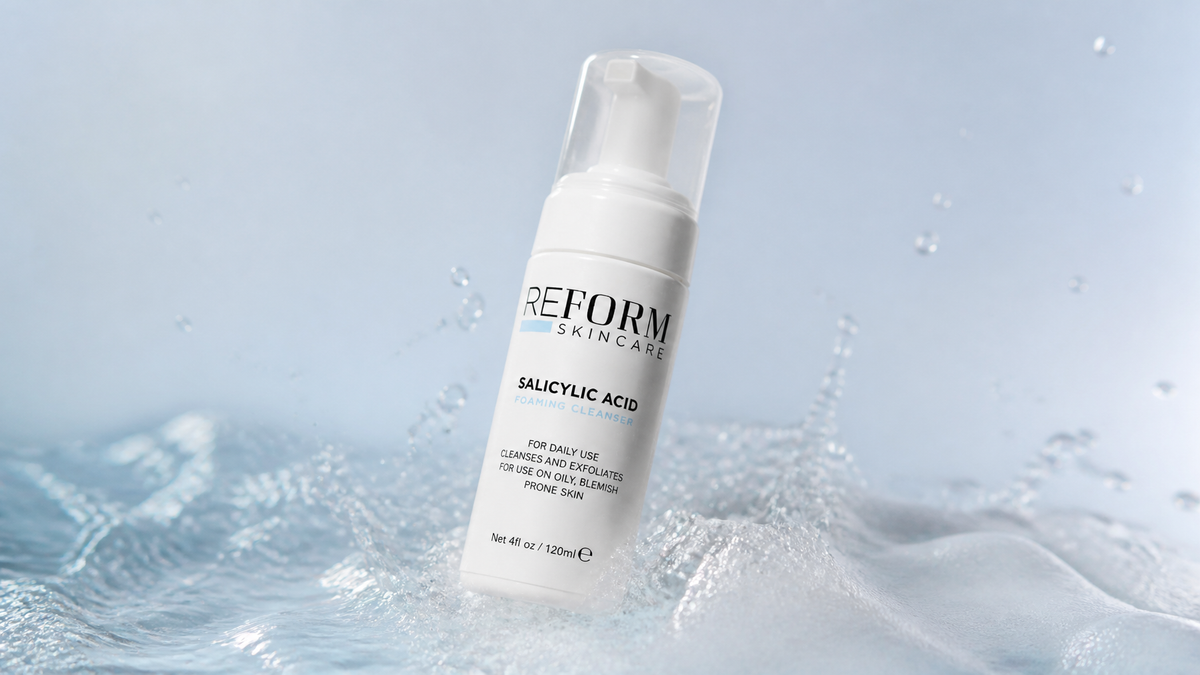
The REFORM Skincare Salicylic Acid Foaming Cleanser, available at www.reformskincare.com, is a good place to start because it takes the guesswork out of the format. It is a 2% BHA daily foaming exfoliant designed for oily and acne-prone skin, and the rinse-off delivery means it clears excess oil and debris from the pores without sitting on the skin all day. Below is a practical, realistic way to build it into your routine — morning and evening — along with the pairings that help and the habits that undo good work.
Know What You Are Working With
A few details about the product shape everything that follows.
2% salicylic acid. This is the concentration most commonly used in leave-on and rinse-off acne products, and it is generally well tolerated at daily use in a cleanser format. The acid dissolves excess oil inside the pore, loosens the plug of dead cells and sebum, and helps reduce the formation of blackheads and breakouts over time.
A foaming, non-drying base. The formula is designed to lift makeup, sunscreen, dirt and excess oil while leaving the skin feeling refreshed rather than tight. That distinction matters: a cleanser that strips the skin triggers rebound oil production, which is the last thing congested skin needs.
An exfoliant that rinses away. Because contact time is limited, the cleanser is a sensible entry point for anyone new to BHAs — and forgiving enough to use twice daily for most people.
Morning: Keep It Simple
Your morning routine should be about protection and control, not correction. The skin is already rested and relatively balanced when you wake, so there is no need to pile on actives.
Step 1 — Cleanse. Apply the Salicylic Acid Foaming Cleanser to damp skin — dampness helps the foam distribute evenly rather than dragging across the face. Massage gently for around thirty seconds, focusing on the T-zone, chin and jawline where congestion tends to gather. Rinse thoroughly with lukewarm water and pat dry. Avoid hot water, which aggravates oiliness and redness.
Step 2 — Hydrate. Follow with the Vitamin B5 Gel. Salicylic acid is well tolerated but it is still an exfoliant, and skin that is kept hydrated simply behaves better. A lightweight, fast-absorbing gel replenishes moisture without adding weight or shine — exactly what oily and combination skin wants in the morning.
Step 3 — Protect. This step is not optional. Exfoliated skin is more vulnerable to UV damage, and unprotected sun exposure is one of the fastest routes to the dark marks that linger long after a spot has healed. Choose a broad-spectrum sunscreen suited to your skin type — the SPF 50+ Antioxidant Sunscreen or the SPF 50+ Invisible Mist Spray are both designed to sit comfortably over a gel. Reapply through the day if you are outdoors.
That is the entire morning. Cleanser, hydration, SPF — three steps, done consistently, will outperform an ambitious routine you abandon by Thursday.
Evening: Here Is Where the Work Happens
Night is when you can afford to be more thorough, because you have hours of rest ahead and no sunlight to contend with.
Step 1 — Remove the day. If you wear makeup or heavy sunscreen, start with a gentle pre-cleanse, or simply use the foaming cleanser twice — first to break down surface residue, then a shorter second pass to actually cleanse the skin. Take your time around the hairline, the sides of the nose and the jaw, where residue quietly accumulates.
Step 2 — Treat, on alternate nights. If you own Repair & Renew Gel, this is where it belongs — but not every night at first. Begin with two or three evenings a week and build from there as your skin tolerates it. Stacking a leave-on exfoliating treatment on top of a daily BHA cleanser from day one is the most common way people tip their skin into irritation.
Step 3 — Moisturise. Finish with the Anti-Blemish Crème if your skin is oily and breakout-prone, or the Intensive Moisturiser if you are drier. Overnight is when the barrier repairs itself; give it the material to work with.
If your skin is on the drier side, or if you are using a retinoid, it is perfectly reasonable to keep the salicylic cleanser for evenings only and use a gentler option such as the Gentle Hydrating Crème Cleanser in the morning.
Introducing It Without Irritation
This is the part most people skip, and it is the part that determines whether the product works for you.

Spend the first week using the cleanser once a day — evening is the natural choice. Let your skin tell you what it thinks. If you notice no tightness, stinging or unusual flaking, move to twice daily in the second week. If your skin does react, drop back to alternate evenings and hold there for another week before trying again.
Signals to slow down: persistent tightness after cleansing, stinging when you apply moisturiser, visible flaking around the nose and mouth, or new redness that was not there before. These are not signs that salicylic acid is "not for you" — they are signs that you moved too quickly.
Signals to see a doctor: painful cystic breakouts, breakouts that leave scars, or skin that does not respond to a consistent six-to-eight-week routine. Salicylic acid is excellent at congestion and mild-to-moderate acne; deeper inflammatory acne usually needs medical treatment. If you are pregnant, breastfeeding, or taking prescription acne medication, check with your GP or dermatologist before starting.
What to Pair It With — and What to Separate
Salicylic acid plays well with a great deal, provided you respect a few boundaries.
Good companions. Niacinamide calms redness and helps regulate oil, and it layers comfortably with BHAs. Hyaluronic acid and glycerin-based hydrators offset any dryness. Antioxidants such as vitamin C are fine in the morning, with the salicylic cleanser, as long as you are wearing sunscreen. The brand's own guide to how salicylic acid, niacinamide and AHAs work together is worth reading if you want to build a fuller routine around blemish control.
Handle with care. Retinol and prescription retinoids are the main ones to manage. Both retinol and salicylic acid accelerate cell turnover, and using them aggressively at the same time is a recipe for a compromised barrier. Either alternate nights, or use the salicylic cleanser in the morning and the retinoid at night — and start the retinoid slowly regardless.
Keep separate. Glycolic acid, the other exfoliant in the REFORM range, does a similar job by a different route. There is no benefit in using both cleansers daily. Pick one as your everyday option and, if you want the other, use it a few times a week instead.
Small Habits That Make a Real Difference
Consistency beats intensity. Visible improvement in congestion typically takes four to eight weeks of steady use; breakouts often appear to worsen slightly in the first fortnight as pores clear, which is normal and not a reason to stop.
Resist the urge to scrub. Physical exfoliants on top of a chemical one cause micro-tears and inflammation. Let the salicylic acid do the work.
Change your pillowcase weekly and clean your phone screen. Both touch your face for hours at a time and quietly undo good skincare.
Do not over-wash. Twice daily is plenty for most people. If your skin feels tight, you have cleansed too often or too harshly, not too little.
Keep the routine boring for a month before adding anything. Every new product is a variable, and variables make it impossible to know what is working.
A Simple Weekly Template
| Time | Routine |
|---|---|
| Morning | Salicylic Acid Foaming Cleanser → Vitamin B5 Gel → SPF |
| Evening (most nights) | Salicylic Acid Foaming Cleanser → Anti-Blemish Crème or Intensive Moisturiser |
| Evening (2–3 nights) | As above, plus Repair & Renew Gel instead of the moisturiser's treatment step |
| Weekly | Review: any tightness or flaking? Adjust frequency before adding anything new |
The Bottom Line
Salicylic acid works best when it is treated as a dependable daily habit rather than a dramatic intervention. Start the REFORM Skincare Salicylic Acid Foaming Cleanser once a day, build to twice as your skin allows, keep hydration and sun protection non-negotiable, and hold the line on layering too many actives at once. Give it two months of consistency before you judge it. Most people find that is when the pores look clearer, the shine is more controlled, and the texture is noticeably smoother — not because of any single dramatic step, but because a simple routine was followed long enough to matter.
This article is general information, not medical advice. If you have persistent or severe acne, or you are pregnant, breastfeeding or using prescription skincare, speak to your GP or a dermatologist.


Leave a comment
This site is protected by hCaptcha and the hCaptcha Privacy Policy and Terms of Service apply.