
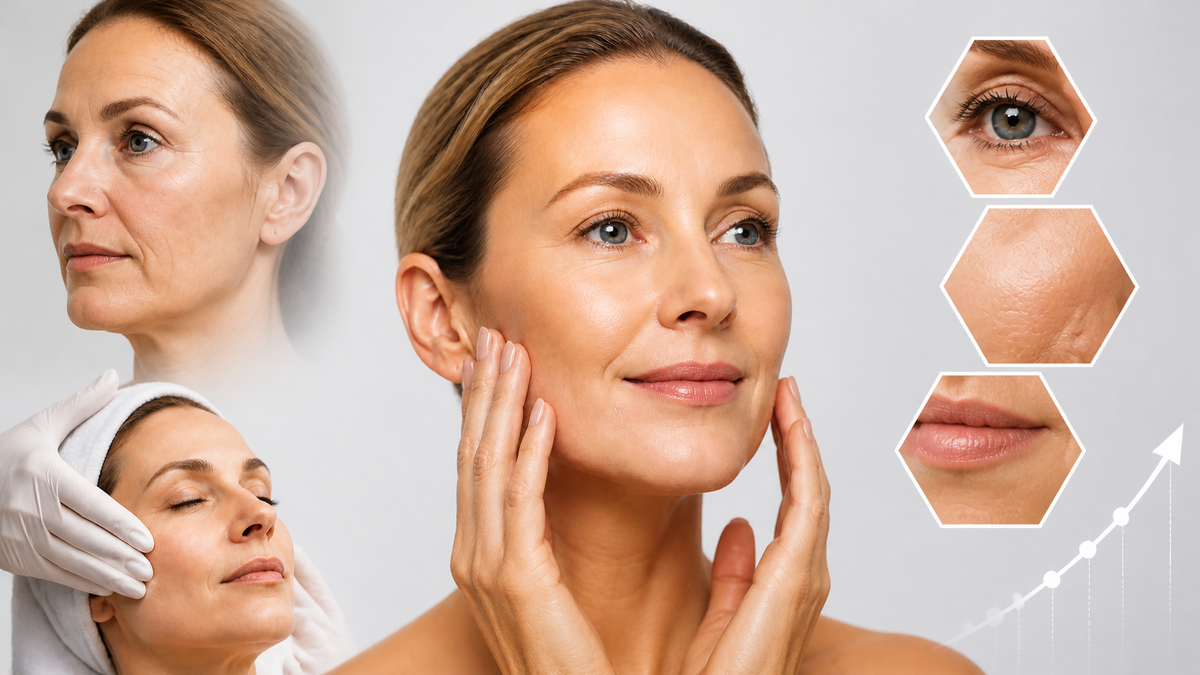
Exosomes for Facial Rejuvenation: What They Add, and What They Do Not
By Dr Naomi Mackle, Dermatology Specialist and Medical Director, Adare Dermatology Clinics
Exosome facials and "exosome add-ons" after microneedling or laser are among the fastest-growing trends in aesthetics. At Adare Dermatology Clinics we are often asked whether they are worth the extra cost. The honest answer is that the treatments they are usually paired with already work very well, and the evidence that exosomes add much on top is still limited.
What are exosomes?
Exosomes are microscopic packages that cells release to communicate with one another. They carry growth factors and other signalling molecules. Commercial products are made from very different sources, including human stem cells, platelets, plants and bacteria, and they vary widely in what they contain.
Because they cannot easily pass through intact skin, exosomes are usually applied immediately after a treatment that creates tiny channels in the skin, such as medical microneedling, radiofrequency microneedling or laser.
What are they supposed to do?
The theory is that these signals help skin repair itself: stimulating collagen, calming inflammation, evening pigmentation and speeding up recovery after a procedure. Of these, faster healing and less redness after laser or microneedling is the most plausible near-term benefit.
What does the evidence show?
A 2026 systematic review of microneedling with exosomes found just 8 studies including 171 patients across all skin and hair uses. Two split-face studies reported improvements in wrinkles, elasticity and collagen, and small studies reported improvements in melasma and acne scarring. Side effects were generally mild and short-lived.
However, the studies were small, most were case series or pilots, none followed patients for longer than six months, and the products came from many different sources. Results from one product cannot be assumed for another. The authors concluded that properly designed trials are needed before firm conclusions can be drawn. In the US, the FDA has stated that no exosome products are approved and has warned the public about unapproved exosome treatments.
The real question: what do exosomes add?
Exosomes are almost always used alongside treatments with strong evidence of their own:
-
Medical microneedling: well established for acne scarring, texture and fine lines.
-
Radiofrequency microneedling: combines microneedling with heat to tighten skin and stimulate collagen.
-
Fractional CO2 laser: one of the most effective treatments for wrinkles, scarring and sun damage, with decades of evidence.
When a patient improves after microneedling with exosomes, most of that improvement is likely to come from the microneedling itself. The key question is how much extra benefit the exosomes provide, and whether that justifies the additional cost. At the moment, there is not enough good-quality evidence to answer that confidently.
Is it safe?
Applied to the skin after microneedling or laser, the reported side effects are mostly mild: redness, swelling and tingling that settle within days. Serious reactions, including granulomas and allergic reactions, have been reported in the wider literature, mainly when exosomes are injected. Because products vary in source, purity and sterility, quality control and regulation matter a great deal. Human-derived products raise additional regulatory and safety questions.
Our approach at ADC
-
Proven treatments first: microneedling, radiofrequency microneedling and CO2 laser deliver excellent results on their own when carried out by experienced practitioners.
-
Good aftercare matters: barrier repair, sun protection and a tailored skincare plan have a big impact on recovery and results.
-
Open to new evidence: if an exosome product shows clear, independently confirmed benefit with proper safety data, we will consider offering it as an add-on, and we will be honest with patients about what it can and cannot do.
Questions to ask before paying for exosomes
-
What is the product, and what is it made from?
-
Is it properly regulated in Ireland or the UK?
-
Is there published clinical data on this specific product, not just on exosomes in general?
-
How much does it add to the cost, and what extra benefit should I expect?
-
Will it be applied to the skin or injected? We would not recommend injection.
Summary
Exosomes are an interesting area of research, and they may prove useful for speeding recovery after procedures. But the evidence is still early, products are poorly standardised, and the treatments they are paired with already work very well. If you are considering facial rejuvenation, the most important decision is choosing the right proven treatment for your skin, carried out by a medically led team.
Interested in skin rejuvenation? Book a consultation with our team at Adare Dermatology Clinics in Dublin, Limerick or London to discuss microneedling, radiofrequency microneedling and laser.
Related reading: PDRN, Polynucleotides and Exosomes; Hair Loss Is Not One Size Fits All. Related treatments: microneedling, radiofrequency microneedling and CO2 laser at Adare Dermatology Clinics.
This article is for general information and does not replace a consultation.


Leave a comment
This site is protected by hCaptcha and the hCaptcha Privacy Policy and Terms of Service apply.