
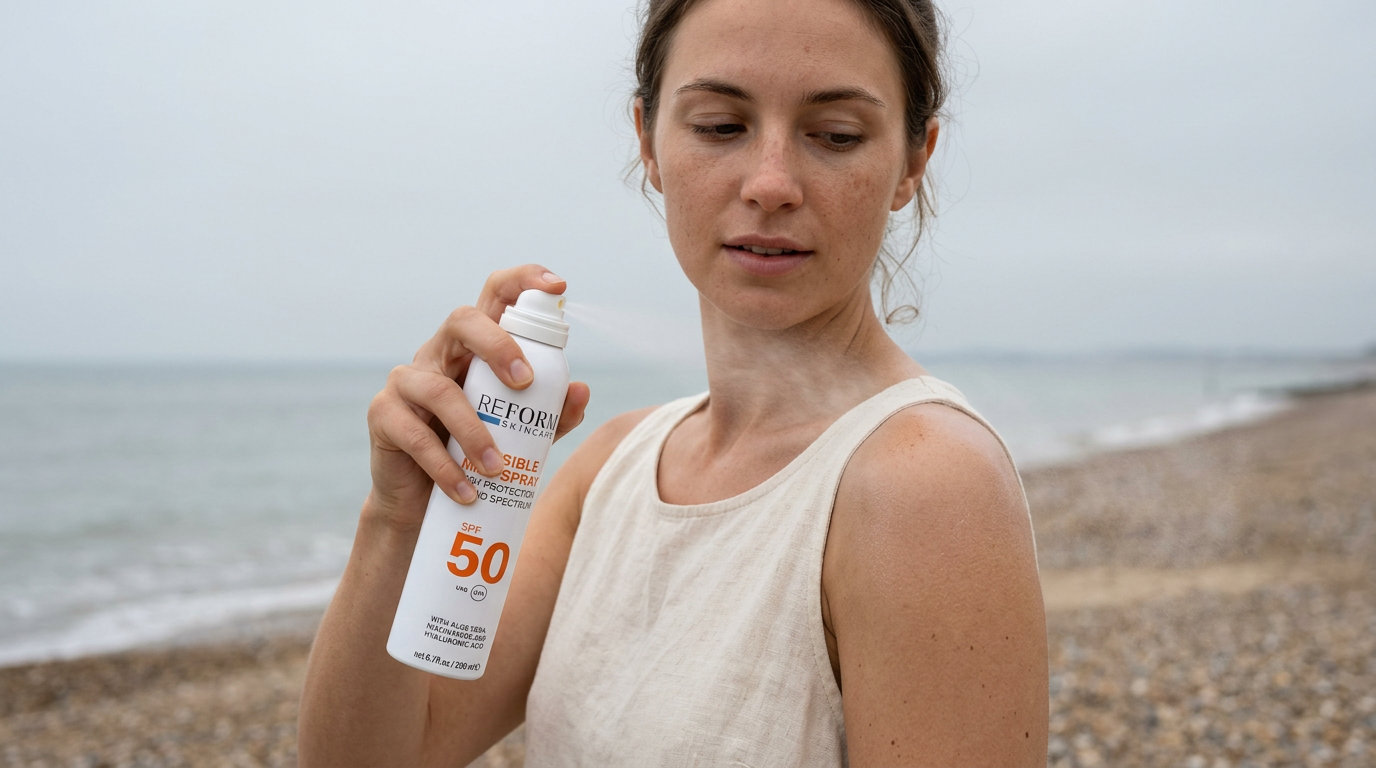
Why Sun Protection is Non-Negotiable on Cloudy Days
Most of us have done it. You glance out the window, see a blanket of grey cloud stretching from horizon to horizon, and quietly decide that sunscreen can wait. After all, if the sun isn't shining, there's nothing to protect against — right? Unfortunately, that reasoning is one of the most widespread and damaging myths in skincare. At Adare Clinic, we see the consequences of this misconception every single day: premature ageing, uneven pigmentation, and sun-related skin damage that built up slowly on days when our patients assumed they were safe.
The truth is simple, even if it's inconvenient: ultraviolet radiation reaches your skin on overcast days, and if you're not wearing adequate sun protection, that radiation is doing real, cumulative harm. In this article, we'll explain exactly why cloudy-day UV exposure matters, what the science says, and how you can make sun protection an effortless, non-negotiable part of your daily routine — rain or shine.
The Science Behind UV Radiation and Cloud Cover
Sunlight contains two types of ultraviolet radiation that affect your skin: UVA and UVB. UVB rays are the ones most people associate with sunburn — they're strongest in summer and at midday, and they are partially filtered by cloud cover. UVA rays, however, tell a very different story. UVA radiation accounts for roughly 95 per cent of the UV energy that reaches the Earth's surface. These rays penetrate deeper into the dermis, silently breaking down collagen and elastin, triggering oxidative stress, and contributing to photoageing — the fine lines, wrinkles, and loss of firmness that appear years before they should.
Here's the critical fact: up to 80 per cent of UV radiation can penetrate cloud cover. Clouds scatter and diffuse sunlight, but they do not block it in the way most people imagine. In certain atmospheric conditions — particularly when thin, high-altitude clouds are present — UV levels can actually be amplified through a phenomenon known as cloud enhancement, where UV intensity temporarily exceeds clear-sky levels. This means that on some overcast days, you may be exposed to more UV radiation than on a sunny afternoon.
Furthermore, UVA rays remain remarkably consistent throughout the year and throughout the day. They pass through glass, they penetrate cloud, and they are present from sunrise to sunset. Unlike UVB, UVA doesn't announce itself with a sunburn. The damage it causes is silent, gradual, and cumulative — which makes it all the more dangerous.
Why Cloudy Days Catch Us Off Guard
Human behaviour plays a significant role in cloudy-day sun damage. When the sky is bright and blue, we instinctively reach for sunscreen, wear hats, and seek shade. These protective behaviours are triggered by visible cues — the warmth of the sun on our skin, the glare in our eyes. On a cloudy day, those cues disappear. We feel cooler, the light seems softer, and our perception of risk drops to almost zero.
This false sense of security means we spend longer outdoors without protection, skip our usual SPF, and forget to reapply. Studies published in the British Journal of Dermatology have shown that people are significantly less likely to use sunscreen on overcast days, yet their cumulative UV exposure over a year can rival that of someone who spends time outdoors on sunny days. The difference? The sunny-day person is more likely to have worn protection.
At Adare Clinic, we often explain it this way: UV radiation is invisible. You cannot feel UVA rays. You cannot see them. The only reliable defence is a consistent, daily habit of protection — one that doesn't depend on what the sky looks like when you leave the house.
The Real Cost of Unprotected Cloudy-Day Exposure
The consequences of skipping sun protection on overcast days are not hypothetical. They are visible in the skin of patients who come to us seeking treatment for concerns that could have been significantly reduced — or even prevented — with consistent SPF use.
Premature ageing is the most common outcome. Chronic, unprotected UVA exposure accelerates the breakdown of collagen and elastin fibres, leading to sagging skin, deep-set wrinkles, and a loss of the plump, firm texture that characterises youthful skin. This process — known as photoageing — is responsible for up to 90 per cent of visible skin ageing, according to research published in the journal Dermato-Endocrinology. That statistic alone should reframe how we think about sun protection: it's not a summer luxury, it's an anti-ageing essential.
Hyperpigmentation is another frequent concern. Melasma, sunspots, and post-inflammatory hyperpigmentation are all worsened — and in many cases triggered — by UV exposure. Patients undergoing treatments for pigmentation at Adare Clinic are always advised that even a single unprotected outing on a cloudy day can undo weeks of progress. UV radiation stimulates melanocytes to produce excess melanin, and once that cycle is activated, it can be incredibly difficult to reverse.
Beyond aesthetics, there is the serious matter of skin health. The World Health Organization classifies UV radiation as a Group 1 carcinogen — the same category as tobacco smoke and asbestos. Cumulative UV exposure is the leading environmental risk factor for skin cancer, including melanoma. Every unprotected exposure contributes to that cumulative total, and cloudy days are no exception.
What Effective Sun Protection Looks Like
At Adare Clinic, we recommend a straightforward, sustainable approach to daily sun protection. It doesn't need to be complicated, but it does need to be consistent.

First, choose a broad-spectrum sunscreen with a minimum SPF of 30, though SPF 50 is preferable for daily facial use. Broad-spectrum means the product protects against both UVA and UVB radiation — this distinction is critical, as many older formulations only targeted UVB. Look for products that carry a high UVA protection rating (often indicated by a UVA circle logo or a PA++++ rating, depending on the brand).
Second, apply sunscreen every single morning as the final step in your skincare routine, before makeup. This applies regardless of the weather, regardless of the season, and regardless of whether you plan to spend time outdoors. UVA rays penetrate windows, so even a day spent at a desk near a window involves meaningful exposure.
Third, reapply. Sunscreen is not a one-and-done product. If you're spending time outside — even walking to and from work, running errands, or eating lunch al fresco — reapply every two hours. For convenience, consider a mineral powder sunscreen or a UV-protective setting spray that can be applied over makeup without disrupting your look.
Fourth, complement your sunscreen with physical protection. A wide-brimmed hat, UV-filtering sunglasses, and lightweight long sleeves offer an additional barrier that doesn't wash off or wear down. On cloudy days especially, when the temptation is to go bare-faced, these physical layers serve as a reliable safety net.
Building a Year-Round Sun Protection Habit
The most effective sun protection strategy is the one you actually follow. At Adare Clinic, we encourage our patients to think of SPF the way they think of brushing their teeth — it's not something you evaluate each morning based on conditions. It's something you do automatically, every day, because the long-term benefit is beyond question.
Keep your sunscreen where you'll see it: next to your moisturiser, on your bathroom shelf, in your handbag. Remove the decision-making from the equation entirely. When sun protection becomes a reflex rather than a choice, cloudy days stop being a vulnerability.
For those already dealing with sun-related skin concerns — pigmentation, photoageing, uneven tone, textural changes — Adare Clinic offers a comprehensive range of advanced treatments designed to repair and rejuvenate. But every one of our skincare specialists will tell you the same thing: no treatment can outpace ongoing, unprotected UV damage. Protection comes first. Treatment builds on that foundation.
The Bottom Line
Clouds are not sunscreen. They do not filter out the UV radiation that ages your skin, triggers pigmentation, and increases your risk of skin cancer. Up to 80 per cent of UV rays pass through cloud cover, and the damage they cause is invisible until it isn't — until the fine lines deepen, the dark patches appear, and the texture of your skin tells the story of years of unprotected exposure.
Sun protection is non-negotiable. Not just on beach days, not just in summer, and certainly not just when the sun is visibly shining. Every single day, your skin needs a shield — and that shield is a well-chosen, consistently applied, broad-spectrum SPF.
At Adare Clinic, we're here to help you protect, maintain, and restore your skin at every stage. If you'd like personalised advice on sun protection, or if you're concerned about existing sun damage, our expert team is ready to guide you. Book a consultation today and take the first step toward skin that's protected for life — whatever the weather.


Leave a comment
This site is protected by hCaptcha and the hCaptcha Privacy Policy and Terms of Service apply.