
Understanding Alopecia and Modern Restoration Options
Losing your hair can feel like losing a part of your identity. But understanding why it happens — and knowing what's available today — puts you back in control.
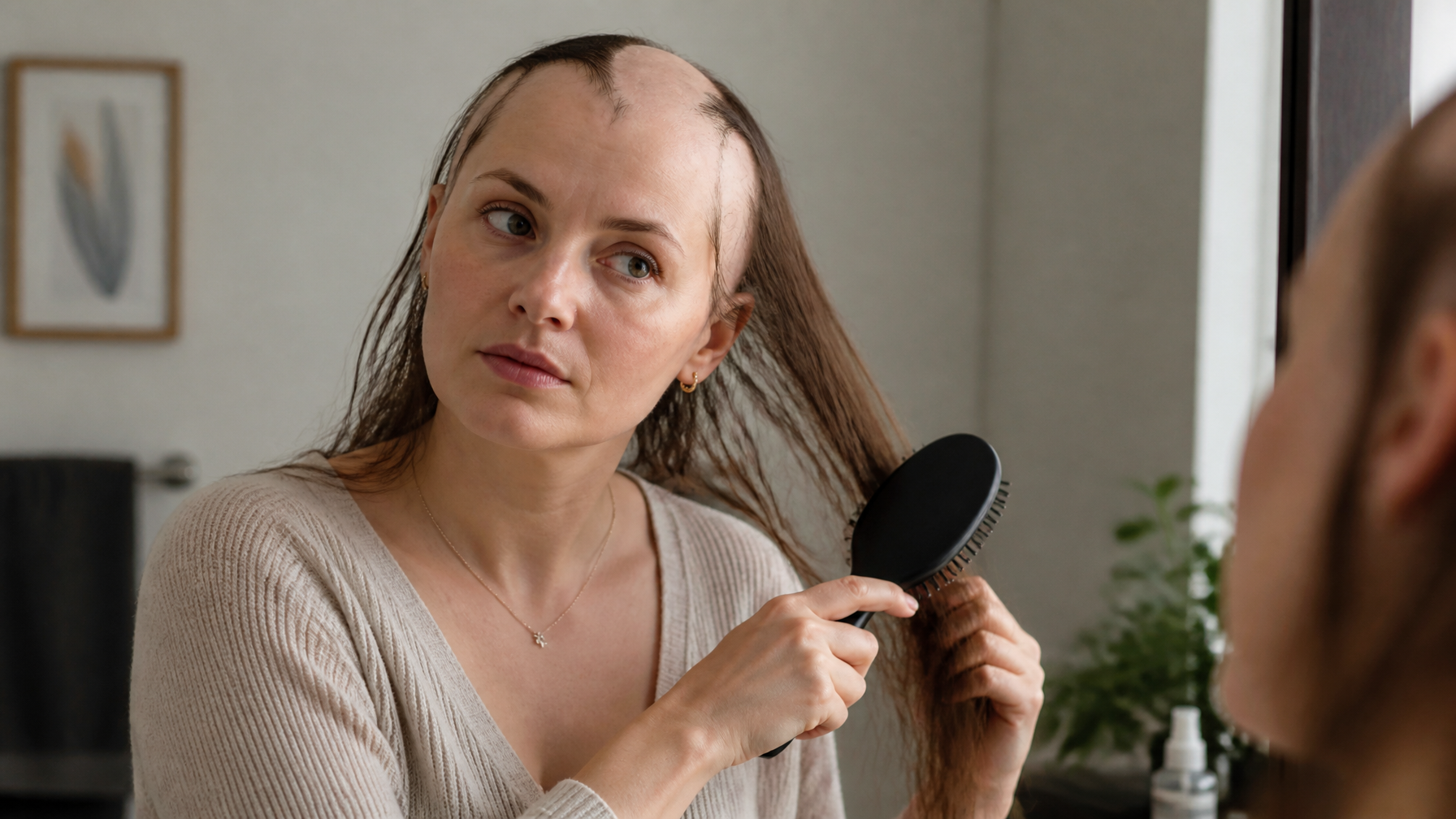
Hair loss affects millions of people worldwide, cutting across age, gender, and ethnicity. Yet despite how common it is, the experience often feels isolating. Whether you've noticed a widening part, a receding hairline, or sudden patches of bare scalp, the emotional weight can be just as significant as the physical change. The medical term for hair loss — alopecia — covers a broad family of conditions, each with its own causes, patterns, and trajectories. And while no single solution works for everyone, the landscape of restoration options has never been more advanced or more accessible than it is right now.
This post breaks down the major types of alopecia, what drives them, and the modern treatments and procedures that are helping people regrow, restore, and reclaim confidence in their appearance.
What Exactly Is Alopecia?
At its simplest, alopecia means hair loss. But that umbrella term covers a wide spectrum. Some forms are temporary and reversible; others are progressive and permanent without intervention. Understanding which type you're dealing with is the critical first step, because it shapes every treatment decision that follows.
Androgenetic Alopecia (Pattern Hair Loss)
This is the most common form of hair loss in both men and women. In men, it typically shows up as a receding hairline and thinning at the crown — the classic "M-shaped" pattern. In women, it tends to present as diffuse thinning across the top of the scalp, often most visible along the part line.
The driver here is genetics and hormones, specifically dihydrotestosterone (DHT), a derivative of testosterone. DHT binds to receptors in susceptible hair follicles, gradually miniaturizing them until they produce thinner, shorter hairs — and eventually stop producing visible hair altogether. This process is progressive, meaning it worsens over time without treatment.
Alopecia Areata
Unlike pattern hair loss, alopecia areata is an autoimmune condition. The body's immune system mistakenly attacks healthy hair follicles, causing hair to fall out in round, smooth patches — often on the scalp, but sometimes on the beard, eyebrows, or other areas. It can appear suddenly, and its course is unpredictable: some people experience a single episode followed by full regrowth, while others develop recurring or expanding patches.
In more severe variants — alopecia totalis (complete scalp hair loss) and alopecia universalis (loss of all body hair) — the impact is far more extensive.
Telogen Effluvium
This form of hair loss is typically temporary and triggered by stress — physical or emotional. Major surgery, childbirth, severe illness, crash dieting, or intense psychological distress can push a large number of hair follicles into the resting (telogen) phase simultaneously. Two to three months later, those hairs shed. The result is dramatic, diffuse thinning rather than bald patches.
The reassuring news: once the trigger resolves, hair usually regrows on its own within six to twelve months.
Traction Alopecia
Caused by repeated mechanical stress on the hair — tight ponytails, braids, extensions, or headwear worn consistently over long periods — traction alopecia damages follicles through sustained pulling. It's most commonly seen along the hairline and temples. Caught early, it's fully reversible by changing hairstyling habits. Left unchecked, the follicle damage becomes permanent.
Scarring (Cicatricial) Alopecias
This group of conditions destroys hair follicles and replaces them with scar tissue, making regrowth impossible in the affected areas. Causes range from inflammatory skin conditions (like lichen planopilaris and frontal fibrosing alopecia) to infections and burns. Early diagnosis and treatment are crucial to halt progression and preserve remaining hair.
The Emotional Toll — And Why It Matters
Hair loss is often dismissed as "cosmetic," but its psychological impact is well-documented. Studies consistently link alopecia to increased rates of anxiety, depression, social withdrawal, and diminished self-esteem. For women especially, hair loss can feel deeply destabilizing in cultures where hair is closely tied to femininity and identity.

Acknowledging this emotional dimension isn't vanity — it's reality. And it's one of the reasons the medical community has invested so heavily in developing effective treatments.
Modern Treatment Options
Today's options range from topical solutions you can start at home to sophisticated surgical procedures. Here's a clear-eyed look at what's available.
Medications
Minoxidil (Rogaine) is an over-the-counter topical solution applied directly to the scalp. It works by increasing blood flow to hair follicles and extending the growth phase of the hair cycle. It's FDA-approved for both men and women and is often the first line of defense. Results typically take three to six months to become visible, and continued use is required to maintain them.
Finasteride (Propecia) is a prescription oral medication for men that blocks the conversion of testosterone to DHT. It's effective at slowing hair loss and, in many cases, promoting regrowth — but it requires ongoing use. Some men experience side effects including decreased libido, though these are relatively uncommon.
Dutasteride, a more potent DHT blocker, is used off-label in some cases and has shown promising results in studies, though it isn't universally approved for hair loss treatment.
For alopecia areata, the treatment landscape has been transformed by JAK inhibitors — a class of oral medications like baricitinib and ritlecitinib that target specific immune pathways driving the autoimmune attack on follicles. These drugs have shown remarkable results in clinical trials and real-world use, with many patients experiencing significant regrowth after years of hair loss.
Platelet-Rich Plasma (PRP) Therapy
PRP involves drawing a small amount of your own blood, concentrating the platelets through centrifugation, and injecting the platelet-rich solution into the scalp. The growth factors in platelets are believed to stimulate dormant follicles and promote healing. While evidence is still accumulating, many dermatologists offer PRP as a complementary treatment alongside medications, and patient satisfaction rates are generally encouraging.
Low-Level Laser Therapy (LLLT)
Available as in-clinic treatments or at-home devices (laser caps and combs), LLLT uses red light wavelengths to stimulate cellular activity in hair follicles. It's FDA-cleared for hair loss treatment and is considered safe with minimal side effects. Results are modest compared to medications or surgery, but it can be a useful addition to a broader treatment plan.
Hair Transplant Surgery
For many people, surgical restoration remains the gold standard — and the techniques have improved dramatically.
Follicular Unit Transplantation (FUT) involves removing a thin strip of scalp from the donor area (usually the back of the head), dissecting it into individual follicular units, and transplanting them into thinning or bald areas. It leaves a linear scar but allows for a large number of grafts in a single session.
Follicular Unit Extraction (FUE) extracts individual follicular units directly from the donor area using tiny punch tools, leaving only small dot-like scars that are virtually undetectable. FUE has become the more popular method due to its minimally invasive nature and faster recovery time. Robotic-assisted FUE systems have further improved precision and consistency.
Both methods produce permanent, natural-looking results because the transplanted hair comes from areas genetically resistant to DHT. Modern surgeons focus heavily on artistic hairline design, density optimization, and natural angulation — the results today are a far cry from the "hair plug" look of decades past.
Scalp Micropigmentation (SMP)
For those who prefer a non-surgical option or want to complement a transplant, scalp micropigmentation uses specialized tattoo techniques to deposit tiny dots of pigment into the scalp, replicating the appearance of hair follicles. It's particularly effective for creating the look of a closely shaved head, adding density to thinning areas, or camouflaging transplant scars.
Emerging Therapies
Research continues to push boundaries. Hair cloning and follicle neogenesis — growing new follicles from stem cells or cloned dermal papilla cells — remain in the experimental stage but represent the potential future of unlimited donor supply. Advances in exosome therapy, microneedling combined with growth factors, and gene editing are also being explored in clinical settings.
Choosing the Right Path
There's no one-size-fits-all answer. The right approach depends on the type and stage of your hair loss, your goals, your health profile, and your budget. A few guiding principles:
- Start early. The earlier you address hair loss, the more options you have and the better the outcomes tend to be.
- Get a proper diagnosis. See a board-certified dermatologist or trichologist. Self-diagnosing based on internet research can lead you down the wrong treatment path.
- Be realistic. Modern treatments are impressive, but they have limits. A good clinician will set honest expectations.
- Combine strategies. The best results often come from layering treatments — medication to slow loss, PRP to stimulate growth, and surgery to restore density in areas that won't respond to non-surgical options alone.
Final Thoughts
Alopecia, in all its forms, is a medical condition — not a character flaw, not a failure, and not something you have to simply accept if it's affecting your quality of life. The science of hair restoration has made enormous strides, and the options available today can deliver genuinely life-changing results.
The most important step is the first one: understanding what's happening and knowing that effective help exists. From there, the path forward is yours to choose.


Leave a comment
This site is protected by hCaptcha and the hCaptcha Privacy Policy and Terms of Service apply.