
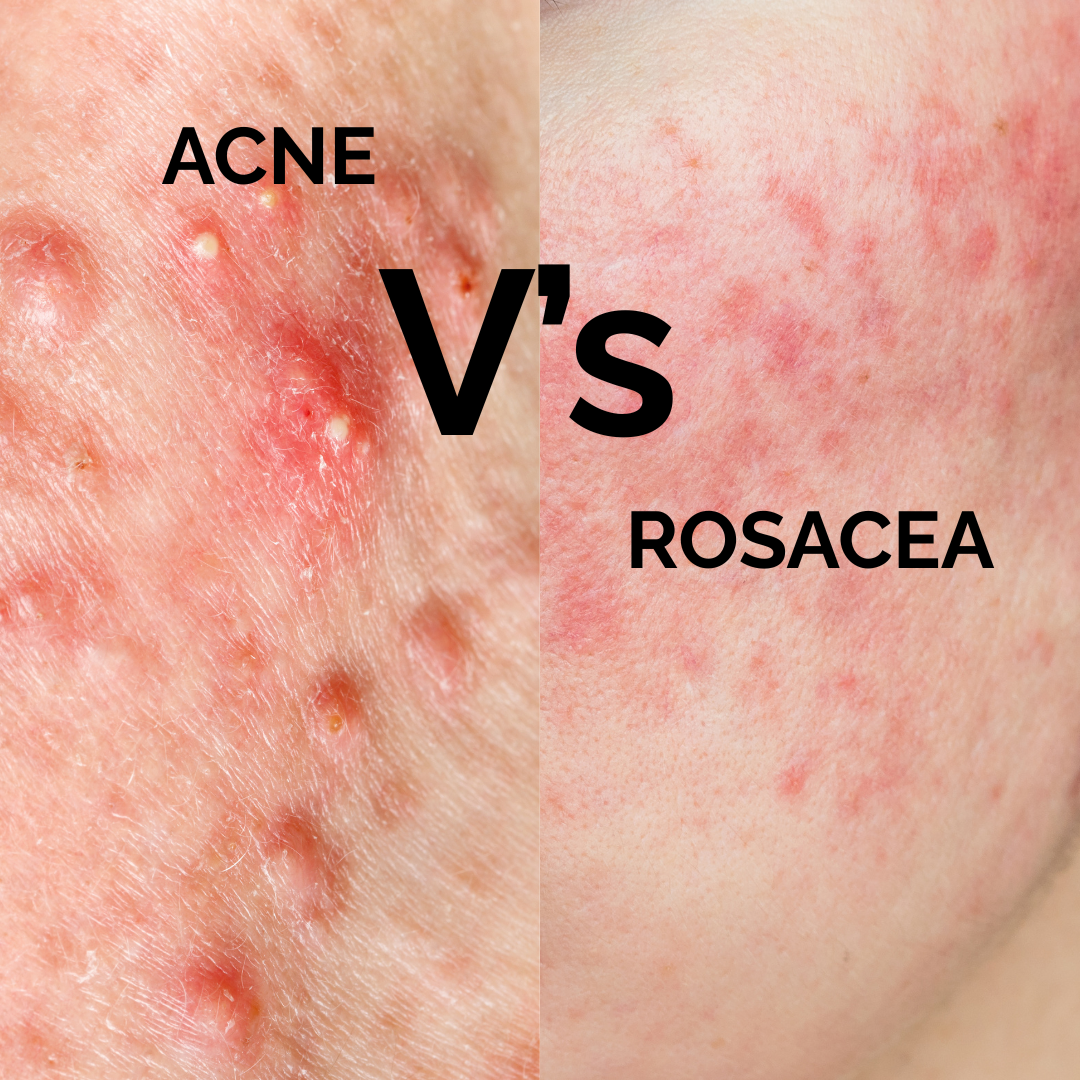
Rosacea vs Acne: How to Tell the Difference
Rosacea and acne are two of the most commonly confused skin conditions. While they can appear similar at first glance, they are fundamentally different in both cause and treatment. Understanding the difference is essential, as treating rosacea like acne can often worsen symptoms.
What Is Rosacea?
Rosacea is a chronic inflammatory skin condition that primarily affects the central face. It is characterised by:
- Persistent redness (especially on the cheeks, nose and forehead)
- Flushing or blushing easily
- Visible blood vessels (telangiectasia)
- Sensitivity, stinging or burning
- In some cases, small red bumps or pustules
Rosacea-prone skin is typically more sensitive and reactive, with a compromised skin barrier.
What Is Acne?
Acne is a condition driven by excess oil production, clogged pores, and bacteria. It can affect both the face and body and is characterised by:
- Blackheads and whiteheads (comedones)
- Inflamed spots, pustules or cysts
- Oily skin
- Breakouts across the face, chest, and back
Unlike rosacea, acne is not primarily linked to flushing or persistent redness.
Key Differences Between Rosacea and Acne
1. Redness vs Oiliness
- Rosacea: Persistent redness and flushing are key features
- Acne: Typically associated with oily skin rather than redness
2. Presence of Comedones
- Rosacea: No blackheads or whiteheads
- Acne: Comedones are a defining feature
3. Skin Sensitivity
- Rosacea: Skin is often sensitive, reactive, and prone to stinging
- Acne: Skin is usually more resilient, though inflamed
4. Location
- Rosacea: Central face (cheeks, nose, forehead)
- Acne: Face, jawline, chest, back
5. Triggers
- Rosacea: Triggered by heat, alcohol, spicy foods, and UV exposure
- Acne: Triggered by hormones, oil production, and bacteria
Can You Have Both?
Yes. It is possible to have both rosacea and acne, particularly in cases of papulopustular rosacea, where breakouts can resemble acne. This is why professional diagnosis is important, as treatment needs to be carefully balanced.
Why Misdiagnosis Matters
Treating rosacea as acne can often make symptoms worse.
Many acne treatments:
- Strip the skin
- Disrupt the skin barrier
- Increase irritation
For rosacea-prone skin, this can lead to increased redness, sensitivity, and flare-ups.
How to Treat Each Condition
Treating Rosacea
- Use gentle, non-foaming cleansers
- Focus on barrier repair and hydration
- Avoid known triggers
- Daily SPF is essential
- Consider medical treatments such as laser for redness
Treating Acne
- Introduce ingredients like salicylic acid or retinoids
- Control oil production
- Use non-comedogenic products
- Target bacteria and congestion
Not Sure If It’s Rosacea or Acne?
If you are unsure whether you are dealing with rosacea or acne, it is important not to guess.
These conditions can look similar, but require very different treatment approaches. Using the wrong products can worsen symptoms, increase irritation, and delay results.
A professional assessment allows for:
- Accurate diagnosis
- A tailored treatment plan
- Guidance on appropriate skincare and in-clinic treatments
If you are unsure, we recommend booking a dermatology consultation.
This ensures your skin is treated correctly from the outset, helping you achieve the best possible outcome with minimal disruption to the skin barrier.
When to Seek Professional Advice
If your symptoms are persistent, worsening, or not responding to over-the-counter skincare, it is important to seek professional advice. Early intervention can prevent progression and improve long-term outcomes.
Final Takeaway
Although rosacea and acne can look similar, they require very different approaches.
- Rosacea is driven by inflammation and sensitivity
- Acne is driven by oil, clogged pores, and bacteria
Understanding the difference is the first step towards achieving clearer, healthier skin.
When in doubt, treat gently and seek professional guidance.


Leave a comment
This site is protected by hCaptcha and the hCaptcha Privacy Policy and Terms of Service apply.