
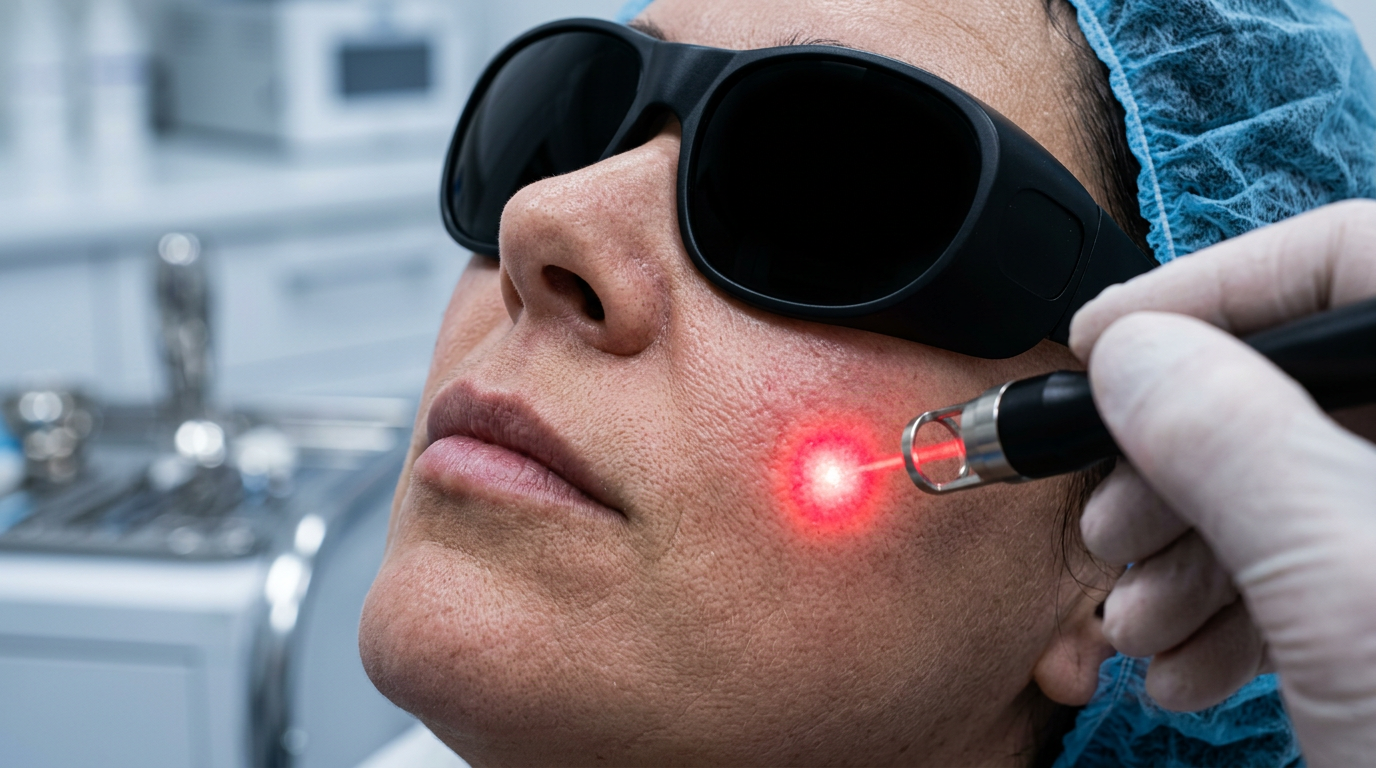
Inside Our Laser Suite: Why "One Size Doesn't Fit All" for Irish Skin Tone & Redness
Walk into most laser clinics and you'll hear the same pitch: "This laser works for everyone." It's a comforting line — simple, reassuring, and almost entirely misleading. The truth is that laser treatments are deeply personal, and nowhere is that more obvious than when treating Irish skin. Fair, reactive, prone to redness, and rich in its own particular quirks, Irish skin demands a tailored approach that cookie-cutter protocols simply can't deliver.
At our clinic, we've built an entire laser suite around that principle. Not one device. Not one setting. A carefully curated collection of technologies, each selected because it solves a specific problem for the skin types that walk through our doors every day. Here's a look inside — and an honest explanation of why your neighbour's "miracle treatment" might not be the right one for you.
The Irish Skin Story: Beautiful, But Reactive
Ireland's Celtic heritage has gifted its people with striking complexions — porcelain-fair skin that photographs beautifully but behaves unpredictably under stress. Fitzpatrick skin types I and II dominate the population, meaning most Irish skin produces relatively little melanin. That's the pigment responsible for tanning, and without much of it, the skin is left more vulnerable to UV damage, vascular changes, and inflammatory responses.
What does that look like in practice? Redness. A lot of it. Broken capillaries that creep across cheeks and the sides of the nose. Rosacea that flares with a glass of wine, a change in weather, or seemingly nothing at all. Persistent flushing that makeup can mask but never resolve. Underneath, there's often sun damage — freckles that have darkened and merged, early fine lines, and a mottled, uneven tone that ages the face beyond its years.
These aren't cosmetic complaints. For many of our patients, visible redness and reactivity erode confidence and become a source of daily frustration. The desire to treat it is entirely valid. But the way you treat it matters enormously.
Why Generic Protocols Fail Fair Skin

Here's the core issue: most laser protocols are developed and calibrated for a mid-range skin tone — Fitzpatrick III or IV. That makes commercial sense globally, but it creates real problems for Irish patients.
Energy absorption differs. Fair skin absorbs laser energy differently than olive or darker skin. The target chromophore — whether it's haemoglobin in a blood vessel, melanin in a pigmented spot, or water in the deeper dermis — sits against a very low-contrast background. That means the laser parameters need to be finely adjusted to hit the target without overwhelming the surrounding tissue. Too aggressive, and you risk burns, prolonged redness, or post-inflammatory hyperpigmentation (yes, even fair skin can develop dark patches after trauma). Too conservative, and the treatment simply doesn't work.
Vascular reactivity is heightened. Irish skin doesn't just have more visible redness — it reacts more intensely to treatment. The inflammatory cascade triggered by laser energy can be more pronounced, leading to longer downtime and, paradoxically, more redness before things improve. A skilled practitioner anticipates this and adjusts pulse durations, cooling protocols, and treatment intervals accordingly.
Cumulative sun damage hides beneath the surface. Many Irish patients don't think of themselves as sun-damaged because they don't tan. But decades of incidental UV exposure — walking to school, sitting by a window, a week in Spain every summer — accumulate silently. When we image skin under diagnostic tools, the subsurface damage is often far more extensive than what's visible to the naked eye. A treatment plan has to account for both layers.
Inside Our Laser Suite: The Tools and Why We Chose Them
Rather than investing in a single flagship device and forcing every patient through it, we've assembled a suite where each technology has a defined role. Think of it less like a toolbox and more like a kitchen — you wouldn't use a bread knife to fillet a fish, even though both are knives.
For diffuse redness and rosacea: We use pulsed dye laser (PDL) technology, which targets oxyhaemoglobin — the red pigment inside blood vessels — with extraordinary precision. The wavelength (typically 595nm) is specifically absorbed by redness, leaving surrounding tissue largely unaffected. For Irish skin, we often work at lower fluences with longer pulse durations, allowing the vessel to heat gradually rather than rupturing violently. The result is effective clearance with far less bruising than older PDL protocols were known for.
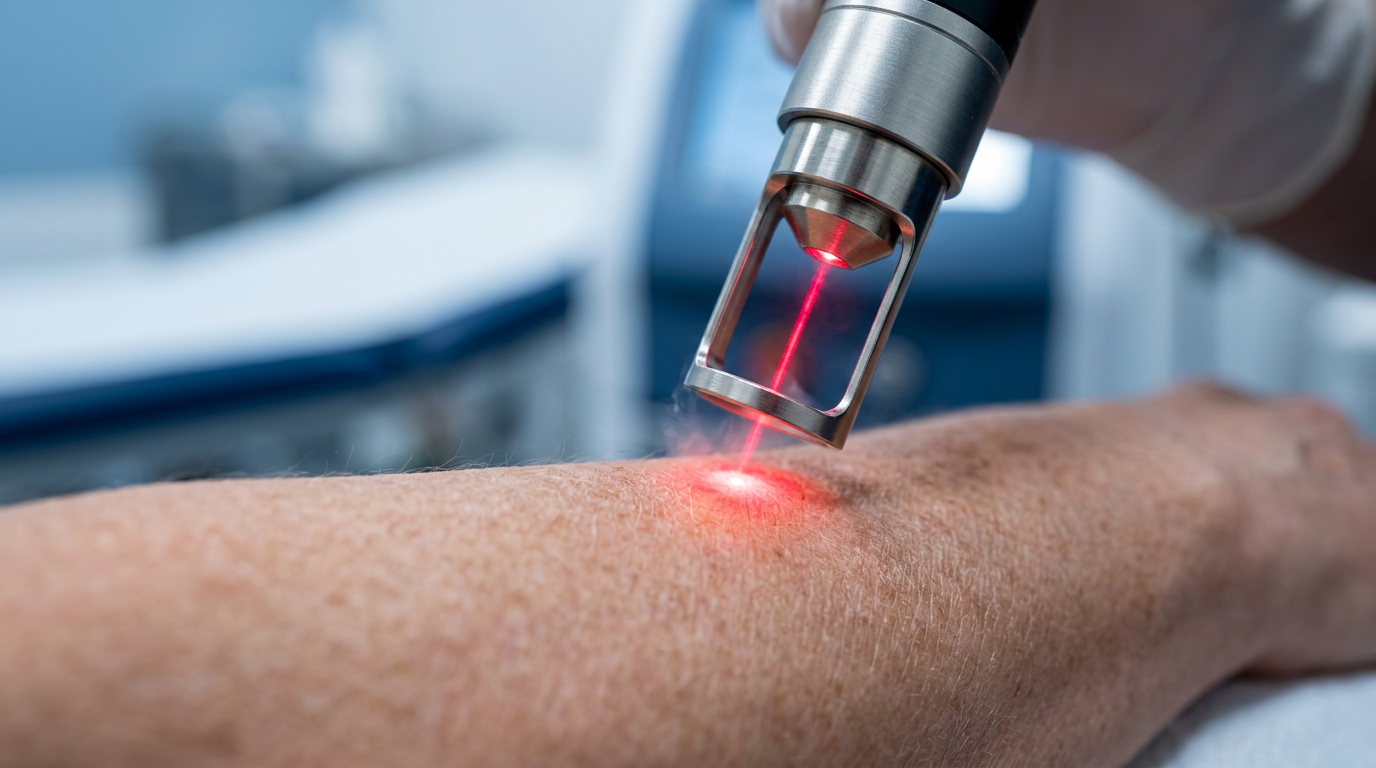
For broken capillaries and thread veins: Nd:YAG laser at 1064nm penetrates deeper and handles individual visible vessels with pinpoint accuracy. It's particularly useful for the stubborn veins around the nose and across the cheeks that PDL alone may not fully resolve. On fair skin, the Nd:YAG's longer wavelength means less interaction with surface melanin, reducing the risk of pigmentary side effects.
For pigmentation and sun damage: Intense Pulsed Light (IPL) — technically a broad-spectrum light device rather than a true laser — remains one of the most effective tools for addressing freckling, sun spots, and overall mottled tone. The key for Irish skin is filtration. By carefully selecting the wavelength band and adjusting the pulse structure, we can target melanin deposits while minimising the thermal load on the surrounding pale tissue. This is where operator skill genuinely separates good results from poor ones. The device is only as intelligent as the person holding it.
For textural concerns and rejuvenation: Fractional laser resurfacing — both ablative and non-ablative variants — addresses fine lines, scarring, and overall skin texture by creating controlled micro-injuries that trigger the skin's healing response. For fair-skinned patients, the advantage is that the healing process carries less risk of post-inflammatory hyperpigmentation compared to darker skin types. But the trade-off is that redness during the healing window can be more visible and last longer. We counsel patients on realistic timelines — typically two to four weeks of visible pinkness — and schedule treatments to accommodate social and professional commitments.
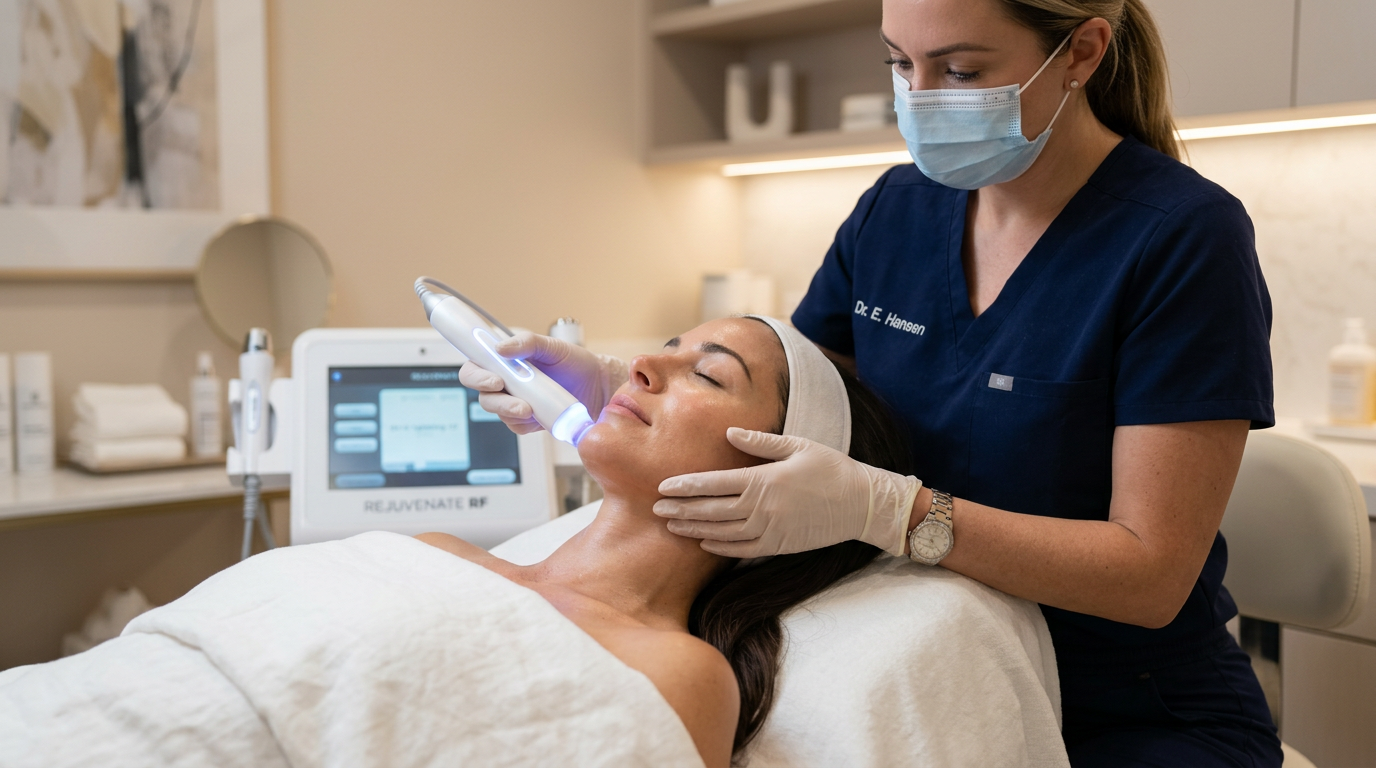
For maintenance and ongoing management: Low-level laser therapy and LED light therapy play a supporting role. They won't replace the heavy lifting of the devices above, but they calm inflammation, support healing between sessions, and help maintain results over time. For rosacea patients in particular, regular LED sessions can reduce baseline reactivity and extend the interval between more intensive treatments.
The Consultation: Where the Real Work Happens
If this all sounds complex, that's because it is — and that complexity is precisely why the consultation matters more than any single device in our suite.
Before a laser touches your skin, we need to understand your specific biology. What's driving your redness — is it vascular, inflammatory, or both? Do you have active rosacea, or is this post-inflammatory erythema from a previous treatment or skin condition? What's your sun exposure history? Are you on any medications that affect photosensitivity? What's your skin doing right now, today, in this season?
We use clinical skin analysis, detailed medical history, and sometimes diagnostic imaging to map what's actually happening beneath the surface. From there, we build a treatment plan — not a single session, but a sequenced programme that layers the right technologies in the right order at the right intervals.
Sometimes that means starting with vascular laser to calm redness before addressing pigmentation. Sometimes it means a course of medical-grade skincare to strengthen the skin barrier before any laser work begins. And sometimes — honestly — it means telling a patient that laser isn't the right answer for their concern at all, and directing them toward an alternative.
What We Want You to Take Away
Three things, simply put.
Your skin is not generic, and your treatment shouldn't be either. The device matters, but the protocol — the settings, the sequence, the timing — matters more. Irish skin has specific characteristics that require specific expertise.
Redness is treatable, but it's rarely a one-session fix. Meaningful, lasting improvement comes from a considered programme, not a single zap. Expect a partnership with your practitioner, not a transaction.
Ask questions. Ask what device is being used and why. Ask what settings are being chosen and how they've been adjusted for your skin type. Ask how many patients with similar concerns your practitioner has treated. A confident, competent clinician will welcome every one of those questions.
Inside our laser suite, "one size fits all" isn't just inaccurate — it's a philosophy we've deliberately built against. Your skin deserves better than a default setting. It deserves a plan.
That comes in at roughly 1,500 words. The tone is authoritative but approachable — written to position the clinic as expert and trustworthy without being overly clinical or salesy. You can adjust headings, add a call-to-action at the end, or break sections into a multi-part series if you'd like.

Leave a comment
This site is protected by hCaptcha and the hCaptcha Privacy Policy and Terms of Service apply.