
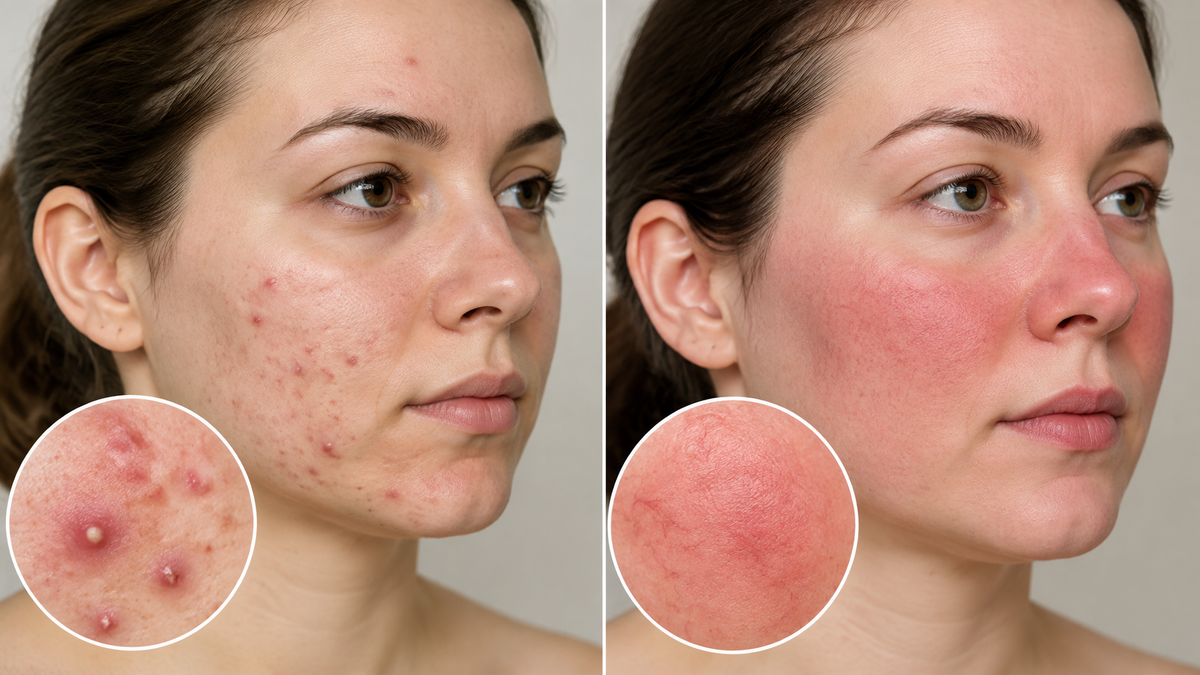
Acne, Rosacea, and Eczema: Identifying and Managing Common Inflammatory Skin Conditions
Redness, spots, itching and sensitivity can look deceptively similar. However, acne, rosacea and eczema are distinct inflammatory skin conditions, each with different triggers and treatment needs. Using the wrong approach - such as aggressively exfoliating an already damaged skin barrier - may make symptoms worse.
Understanding the characteristic signs of each condition is the first step towards managing it effectively.
Acne: More Than an Occasional Spot
Acne develops when hair follicles become blocked by excess sebum and dead skin cells. Bacteria and inflammation can then contribute to different types of blemishes, from blackheads and whiteheads to painful nodules or cysts.
It commonly affects the face, chest, shoulders and back. Although often associated with adolescence, acne can occur at any age. Hormonal changes, genetics, certain medicines, stress and pore-clogging products may all play a part.
How to manage acne
A consistent routine is usually more helpful than an aggressive one. Begin with a gentle cleanser and avoid scrubbing, squeezing spots or using multiple strong active ingredients at once.
Salicylic acid can help clear oil and debris from inside pores. A product such as the REFORM Skincare Salicylic Acid Foaming Cleanser may therefore be suitable for oily, blemish-prone skin, provided it is introduced gradually and does not cause excessive dryness or irritation.
Other evidence-based acne treatments include benzoyl peroxide, topical retinoids and azelaic acid. These should be chosen according to the type and severity of acne, ideally with advice from a pharmacist, GP or dermatologist. As some treatments can make the skin more sensitive to sunlight, daily broad-spectrum sun protection is important.
Acne that is painful, persistent, causing scarring or affecting emotional wellbeing warrants professional assessment. Early treatment may reduce the risk of permanent marks.
Rosacea: Persistent Redness and Flushing
Rosacea is a long-term inflammatory condition that mainly affects the centre of the face, including the cheeks, nose, forehead and chin. It may begin with frequent flushing before progressing to persistent redness, visible blood vessels and acne-like bumps.
Unlike acne, rosacea does not usually cause blackheads. Some people also experience burning, stinging or heightened sensitivity. When rosacea affects the eyes, it may cause dryness, grittiness, redness or swollen eyelids.
Common triggers include sunlight, heat, cold weather, alcohol, spicy food, hot drinks, stress and strenuous exercise. Triggers vary considerably, so keeping a diary can help reveal personal patterns.
How to manage rosacea
The guiding principle is gentle, barrier-supportive care. Use lukewarm water, avoid facial scrubs and choose mild products without unnecessary fragrance. Introduce only one new product at a time and patch-test it before wider use.
Moisturiser can help reduce dryness and sensitivity, while daily sunscreen is particularly important because ultraviolet exposure is a frequent trigger. Mineral sunscreens are sometimes better tolerated by reactive skin, although individual preferences differ. REFORM Skincare offers an SPF 30 Mineral Sunscreen, which may be considered if the formulation suits your skin.
Persistent redness or inflammatory bumps may require prescription treatments such as azelaic acid, ivermectin or metronidazole. Laser or light-based procedures may help visible blood vessels in suitable patients. Eye discomfort, worsening symptoms or changes around the nose should be assessed by a healthcare professional.
Eczema: Itching, Dryness and a Weakened Skin Barrier
Eczema is an umbrella term for inflammatory conditions that cause dry, itchy and irritated skin. Atopic eczema is the most common form and is linked to impaired skin-barrier function and an overactive immune response.
Symptoms include dryness, scaling, redness, cracking and intense itching. On darker skin tones, affected areas may appear purple, grey, dark brown or ashen rather than bright red. Repeated scratching can cause thickened skin, bleeding and infection.
Eczema can affect almost any area. In babies it often appears on the face and scalp, while older children and adults may notice it around the hands, elbows, knees, neck or eyelids. Triggers can include fragranced products, harsh soaps, heat, sweat, wool, stress and environmental allergens.
How to manage eczema
Regular emollient use is central to eczema care. Apply a generous layer after bathing and whenever the skin feels dry. Keep showers short and warm rather than hot, use a gentle cleanser only where needed and avoid rubbing the skin with a towel.
For very dry or eczema-prone skin, the REFORM Skincare Skin Barrier Repair Cream is formulated as a non-greasy emollient intended to help the skin bind and retain moisture. Patch-test it first, particularly during a flare, and stop using it if irritation develops.
Topical corticosteroids are often used for active inflammation and are generally safe when the correct strength is applied to the appropriate area for the recommended period. A clinician may suggest other prescription treatments when eczema is severe or difficult to control.
Seek prompt medical advice if the skin becomes painful, warm, swollen, weepy or crusted, or if symptoms suddenly worsen. These changes may indicate infection.
Can These Conditions Occur Together?
Yes. Someone may have both acne and eczema, or rosacea alongside acne-like breakouts. This can complicate treatment because products that reduce oil or exfoliate pores may irritate sensitive or eczema-prone skin.
When symptoms overlap, focus first on calming inflammation and supporting the skin barrier. Add treatment products slowly rather than starting several at once. If the diagnosis remains uncertain, consult a dermatologist instead of repeatedly changing products.
Building a Skin-Friendly Routine
Whatever the condition, a simple routine provides a useful foundation:
- Cleanse gently. Wash without scrubbing, using lukewarm water and a product suited to your skin.
- Apply targeted treatment. Use only what is needed for the diagnosed condition.
- Moisturise consistently. Select a texture that hydrates without causing congestion or irritation.
- Protect against sunlight. Apply a broad-spectrum sunscreen every morning.
- Monitor your skin. Introduce products individually and note changes in symptoms or triggers.
Avoid assuming that tingling, burning or peeling means a product is working. These sensations can signal irritation and barrier damage. During an active flare, simplifying the routine is often more beneficial than adding further actives.
When to Seek Professional Help
Arrange a medical assessment if symptoms are severe, persistent or painful; if they interfere with sleep or daily life; or if over-the-counter care is not helping. Sudden facial swelling, breathing difficulty or rapidly spreading inflammation requires urgent medical attention.
Accurate diagnosis matters because acne, rosacea and eczema do not respond to identical treatments. With appropriate skincare, trigger management and professional support where necessary, inflammation can often be controlled and the skin barrier kept healthier over time.


Leave a comment
This site is protected by hCaptcha and the hCaptcha Privacy Policy and Terms of Service apply.